Of Course vs Ofcourse — Which One Is Actually Correct?
You’re typing a text, you pause, and your fingers just want to smash “ofcourse” together like it’s one word. It feels natural. It feels fast. But something nags at you, is this even real English? That small hesitation is exactly why so many people search of course vs ofcourse before hitting send. The good news is the answer is short, and once you see the reason behind it, you’ll never second guess it again.
Quick Answer
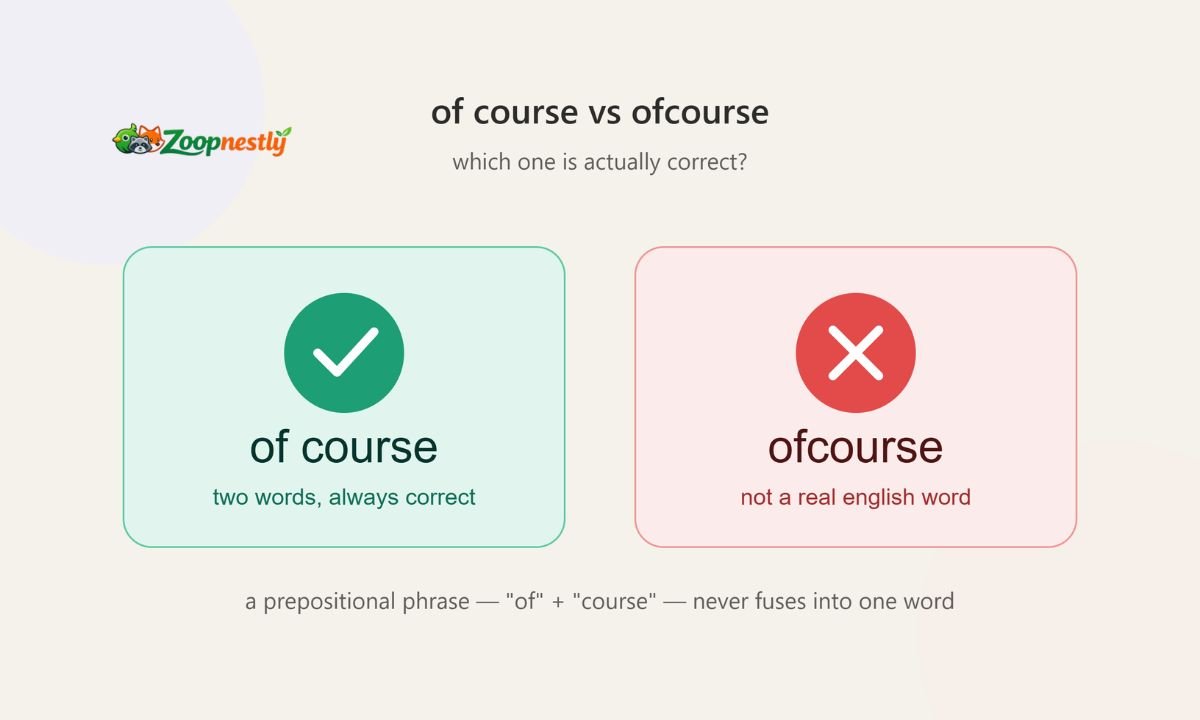
“Of course” is the only correct spelling. It is always written as two separate words. “Ofcourse” is a common misspelling and is not recognized as a word in standard English dictionaries, whether American or British. If you remember one rule, remember this: two words, always.
Why Does “Ofcourse” Feel So Natural to Type?
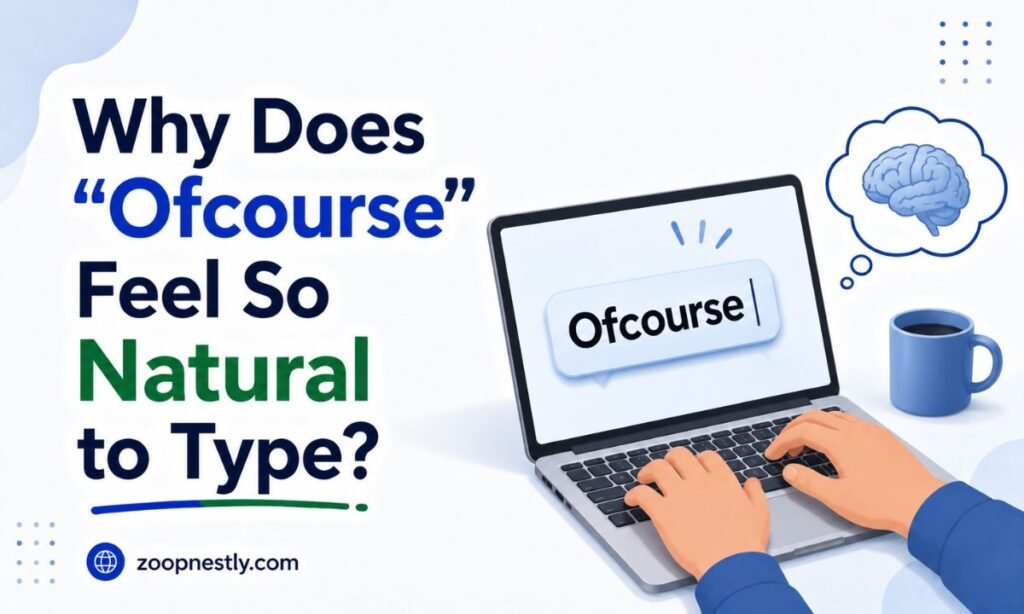
This mistake isn’t about carelessness. It happens because of how our brains process speech.
When people talk, they don’t pause between “of” and “course.” The phrase blends into one smooth sound, almost like “uhv-course.” Your ear hears one unit, so your brain assumes it should be written as one unit. This is the same reason people mix up “a lot” and “alot,” or “all right” and “alright.”
Fast typing and autocorrect habits make it worse. Once your fingers learn a rhythm, they repeat it, mistakes included.
What Does “Of Course” Actually Mean?
“Of course” is a fixed phrase, also called an idiom, used to:
- Confirm something is true or expected
- Give permission
- Show agreement
- Add emphasis to an obvious answer
Example: “Can I borrow your charger?” “Of course, go ahead.”
Here, “of course” replaces a simple “yes” with a warmer, more natural tone.
Where Does “Of Course” Come From?
Understanding the origin makes the spelling rule easier to accept, because it shows why the words were never meant to merge.
“Course” traces back to the Latin word cursus, meaning a running or a path. Over time, English speakers began using “course” to describe a natural sequence of events, something following its expected path.
“Of course” literally meant something was happening “as part of the natural course” of events. Since “of” is a preposition and “course” is a noun, English grammar never allowed them to fuse into a single word. Prepositional phrases stay separate. That’s simply how English structure works.
How Do You Pronounce “Of Course”?
In everyday speech, “of course” is pronounced as /əv kôrs/, with the “of” softened almost to “uh.” That soft pronunciation is the real reason people misspell it, not poor grammar knowledge, just a mismatch between sound and spelling. This happens with plenty of English phrases, so you’re in good company.
“Of Course” in Real Sentences
Seeing the phrase across different tones helps lock in the correct usage.
Formal and Professional Use
- “Of course, we will review the contract before signing.”
- “The manager agreed, of course, that the deadline needed adjusting.”
Casual and Conversational Use
- “Of course I remember your birthday!”
- “You want fries with that? Of course.”
When “Of Course” Sounds Right But Reads Awkwardly
Sometimes “of course” is grammatically correct but stylistically clunky, especially when overused in formal writing. Repeating it in every paragraph can make writing sound less confident, not more polished. In professional documents, it’s often better to vary your confirmation words instead of leaning on the same phrase again and again.
Of Course vs Ofcourse: Side-by-Side Comparison
| Feature | Of Course (Correct) | Ofcourse (Incorrect) |
| Word count | Two words | One word |
| Dictionary status | Recognized in all major English dictionaries | Not a recognized word |
| Grammar rule | Prepositional phrase (of + course) | Not a valid English structure |
| Common usage | Formal and casual writing, speech | Typos, texting, non-native writing |
| Acceptable in essays or business writing | Yes | No |
Why Do Smart, Careful Writers Still Get This Wrong?
It’s not a lack of intelligence, it’s pattern matching. English has several common one-word compressions like “cannot,” “another,” and “himself.” Your brain assumes “of course” might follow the same pattern, even though it doesn’t.
Non-native English speakers sometimes pick up “ofcourse” from casual chat platforms or informal writing they’ve seen online, where errors spread quickly because nobody corrects them.
Autocorrect tools usually catch this error, but not always, especially in messaging apps with looser spell check settings.
DISCOVER MORE : Apposed or Opposed? Learn the Key Difference in English
Practical Ways to Never Mix This Up Again

A few small habits can permanently fix this for you.
- Say it slowly in your head. If you can hear two separate words, type two separate words.
- Think “of” + “course” as separate building blocks, like “of” in “of mine” and “course” in “main course.”
- Use a simple memory trick: “Of course” has “course,” like a school course, always its own word.
- Turn on spell check in your writing app and don’t ignore the red underline.
- Proofread out loud before sending important emails or documents. Mistakes are easier to catch by ear.
Words and Phrases That Mean the Same Thing
If you want variety in your writing instead of repeating “of course,” these alternatives work well depending on tone:
Formal alternatives:
- Certainly
- Naturally
- Undoubtedly
- Indeed
Casual alternatives:
- Sure thing
- Totally
- Obviously
- For sure
Each carries a slightly different weight. “Certainly” feels more formal than “sure thing,” so match the alternative to your audience.
Is “Ofcourse” Acceptable Anywhere?
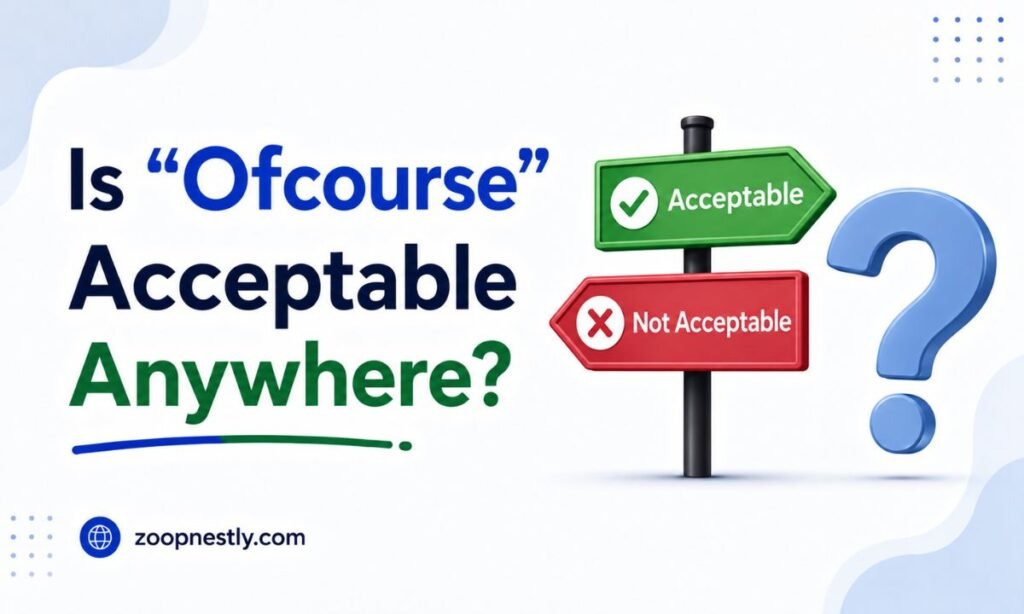
No major English dictionary, style guide, or grammar authority accepts “ofcourse” as a standard word. You may see it in casual text messages, social media comments, or informal chats, but it should never appear in:
- Emails
- Essays or academic papers
- Resumes or cover letters
- Business communication
- Published articles or books
If you’re writing for a professional or academic audience, treat “ofcourse” the same way you’d treat any other spelling error.
Frequently Asked Questions
Is “ofcourse” a real word in English?
No. “Ofcourse” is not listed in Merriam-Webster, Oxford, or Cambridge dictionaries. The correct form is always two words: “of course.”
Why do people write “ofcourse” as one word?
It usually happens because “of course” is pronounced as one smooth sound in speech, so writers assume it should be written the same way. It’s a spelling habit, not a grammar rule.
Can “of course” start a sentence?
Yes. “Of course, I’ll help you with that” is grammatically correct and commonly used in both speech and writing.
Is “of course” formal or informal?
It works in both formal and informal contexts. It’s appropriate in business emails, academic writing, and casual conversation, though overusing it in formal writing can weaken your tone.
What’s a polite alternative to “of course” in professional writing?
“Certainly” or “Naturally” often sound slightly more formal and work well in business emails or client communication.
Final Takeaway
The rule behind of course vs ofcourse comes down to one simple fact: English keeps prepositional phrases separate, and “of course” is no exception. “Ofcourse” might sound right in your head, but it has no place in correct written English. Once you understand the grammar behind it, and practice hearing the two words separately, this mistake becomes easy to avoid for good.

James Walker is a content writer and language researcher with over 5 years of experience in meanings, definitions, and language-related topics. He enjoys simplifying complex terms into clear, easy-to-understand explanations. Through ZoopNestly.com, he helps readers find accurate and reliable information.