Seel or Seal: Which Word Is Correct and When Should You Use It?
You typed a word into an email, paused, and stared at it. Does it look right? Should you write seel or seal? You’re not imagining things.
This mix-up trips up plenty of writers, especially when autocorrect isn’t around to save you. The good news is the answer is simple once you see the rule, and this guide clears up the confusion for good with real examples you can actually use.
Quick Answer
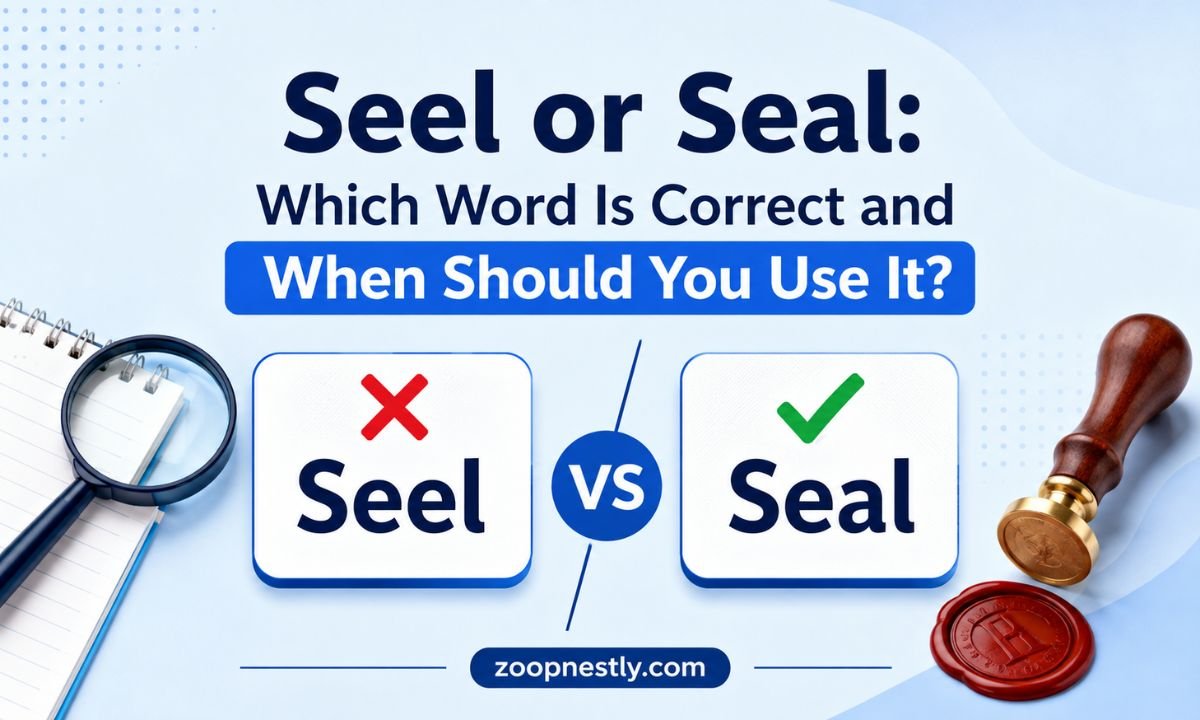
Seal is the correct spelling in modern English. It works as both a noun (a stamp, a device, or the marine animal) and a verb (to close something securely). Seel is an archaic or obsolete spelling that isn’t used in standard writing today, though it survives in a few specialized or historical contexts.
Why People Confuse “Seel” and “Seal”
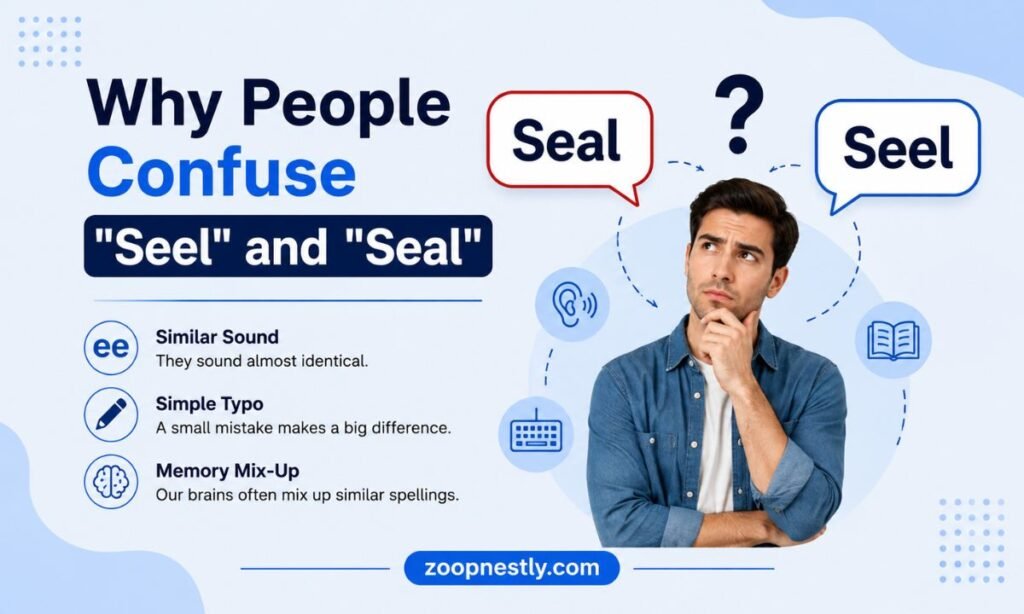
The mix-up usually comes down to three things: unfamiliarity with the word “seel,” phonetic guessing, and old texts or dictionaries that still list it. Since “seel” looks like a simple respelling of “seal,” it’s an easy typo to make, especially for non-native English speakers or fast typists. Add in autocorrect inconsistencies across devices, and the confusion multiplies.
What Does “Seal” Actually Mean?
“Seal” carries several meanings depending on context. Understanding each one helps you use the word with confidence.
As a verb, seal means to close something tightly so nothing can get in or out.
- Please seal the envelope before mailing it.
- The technician sealed the pipe to stop the leak.
As a noun, seal refers to a device, mark, or object used to close or authenticate something.
- The notary stamped her official seal on the document.
- The jar has a rubber seal to keep air out.
As an animal, a seal is a marine mammal known for its flippers and playful behavior in the water.
- We watched seals sunbathing on the rocks at the coast.
This range of meanings is exactly why “seal” shows up so often in everyday language, from kitchens to courtrooms.
DISCOVER MORE : Coming vs Comming: Which Word Is Right and Why?
Does “Seel” Exist at All?
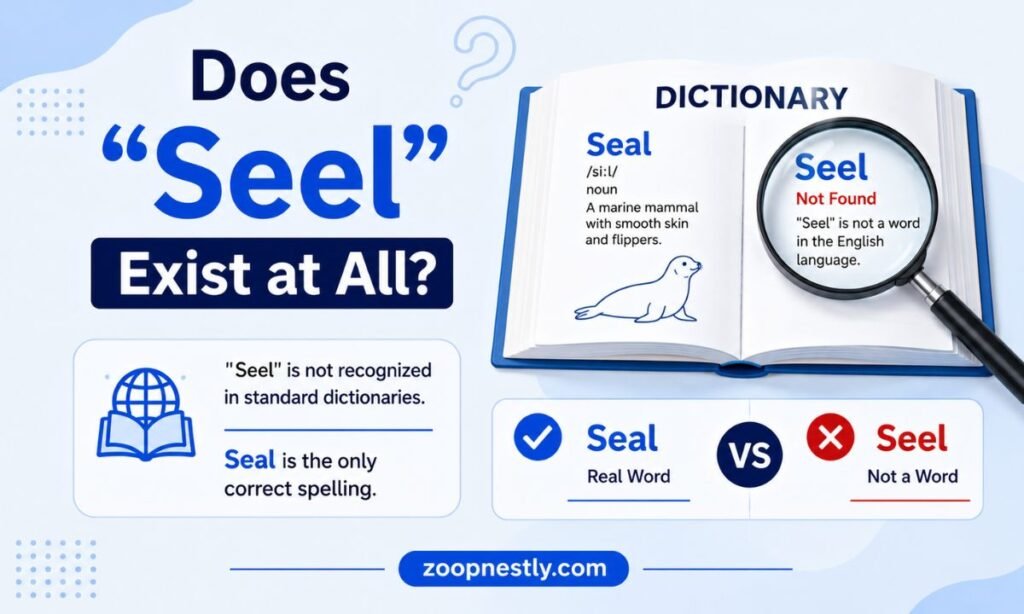
Yes, but barely. Seel is a genuine historical English word, mostly tied to falconry, where it described the practice of stitching a hawk’s eyelids closed temporarily to help train the bird. It also appears in older poetic or literary texts as an archaic verb meaning “to close the eyes” or, in some dialects, “to totter” or “become unsteady.”
You won’t find “seel” in everyday conversation, business writing, or modern journalism. If you come across it today, it’s almost always a misspelling of “seal,” not an intentional use of the old term.
Seel or Seal: Side-by-Side Comparison
| Feature | Seal | Seel |
| Current usage | Standard, widely used | Rare, archaic |
| Part of speech | Noun and verb | Historically a verb |
| Common meaning | To close tightly; a stamp or mark; a marine animal | To stitch a hawk’s eyes shut (falconry); to close eyes (archaic) |
| Found in modern dictionaries | Yes, as a primary entry | Sometimes, marked archaic or obsolete |
| Correct for everyday writing | Yes | No |
Common Mistakes to Avoid
Even confident writers slip up here. Watch for these patterns:
- Typing “seel” out of habit because it feels like a natural spelling variation. It isn’t.
- Confusing it with “steal,” which shares some letters but means something entirely different.
- Assuming British and American English spell it differently. They don’t. Both use “seal.”
- Using “seel” in professional documents, which can make writing look like a typo rather than a stylistic choice.
If you’re ever unsure, a quick rule works every time: unless you’re specifically discussing historical falconry terms, always write “seal.”
British English vs. American English
Unlike words such as “colour” and “color,” there’s no regional split here. Seal is spelled the same way in both British and American English. This consistency makes it easier to write with confidence no matter your audience or location.
Seel or Seal in Real-World Writing
Seeing the word in context makes the correct usage stick. Here’s how “seal” appears across different types of writing:
In business emails: Please seal the package securely before shipping.
In legal documents: This agreement is valid once signed and sealed by both parties.
In news writing: Officials sealed the building after reports of structural damage.
In casual conversation: Did you seal the bag so the chips stay fresh?
In nature or wildlife content: A group of seals gathered near the harbor this morning.
Across all these examples, “seel” never appears, because it simply isn’t part of modern usage.
Seal in Idioms and Common Phrases
English uses “seal” in several familiar expressions, and knowing them helps you sound more natural in writing and speech.
- Seal the deal – to finalize an agreement.
- Seal your lips – to stay silent about something.
- Sealed with a kiss – an old-fashioned romantic phrase, often abbreviated as SWAK.
- Under seal – a legal term meaning a document is officially closed or confidential.
These phrases show how flexible and embedded “seal” is in everyday English, something “seel” never achieved.
Synonyms for “Seal”
Depending on the meaning you’re going for, several words can substitute for “seal”:
- To close tightly: shut, secure, fasten, lock
- As a stamp or mark: stamp, insignia, emblem, imprint
- To finalize: confirm, settle, complete
Choosing the right synonym depends on whether you’re talking about a physical action, an official mark, or finishing an agreement.
How to Remember the Correct Spelling

If you want a simple memory trick, think of the phrase “a seal seals things.” The double use of “seal” reinforces both the noun and the verb form, and it’s a lot easier to recall than trying to remember when “seel” might apply, since for practical purposes, it never does in modern writing.
Another helpful tip: if spellcheck flags the word, trust it. Most style guides and dictionaries have long since dropped “seel” from standard usage lists, so autocorrect tools are generally accurate here.
Seel or Seal for an Envelope
When you’re closing an envelope, the correct word is always seal.
- Seal the envelope before dropping it in the mailbox.
- She licked the flap and sealed the letter shut.
There’s no situation involving envelopes, packages, or containers where “seel” would be appropriate.
Frequently Asked Questions
Is “seel” a real word?
Yes, but it’s archaic. It historically referred to stitching a hawk’s eyelids shut in falconry, or to closing one’s eyes in older literary English. It isn’t used in modern standard writing.
What is the correct spelling: seel or seal?
Seal is the correct and only standard spelling used in modern English, whether you mean the verb (to close) or the noun (a stamp or the animal).
Do British and American English spell “seal” differently?
No. Both British and American English use the same spelling, seal, with no regional variation.
Can “seel” be used in formal writing?
No. Using “seel” in formal, business, or academic writing will likely be read as a spelling error rather than an intentional archaic reference.
What does “seal the deal” mean?
It means to finalize an agreement or make a decision official, often used in business or negotiation contexts.
Final Take a way
When you’re choosing between seel or seal, the decision is easy: use “seal.” It’s the standard, correct, and widely recognized spelling in every context, from sealing an envelope to sealing a business deal. “Seel” belongs to history books and falconry manuals, not to your next email or report. Stick with “seal,” and you’ll never second-guess your spelling again.

James Walker is a content writer and language researcher with over 5 years of experience in meanings, definitions, and language-related topics. He enjoys simplifying complex terms into clear, easy-to-understand explanations. Through ZoopNestly.com, he helps readers find accurate and reliable information.