Wiener vs. Weiner: Common Spelling Mistake Explained
You typed it in a text, then paused. Wiener? Weiner? Autocorrect didn’t flag either one, and now you’re second-guessing a word you’ve used your whole life. That small hesitation is more common than you’d think, because these two spellings look nearly identical but serve very different purposes.
One is a standard English word for a hot dog. The other usually shows up as a surname or a casual misspelling. Getting Weiner or Wiener right matters more than it seems, especially in writing that other people will actually read.
Quick Answer
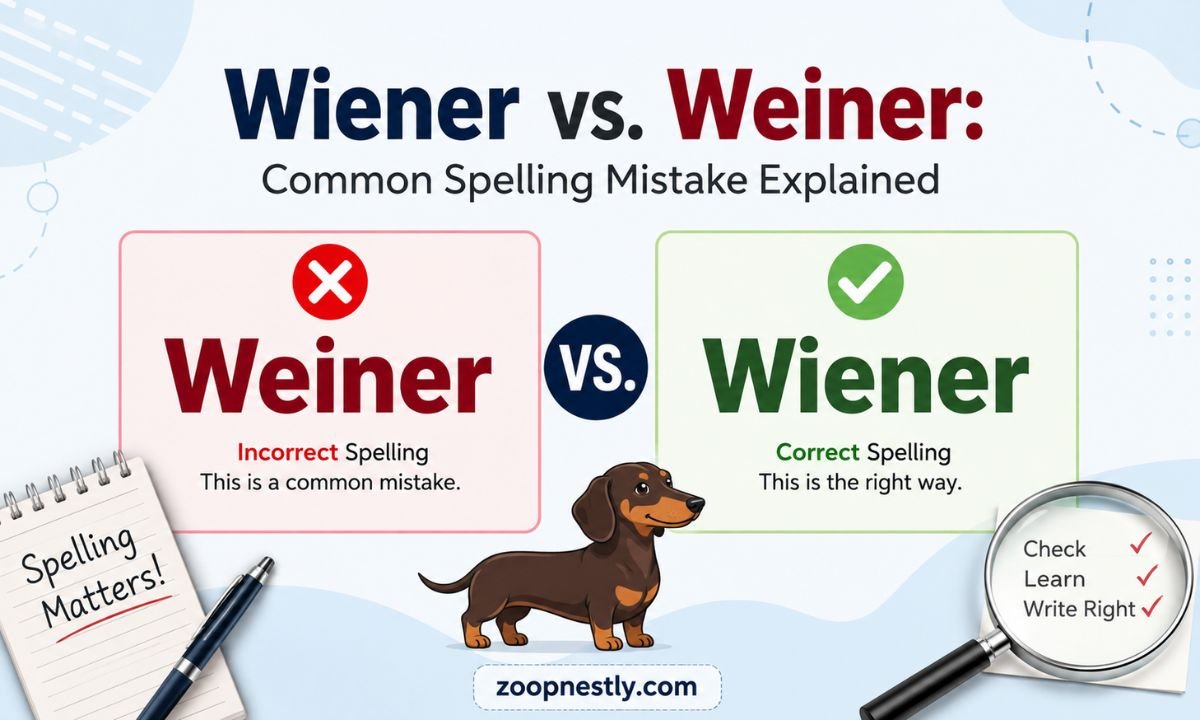
Wiener is the correct spelling for a hot dog or frankfurter in standard American English. Weiner is a common misspelling, though it does appear as a surname (like former congressman Anthony Weiner). If you’re writing about food, always use wiener.
Where Does the Word “Wiener” Come From?
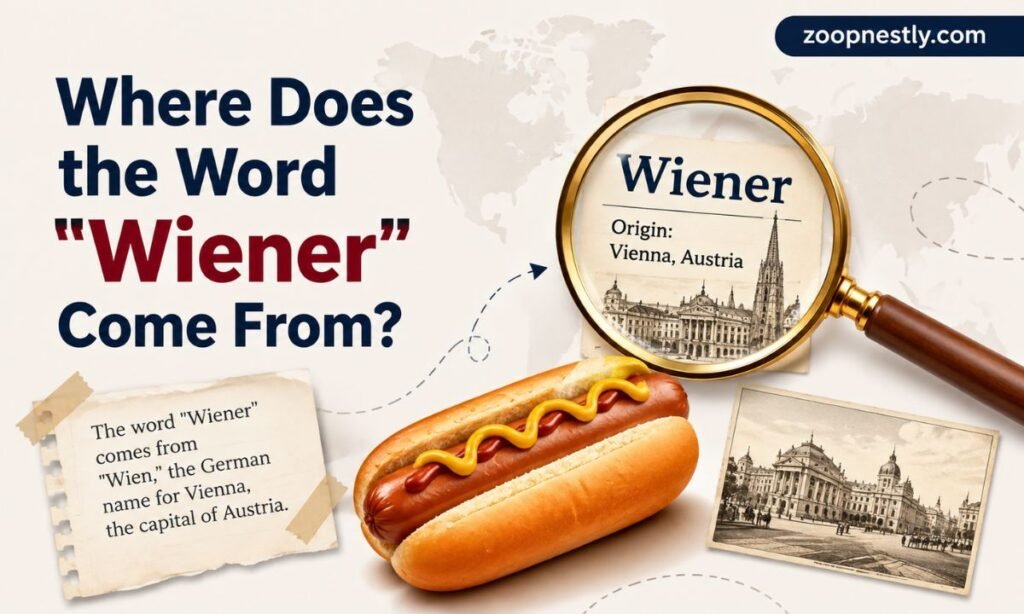
The word traces back to Wiener Würstchen, German for “Vienna sausage.” Vienna, Austria, is called “Wien” in German, and “Wiener” simply means “of Vienna” or “from Vienna.” When German immigrants brought this style of sausage to the United States in the 1800s, the name stuck, and English speakers shortened it to just “wiener.”
This origin explains why the spelling has a “wie” pattern instead of “wei.” It’s not a random English spelling quirk. It’s a direct borrow from German, which is also why so many people misspell it. English speakers naturally want to flip the letters to match more familiar patterns like “weird” or “their,” and that instinct is exactly where the confusion with weiner comes from.
Wiener vs. Weiner: The Real Difference
Here’s the simplest way to think about it:
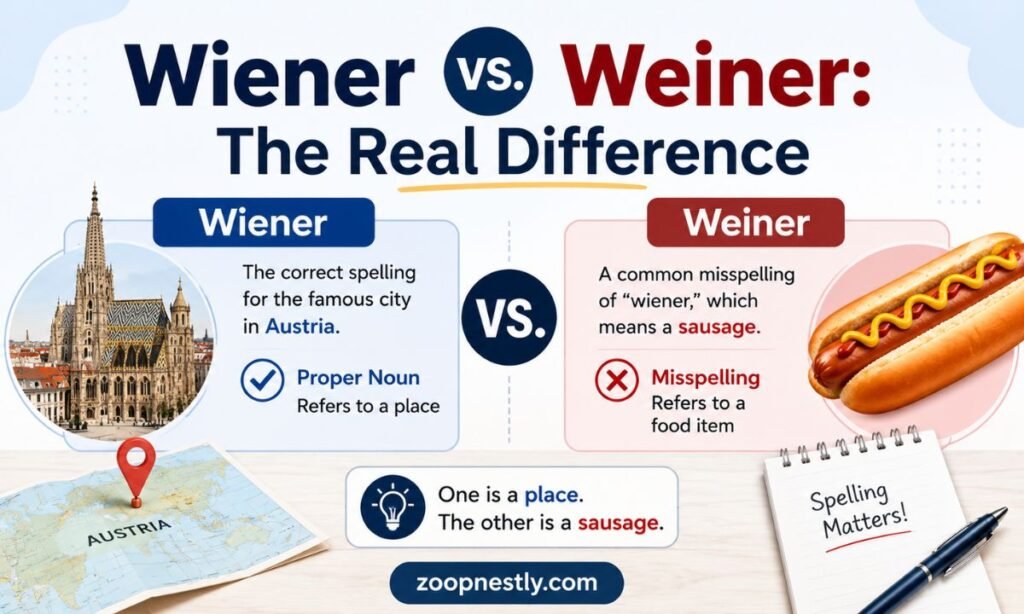
- Wiener = the correct English word for a hot dog, frankfurter, or dachshund-related nickname
- Weiner = almost always a misspelling, unless it’s someone’s actual last name
Unlike true British vs. American spelling differences (think “colour” vs. “color”), this isn’t a regional variation. Both American and British dictionaries recognize wiener as the standard spelling. Weiner isn’t a British alternative. It’s simply an error that spread because it looks more “normal” to English readers.
Comparison Table
| Term | Correct Usage | Common Context |
| Wiener | Standard spelling | Hot dogs, sausages, dachshunds |
| Weiner | Rarely correct | Surnames only (e.g., Weiner as a last name) |
| Wienerwurst | Formal/older term | German-style sausage |
| Vienna sausage | Alternate name | Canned or smaller sausages |
Which Spelling Should You Use?
If you’re writing about food, stick with wiener. This applies to:
- Restaurant menus
- Recipes and cooking blogs
- Product packaging
- Everyday conversation about hot dogs
The only time weiner is appropriate is when referring to a specific person’s surname. Since surnames are proper nouns, they don’t follow standard spelling rules. If someone’s last name happens to be spelled “Weiner,” that’s simply how their family name is written, and it has nothing to do with the sausage.
Common Mistakes People Make
A few patterns show up again and again:
- Autocorrect confusion. Some phone keyboards learn “weiner” as a valid word because users type it so often, which reinforces the mistake.
- Mixing up the surname with the food word. People see “Weiner” in a news headline about a person and assume that’s how the food is spelled too.
- Applying the “i before e” rule incorrectly. The classic rule (“i before e, except after c”) doesn’t actually apply here, since this word follows German spelling conventions, not the standard English rule.
- Assuming it’s a British/American split. As covered above, this isn’t a regional spelling difference. It’s just a common typo.
DISCOVER MORE : Seel or Seal: Which Word Is Correct and When Should You Use It?
Real-World Examples
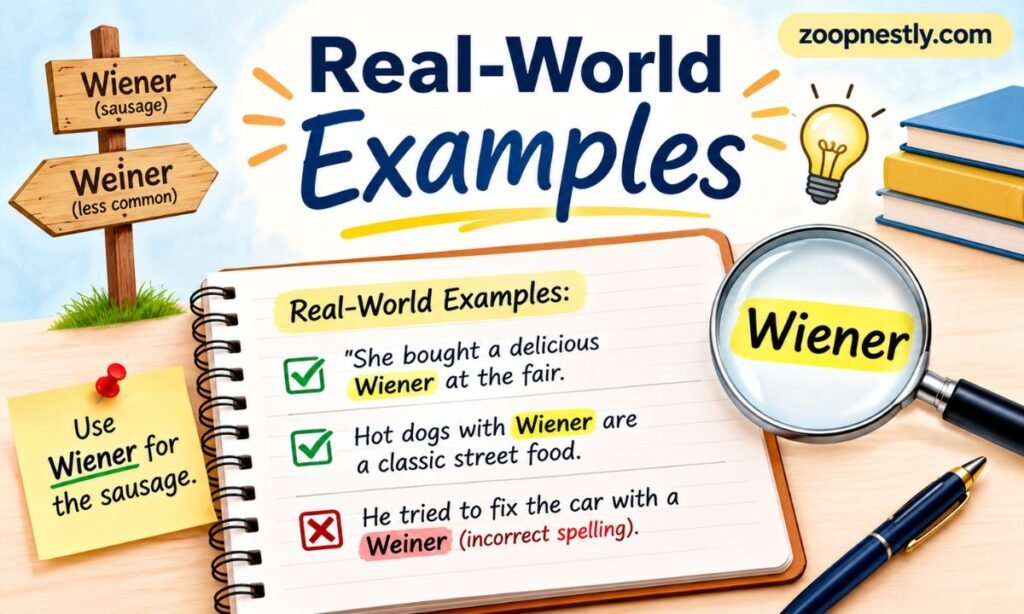
Seeing the word in context makes the distinction easier to remember.
Correct usage (wiener):
- “We grilled wieners for the whole family at the barbecue.”
- “This restaurant serves a Chicago-style wiener with all the classic toppings.”
- “Our dachshund is basically a walking wiener dog.”
Correct usage (Weiner as a surname):
- “Anthony Weiner previously represented New York’s 9th congressional district.”
- “The Weiner family has run that bakery for three generations.”
Incorrect usage:
- ~~”I’ll have a weiner with mustard, please.”~~ → Should be wiener
- ~~”She named her dog Little Weiner.”~~ → Should be Wiener (unless intentionally referencing the surname)
Wiener in Different Everyday Situations
In Food and Menus
Restaurants and grocery packaging almost universally use wiener, since it’s the dictionary-standard spelling recognized by food industry style guides.
In Casual Writing and Texting
This is where weiner slips in most often. Because it’s a fast, informal context, people don’t always double-check spelling, and the error spreads through repetition.
In News and Public Figures
When the word refers to a person’s surname, capitalization and spelling follow that individual’s actual name, not the food-related spelling rule.
In Pet Naming
“Wiener dog” is the widely accepted nickname for a dachshund, thanks to its long, low body shape resembling the sausage.
Frequently Asked Questions
Is “Weiner” ever correct?
Yes, but only as a proper noun. If it’s someone’s legal surname, that spelling is correct for that specific person. For the food item, wiener is the correct spelling.
What does “wiener” mean in dictionaries?
Standard dictionaries define wiener as a smoked sausage, typically made of beef, pork, or a combination, commonly served in a bun as a hot dog. It’s listed as a noun with roots in the German “Wiener Würstchen.”
Why do people say “weiner dog” instead of “wiener dog”?
This is simply a spelling slip based on how the word sounds. Phonetically, both spellings can sound similar when spoken quickly, which is why the incorrect version shows up so often in casual speech and writing, even though wiener dog is the standard spelling.
Is “wiener” used the same way in British English?
Yes. Unlike many American-British spelling pairs, wiener doesn’t have a separate British variant. British English speakers may use “sausage” or “frankfurter” more often in everyday speech, but when the word “wiener” is used, it’s spelled the same way.
How do you pronounce “wiener”?
It’s pronounced “WEE-ner,” rhyming with “cleaner.” The pronunciation matches the German origin, where “ie” typically makes a long “ee” sound.
A Quick Note on Slang Usage
Like many food-related words, “wiener” has also picked up informal slang meaning in casual American English, similar to other everyday euphemisms. This usage is context-dependent and generally appears in informal conversation rather than formal writing. If you’re writing anything professional, technical, or brand-related, stick to the literal food definition and avoid ambiguity by using precise, clear language.
Wiener Hotdog: Is That Phrase Correct?
You’ll sometimes see the phrase “wiener hotdog,” but this is technically redundant, since a wiener already refers to the sausage used in a hot dog. It’s not grammatically wrong, but for cleaner writing, choose one term. Say either “hot dog” or “wiener,” not both together.
Final Thoughts
When it comes down to it, the choice between Weiner or Wiener isn’t really a toss-up. Wiener is the standard, dictionary-correct spelling for the sausage, the hot dog, and the dachshund nickname. Weiner only makes sense when it’s someone’s actual last name. Next time you’re writing a menu, a text, or a caption for your dog’s Halloween costume, you’ll know exactly which spelling to trust.

James Walker is a content writer and language researcher with over 5 years of experience in meanings, definitions, and language-related topics. He enjoys simplifying complex terms into clear, easy-to-understand explanations. Through ZoopNestly.com, he helps readers find accurate and reliable information.