Loosing vs. Losing: Understanding the Difference and Correct Usage
You typed a text message, stared at it for three seconds, and suddenly weren’t sure if you were “loosing” your mind or “losing” it. One extra letter and the whole sentence feels wrong.
This mix-up trips up even confident writers because the words look almost identical. The good news: once you see the pattern behind loosing or losing, you’ll never second-guess it again.
Quick Answer
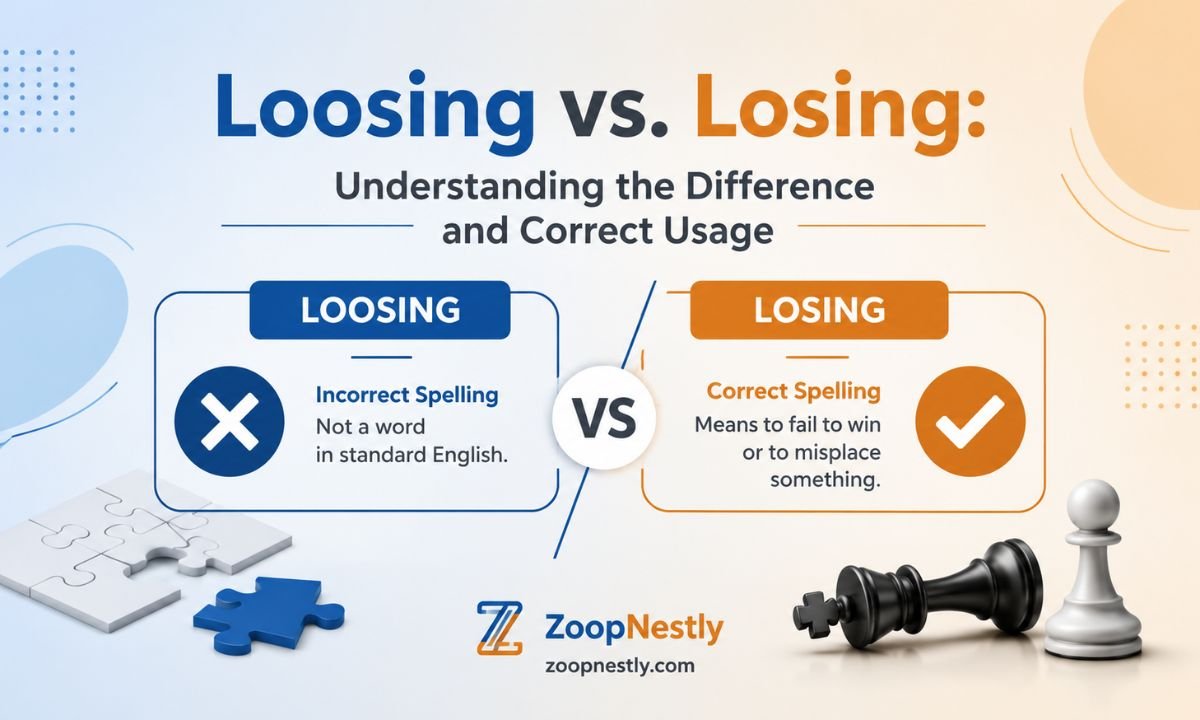
Losing (one O) is the correct word for almost everything you want to say, including losing a game, losing weight, or losing your keys. Loosing (two O’s) is a rare verb meaning to set something free or release it, and it’s almost never the word you’re looking for in everyday writing.
Loosing vs Losing: The Core Difference
The confusion comes down to spelling, not meaning overlap. These are two separate words with two separate jobs.
- Losing comes from the verb “lose,” meaning to misplace something, fail to win, or no longer have something.
- Loosing comes from the adjective “loose,” meaning to release, untie, or set free.
They sound similar when spoken quickly, but they are not interchangeable. If you’re writing about a competition, a diet, or forgetting where you put your phone, you want losing.
Why This Word Pair Confuses So Many Writers

Part of the problem is visual. Adding one letter changes the meaning entirely, but your eyes can easily skip over it while typing fast. Another factor is that “loose” and “lose” already look like they could be spelled the opposite way, since “loose” has two O’s and rhymes with “goose,” while “lose” has one O but rhymes with “shoes.”
Autocorrect doesn’t always catch it either, because both words are spelled correctly on their own. The mistake isn’t a typo in the traditional sense. It’s a word choice error that spell checkers often miss.
How to Remember Which One to Use
A simple trick: think of losing as “one O, one loss.” You lose one thing at a time, whether it’s a game, a bet, or your patience.
For loosing, picture the extra O as extra space, the kind you’d need to loosen something and let it go. If you can replace the word with “releasing” or “setting free” and the sentence still makes sense, loosing is correct. If not, you need losing.
Another quick test: say the sentence out loud and swap in “lose” as a base verb. “I am losing my keys” works because you can lose your keys. “I am loosing my keys” doesn’t make sense unless you’re literally untying them from something.
When to Use Losing
Use losing whenever you mean:
- Failing to win or succeed
- Misplacing or no longer having something
- Experiencing a decrease or reduction
- Feeling like you’re losing control, focus, or patience
Example sentences:
- The team kept losing every match this season.
- She’s losing patience with the slow internet.
- He’s been losing weight steadily since January.
- I hate losing my train of thought mid-sentence.
When to Use Loosing
Loosing is a real word, just a rare one outside of formal, historical, or archery-related writing. It means to release, free, or let go of something physically restrained.
Example sentences:
- The archer focused before loosing the arrow.
- The farmer began loosing the horses from their reins.
- The old text described loosing the prisoners at dawn.
You’ll mostly see loosing in older literature, poetry, or technical descriptions involving physical restraint. In modern everyday writing, it’s uncommon enough that if you’re unsure, losing is almost always the safer and more accurate choice.
DISCOVER MORE : Drier or Dryer: Which Word Should You Use and Why?
Loosing or Losing Weight
This is one of the most searched versions of this mix-up, and the answer is simple: it’s always losing weight, never “loosing weight.” You are losing pounds, not releasing them from a leash. Even though “loosening” your grip on unhealthy habits might feel like a fitting metaphor, the correct spelling for weight loss content, fitness articles, and everyday conversation is losing.
Loosing or Losing Myself

Same rule applies here. If you mean feeling disconnected from who you are, overwhelmed, or emotionally lost, the correct phrase is losing myself. “Loosing myself” would technically mean freeing yourself from something, which isn’t the intended meaning in almost any modern context. Stick with losing myself when writing about identity, stress, or emotional overwhelm.
Common Mistakes with Loosing or Losing
Here are the errors that show up most often in writing:
- Using “loosing” as a general substitute for “losing.” This is the single biggest mistake. Most people who type “loosing” actually mean losing.
- Confusing “loose” (adjective) with “lose” (verb). “My tooth is lose” is wrong; it should be “My tooth is loose.” Meanwhile, “I don’t want to loose the game” should be “I don’t want to lose the game.”
- Relying on autocorrect. Since both words are spelled correctly, spell check won’t flag the wrong one for you.
- Doubling the O by habit. Some writers instinctively add an extra O because “choose,” “goose,” and “loose” all follow that pattern, but “lose” breaks the rule.
Loosing or Losing: Comparison Table
| Word | Part of Speech | Meaning | Example |
| Losing | Verb (present participle of “lose”) | Failing to win, misplacing, or no longer having something | She is losing the argument. |
| Loosing | Verb (present participle of “loose”) | Releasing, untying, or setting free | He is loosing the rope from the post. |
| Loose | Adjective | Not tight, not fixed in place | The screw is loose. |
| Lose | Base verb | To no longer have, to fail to win | Don’t lose your ticket. |
Is “Loosing” Ever Correct in Modern Writing?
Yes, but rarely. Loosing shows up in specific contexts like archery (“loosing an arrow”), formal or biblical language, and descriptions of physically releasing something that was tied, bound, or restrained. Outside of those niche cases, if you’re writing an email, essay, article, or text message, losing is almost certainly the word you need.
British English vs American English: Does Spelling Change?
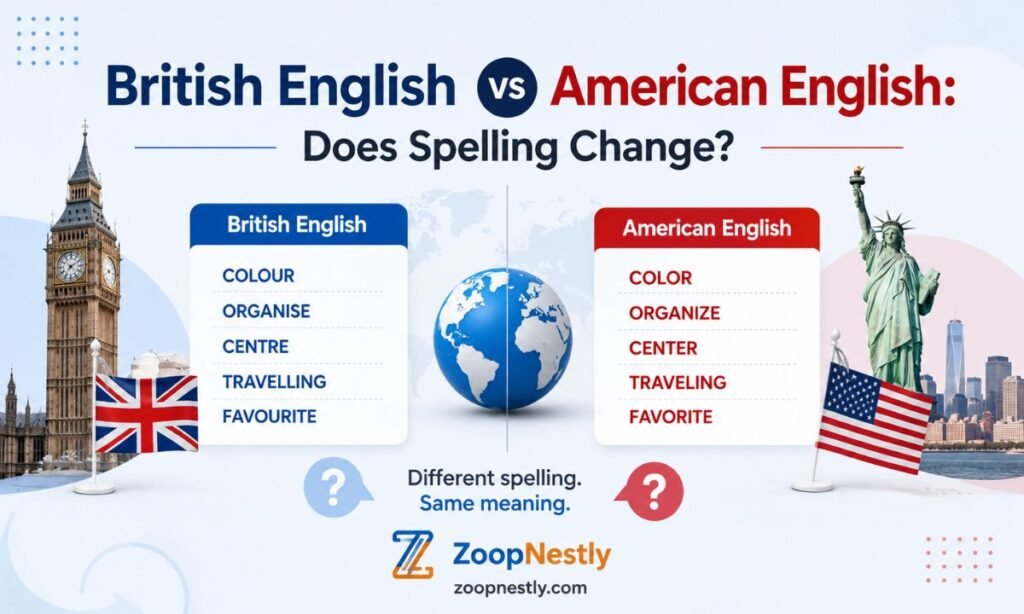
No. Unlike words such as “colour” versus “color,” the spelling of losing and loosing doesn’t change between British and American English. Both dialects follow the same rule: losing for loss, loosing for release. This isn’t a regional spelling variation, it’s simply a matter of choosing the right word for the right meaning.
A Simple Grammar Rule to Lock This In
Remember the root words:
- Lose → Losing (drop the E, add I-N-G)
- Loose → Loosing (keep both O’s, add I-N-G)
If you can picture the base word before adding “-ing,” the correct spelling usually becomes obvious. When in doubt, ask yourself whether you’re talking about failure or loss (losing) versus release or freedom (loosing). Ninety-nine percent of the time, you want losing.
Frequently Asked Questions
Is it “loosing weight” or “losing weight”?
It’s always losing weight. “Loosing” would imply releasing weight like an object, which isn’t how the phrase works in English. Fitness, health, and diet content should always use losing weight.
What does “loosing” mean in English?
Loosing means to release, untie, or set free. It’s the present participle of the adjective “loose” used as a verb, and it’s most common in formal, historical, or literary writing, such as loosing an arrow or loosing an animal from its leash.
Why do people confuse loosing and losing?
The two words look nearly identical and sound similar when spoken quickly. Since both are spelled correctly on their own, spell checkers and autocorrect tools often fail to catch the mistake, making it an easy error to miss.
Is “loosing” a typo for “losing”?
Not technically, since both are real words. But in the vast majority of cases where someone writes “loosing,” they actually mean losing. It’s a word choice mistake rather than a spelling typo.
How can I quickly check which spelling to use?
Ask if your sentence is about failure, loss, or no longer having something. If yes, use losing. If your sentence is about releasing or untying something, use loosing. When unsure, losing is the correct choice most of the time.
Conclusion
The difference between loosing or losing comes down to one simple test: are you talking about loss, or are you talking about release? For nearly every situation, from losing a game to losing weight to losing your train of thought, losing is the word you want. Keep loosing reserved for its rare, specific meaning of setting something free, and you’ll spell this word pair correctly every time.

James Walker is a content writer and language researcher with over 5 years of experience in meanings, definitions, and language-related topics. He enjoys simplifying complex terms into clear, easy-to-understand explanations. Through ZoopNestly.com, he helps readers find accurate and reliable information.