Gage or Gauge: What’s the Difference and Which One Should You Use?
You’re writing a report about tire pressure or metal thickness, and suddenly you stop typing. Is it gage or gauge? Both look almost right, and spellcheck won’t always catch it. Get it wrong in a technical document, a legal form, or a manufacturing spec, and you risk looking careless or confusing your reader. The good news is the rule is simpler than it seems, and once you learn it, you’ll never second guess the spelling again.
Quick Answer
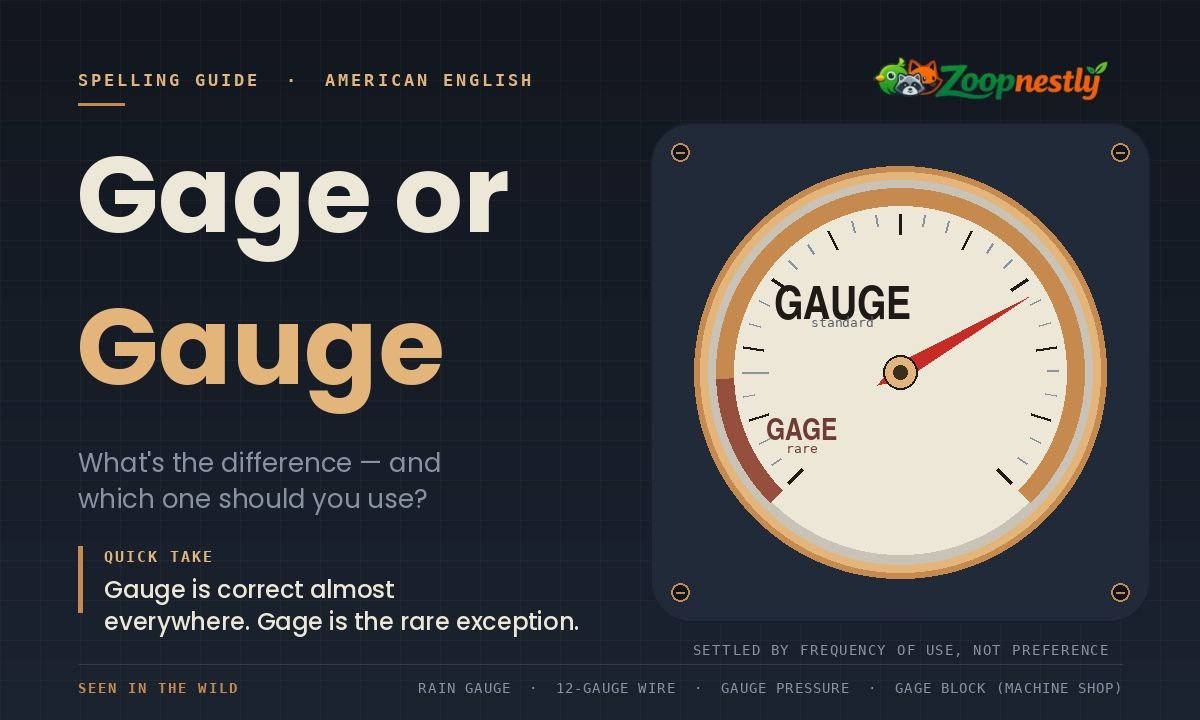
Gauge is the standard, correct spelling for almost every situation in American English, whether you’re talking about a fuel gauge, wire gauge, or gauging someone’s reaction. Gage is an older, less common variant that still shows up in some manufacturing, legal, and historical writing, and as a personal name. When you’re not sure which to use, gauge is the safe choice.
What Does Gauge Mean?
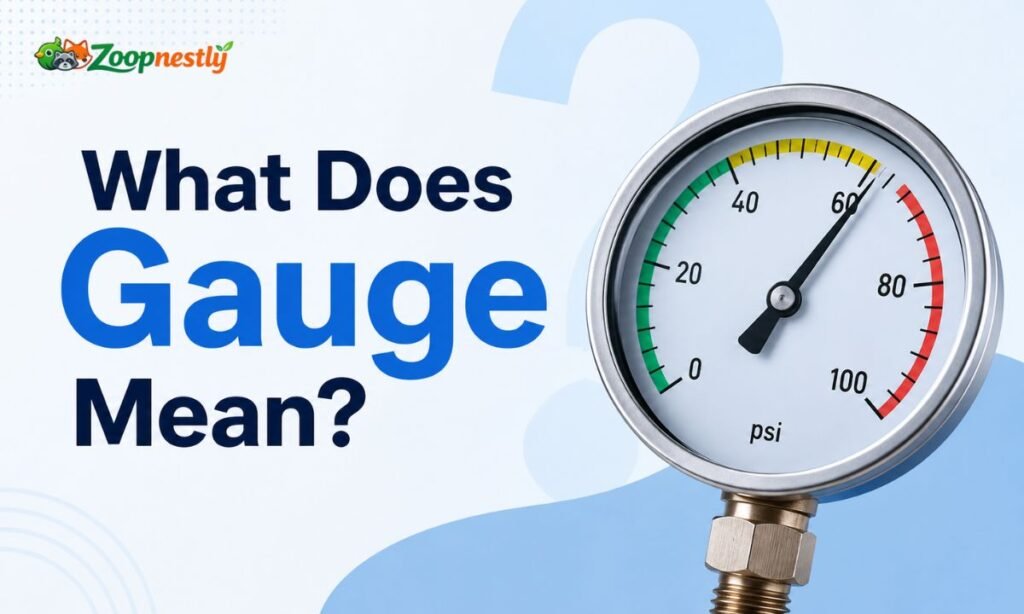
Gauge works as both a noun and a verb. As a noun, it refers to a standard measurement, an instrument that measures something, or the thickness or diameter of an object (think wire gauge or shotgun gauge). As a verb, it means to measure, estimate, or judge something.
Examples:
- The mechanic checked the pressure gauge before the road trip.
- It’s hard to gauge how the client will react to the proposal.
- This sheet metal has a 16-gauge thickness.
Gauge is the version you’ll see in newspapers, textbooks, product manuals, and everyday writing across the United States, United Kingdom, Canada, and Australia.
What Does Gage Mean?
Gage is a genuine English word, not a typo or a “wrong” spelling invented by mistake. Historically, gage referred to a pledge or something given as security, like a token thrown down to challenge someone to a duel (“throwing down the gage”). It also appears as a verb meaning to bind by pledge or guarantee.
In modern usage, gage survives in three main places:
- As an alternate spelling of gauge in certain manufacturing and engineering documents
- In legal and historical texts referring to pledges or security
- As a first or last name (Gage is a fairly common given name in the US)
Outside of these specific cases, gage is not the word most readers expect to see.
DISCOVER MORE : Totalling vs Totaling: Which Word Should You Use?
Why Do Both Spellings Still Exist?
Both words trace back to French. Gauge and gage were once used somewhat interchangeably in older English texts before spelling conventions settled. Over time, gauge became the dominant form for measurement-related meanings, while gage narrowed to its pledge-related meaning and to specific technical fields that never fully switched over. That’s why you’ll still spot gage in older engineering standards or legal documents, even though gauge is the modern default.
Gage vs Gauge: Key Differences at a Glance
| Feature | Gauge | Gage |
| Common usage | Standard, widely used | Rare, specialized |
| Meaning | Measurement, instrument, to estimate | Pledge, security, alternate spelling |
| Fields | General writing, science, business, media | Manufacturing, legal, historical texts |
| Part of speech | Noun and verb | Noun and verb |
| Recommended for most writing | Yes | No |
When Should You Use Gauge?

In General Communication
If you’re writing an email, article, blog post, or anything meant for a general audience, use gauge. It’s the spelling readers recognize instantly, and it won’t raise questions about whether you made a typo.
In Scientific and Technical Writing
Gauge is standard in physics, engineering, and technical documentation when referring to measurement instruments, such as a pressure gauge, rain gauge, or strain gauge.
In Business and Everyday Writing
Phrases like “gauge customer interest” or “gauge the market” are common in business writing. Using gage here would look like an error to most readers.
When Might You See Gage?
Manufacturing and Engineering Contexts
Some manufacturing standards, especially older ones related to metalworking and machining, still use gage as a technical term for measuring instruments (a “gage block,” for example, is a precision tool used in machine shops). This usage persists mostly through tradition and industry-specific style guides rather than general spelling rules.
Legal and Historical Contexts
Historical and legal texts sometimes use gage in its original sense of a pledge or a security deposit. You won’t encounter this meaning often outside of older documents or specialized legal writing.
As a Name
Gage is a popular first name in the US, and some surnames use this spelling too. This has nothing to do with the measurement meaning, but it’s worth noting since it explains why “Gage” appears so often in everyday contexts.
Gage or Gauge for Metal Thickness
When describing the thickness of sheet metal, wire, or needles, both spellings appear in circulation, but gauge is the more widely accepted and understood spelling. A “16-gauge steel sheet” or a “12-gauge wire” is standard phrasing in retail, hardware, and most technical writing. Some machine shop and tooling documents use “gage” instead, particularly when referring to gage blocks or gaging equipment, but this is an industry-specific convention rather than a general rule.
Gage or Gauge Pressure
In physics and engineering, gauge pressure is the standard term. It refers to pressure measured relative to atmospheric pressure, as opposed to absolute pressure. You’ll see this spelled “gauge pressure” in textbooks, lab reports, and technical papers. “Gage pressure” does appear occasionally in older or industry-specific engineering documents, but gauge pressure is what most readers, students, and professionals expect to see.
Common Mistakes People Make
Mistake 1: Assuming gage is always wrong. Gage is a real word with a legitimate history. It’s just far less common in modern general writing.
Mistake 2: Using gage in general content. If you’re writing for a broad audience, gage can look like a spelling error even though it technically isn’t one.
Mistake 3: Ignoring industry standards. Some manufacturing and legal fields have their own conventions. Always check the style guide or standard your industry follows before assuming gauge is automatically correct.
Mistake 4: Mixing both spellings in one document. Pick one spelling and stay consistent throughout your writing. Switching between gage and gauge in the same document looks inconsistent and unpolished.
Example Sentences
- The nurse checked the gauge on the blood pressure monitor.
- His name is Gage, and he works as a machinist.
- The old contract used gage to describe the pledged property.
- The company wanted to gauge employee satisfaction before making changes.
- This wire comes in 10-gauge and 12-gauge options.
How to Choose the Correct Spelling
Use gauge if:
- You’re writing for a general or professional audience
- You’re referring to a measuring instrument or measurement
- You’re using it as a verb meaning to estimate or judge
- You’re unsure which spelling applies
Use gage if:
- You’re following a specific industry or company style guide that specifies it
- You’re writing about historical or legal pledges
- You’re referring to a person’s name
Frequently Asked Questions
Is gage a misspelling of gauge?
No. Gage is a real word with its own history and meaning, mainly related to pledges and security. It’s not simply an incorrect spelling of gauge, though it’s far less common in everyday usage.
Which spelling is correct in American English?
Gauge is the standard spelling in American English for measurement and estimation. Gage is considered a variant used mainly in specific technical, legal, or historical contexts.
Is gage ever correct for shotgun gauge?
No. Shotgun bore size is always written as “gauge,” such as 12-gauge or 20-gauge. Gage is not used in this context.
Why is Gage a popular name if gauge is the correct spelling?
Names don’t follow the same spelling rules as common nouns. Gage became popular as a given name independent of the measurement word, so its spelling stayed fixed as a name.
Can gage and gauge be used interchangeably?
In most writing, no. Gauge is understood everywhere, while gage is limited to specific fields like manufacturing, legal writing, or as a name. Using gauge is the safer choice unless your field specifically calls for gage.
Conclusion
When you’re deciding between gage or gauge, gauge is almost always the right call for measurement, instruments, and everyday writing. Gage sticks around in specific manufacturing terms, legal language, and as a popular name, but it’s not a spelling most readers expect outside those contexts. When in doubt, gauge is the spelling that will keep your writing clear, professional, and easy to understand.

James Walker is a content writer and language researcher with over 5 years of experience in meanings, definitions, and language-related topics. He enjoys simplifying complex terms into clear, easy-to-understand explanations. Through ZoopNestly.com, he helps readers find accurate and reliable information.