Transferred vs Transfered: Which Spelling Is Actually Correct?
You typed a quick email, hit send, then froze. Did you write “transfered” or “transferred”? It happens to almost everyone at some point, especially when typing fast or texting on autopilot. The confusion around transferred vs transfered is more common than you’d think, and it usually comes down to one small spelling rule most people never learned properly. Once you understand it, you’ll never second-guess the word again.
Quick Answer
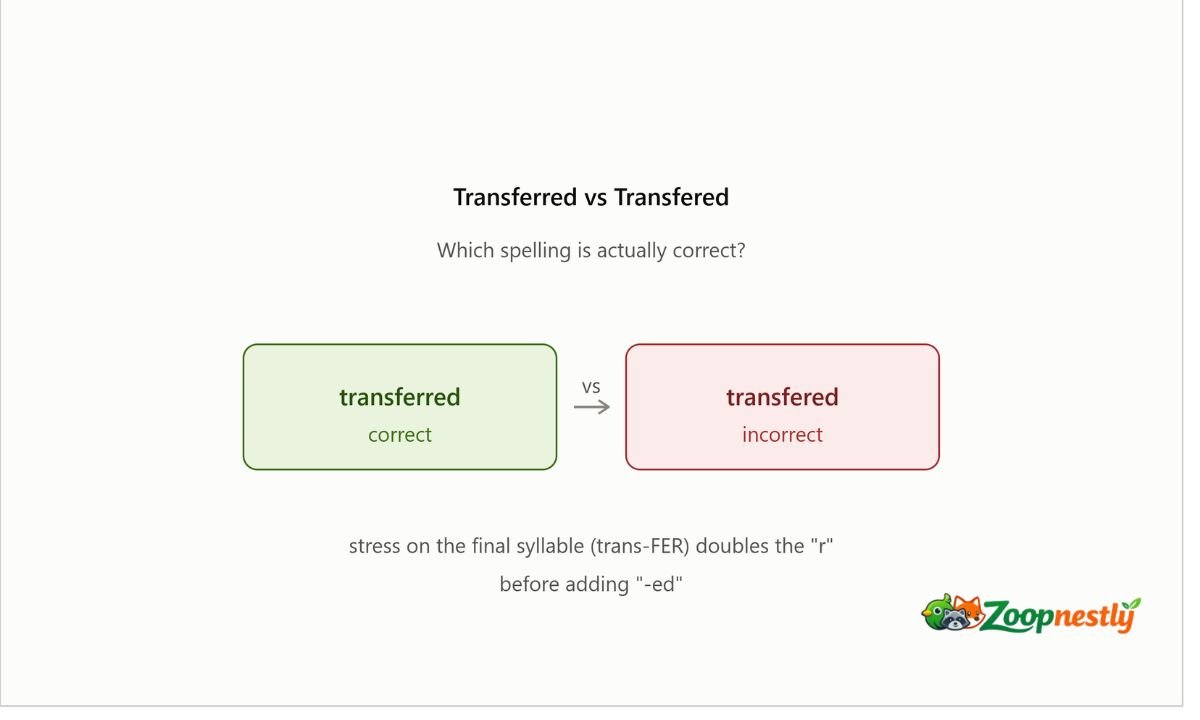
Transferred is the only correct spelling. Transfered is a common misspelling and does not exist in standard English. The correct form doubles the final consonant “r” before adding “-ed,” following a standard English spelling rule for verbs ending in a stressed syllable with a single vowel before a single consonant.
What Is the Difference Between Transferred and Transfered?
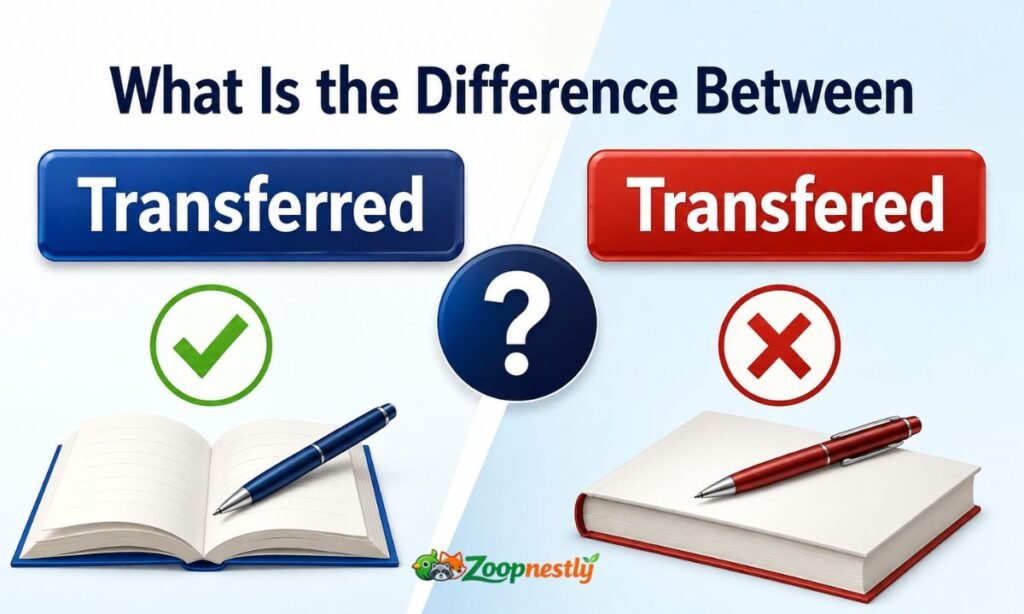
There’s really no debate here. “Transferred” is the grammatically correct past tense of the verb “transfer.” “Transfered” is simply a spelling error, not an alternate or informal version.
Why “Transferred” Is Correct
English has a rule that decides whether you double the final consonant of a verb before adding “-ed” or “-ing.” When a word ends in a single consonant, preceded by a single vowel, and the stress falls on the last syllable, you double that final consonant.
“Transfer” fits this pattern exactly. It ends in “-fer,” has one vowel before the final consonant, and the stress lands on the second syllable (trans-FER). That’s why it becomes transferred, not “transfered.”
Correct Examples
- She transferred the funds to her savings account.
- He was transferred to the Chicago office last month.
- The data was transferred successfully.
Incorrect Examples
- She transfered the funds to her savings account. ❌
- He was transfered to the Chicago office. ❌
- The data transfered without issues. ❌
The Grammar Rule Behind Doubling the Consonant
This isn’t a random exception. It’s part of a broader spelling pattern that applies to many English verbs.
The Consonant Doubling Rule
If a one- or two-syllable verb ends in a single vowel followed by a single consonant, and the stress falls on the final syllable, double that consonant before adding a suffix like “-ed,” “-ing,” or “-er.”
Examples that follow the same rule:
| Base Word | Stress | Correct Past Tense |
| refer | re-FER | referred |
| occur | oc-CUR | occurred |
| prefer | pre-FER | preferred |
| transfer | trans-FER | transferred |
| admit | ad-MIT | admitted |
Why Stress Matters
Stress is the deciding factor. Compare “transfer” (trans-FER, stress on the second syllable) to a word like “offer” (OFF-er, stress on the first syllable). Since “offer” is stressed on the first syllable, it does not double the consonant: offered, not “offerred.” This is exactly why people get tripped up. The rule depends on pronunciation, not just spelling.
British vs American English
Good news here: transferred is spelled the same way in both British and American English. Unlike words such as “traveled/travelled” or “canceled/cancelled,” where American English often uses a single consonant, “transferred” keeps the double “r” in every major English variety. There’s no regional excuse for “transfered.”
What Does “Transferred” Actually Mean?
Definition
“Transferred” is the past tense and past participle of “transfer,” meaning to move something or someone from one place, person, account, or position to another.
DISCOVER MORE : Authorization or Authorisation: Which Spelling Is Correct?
Common Contexts Where It’s Used
- Banking: money transferred between accounts
- Employment: an employee transferred to a new department or location
- Education: a student transferred to another school or university
- Technology: files or data transferred between devices
- Sports: a player transferred to a new team
Synonyms of “Transferred”
Depending on context, you can also say: moved, relocated, shifted, reassigned, forwarded, or handed over. These aren’t perfect substitutes in every sentence, but they help when you want to avoid repeating the same word.
Other Words People Misspell the Same Way
If “transfered” trips you up, you’re likely making the same mistake with related words.
Frequently Confused Words
| Correct | Common Misspelling |
| preferred | prefered |
| referred | refered |
| occurred | occured |
| deferred | defered |
| conferred | confered |
Why People Misspell “Transferred”
Most people misspell it because English spelling doesn’t always match pronunciation intuitively, and the consonant doubling rule isn’t something schools consistently teach past elementary grades. Autocorrect also isn’t always reliable, since “transfered” can sometimes slip through in casual typing apps.
A Simple Memory Trick
Think of it this way: “Transfer” has stress on ‘fer,’ so double the ‘r’ before adding ‘ed.’ If the stress falls on the final syllable, double it. If it doesn’t, don’t. Saying the word out loud and noticing where your voice lands the emphasis is often the fastest way to check yourself.
How a Small Spelling Mistake Can Affect Professional Writing
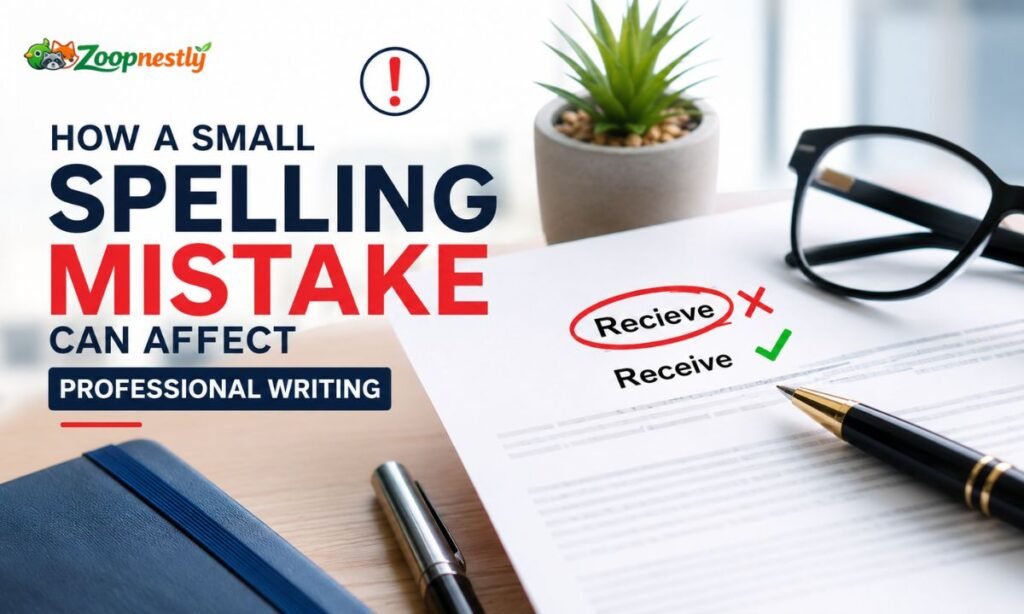
Imagine sending a business email that says, “Your account has been transfered.” It’s a small typo, but in formal writing, especially resumes, legal documents, or client communication, spelling errors can quietly undermine credibility. Readers may not consciously notice the mistake, but repeated errors like this can create an impression of carelessness. This matters most in HR letters, banking notices, and academic transcripts, where “transferred” appears frequently and needs to be exact.
How to Avoid Spelling Mistakes Like “Transfered”
You don’t need to memorize hundreds of exceptions. A few habits go a long way.
- Learn the consonant doubling rule. Focus on stress: if the last syllable is stressed and ends in a single vowel plus consonant, double it.
- Use a grammar checker. Tools built into word processors or browser extensions catch this instantly.
- Read your writing aloud. Hearing the stress pattern helps you apply the rule naturally.
- Practice with a short list. Referred, occurred, preferred, and transferred all follow the same pattern, so learning one helps you remember the rest.
- Focus on patterns, not memorization. Once you understand why the rule exists, you stop needing to guess.
Why Correct Spelling Still Matters Online and Professionally
Search engines and readers both reward clear, accurate writing. Content with spelling errors can feel less trustworthy, and readers often bounce off a page the moment they spot a mistake in the first few lines. For students, professionals, and anyone writing emails, reports, or resumes, using transferred correctly signals attention to detail. It’s a small thing, but small things add up when someone is deciding whether to trust what you’ve written.
Transferred Pronunciation
“Transferred” is pronounced trans-FURD, with the stress on the second syllable. This is the same stress pattern as the base verb “transfer” (trans-FER), which is exactly why the consonant doubles in the first place. If you say the word slowly, you’ll notice your emphasis naturally falls on “ferred,” not “trans.”
Mini Quiz: Test Yourself

- Spot the correct spelling: transfered / transferred
- Fill in the blank: The manager ___ him to another branch. (transferred/transfered)
- True or False: “Transfered” is acceptable in British English.
- Grammar challenge: Why does “transfer” double its final consonant?
- Find the mistake: “She transfered the call to another department.”
- Choose the correct sentence: “Funds were transferred” or “Funds were transfered.”
- One word answer: What part of speech is “transferred”?
- Fast typing test: Type “transferred” three times without looking.
- Fill the missing letter: transfe__ed
- Real-life check: Which spelling would you expect on a bank statement?
- Rule master: Name one other word that follows the same doubling rule.
- Mini brain test: Does stress fall on “trans” or “fer” in “transfer”?
(Answer key: 1. transferred, 2. transferred, 3. False, 4. Stress falls on the final syllable with a single vowel-consonant ending, 5. “transfered” should be “transferred,” 6. “Funds were transferred,” 7. Verb (past tense), 8. Practice check, 9. “rr,” 10. transferred, 11. referred/preferred/occurred, 12. “fer.”)
Transferred vs Transfered: Examples in Real Sentences
- The property was transferred to the new owner last week.
- Employees can request to be transferred between offices.
- The document was transferred to a secure server.
- All calls are automatically transferred to voicemail after hours.
Frequently Asked Questions
Is “transfered” ever correct?
No. “Transfered” is always incorrect. The only correct spelling is “transferred,” in both American and British English.
Why does “transfer” double its consonant but “offer” doesn’t?
It comes down to stress. “Transfer” is stressed on the second syllable (trans-FER), so the final consonant doubles. “Offer” is stressed on the first syllable (OFF-er), so it doesn’t double.
Is “transferring” spelled with two R’s too?
Yes. The same doubling rule applies to “-ing” forms, so it’s “transferring,” not “transfering.”
What is the noun form of “transferred”?
The noun form is “transfer,” used without the “-red” ending, as in “a bank transfer” or “a player transfer.”
How can I remember this rule for other words?
Focus on stress and syllable structure. If a short verb ends in one vowel plus one consonant and the stress lands on that final syllable, double the consonant before adding a suffix.
Conclusion
The spelling debate around transferred vs transfered really has one answer: transferred is correct, and transfered isn’t a word at all. Once you understand the consonant doubling rule and where the stress falls in “transfer,” the spelling becomes automatic. Keep this pattern in mind for similar words like referred, preferred, and occurred, and you’ll avoid one of the most common typing slips in everyday and professional writing.

James Walker is a content writer and language researcher with over 5 years of experience in meanings, definitions, and language-related topics. He enjoys simplifying complex terms into clear, easy-to-understand explanations. Through ZoopNestly.com, he helps readers find accurate and reliable information.