Really vs Realy: Which Spelling Is Actually Correct?
You’re typing a text, you pause, and your fingers freeze over the keyboard. Is it “really” or “realy”? You’ve seen both floating around online, and now you’re second guessing a word you’ve used since childhood. This mix up trips up more writers than you’d expect, and it’s an easy one to fix once you see the pattern clearly. The really vs realy confusion usually comes down to one missing letter, and getting it wrong can make even a strong sentence look careless.
Quick Answer
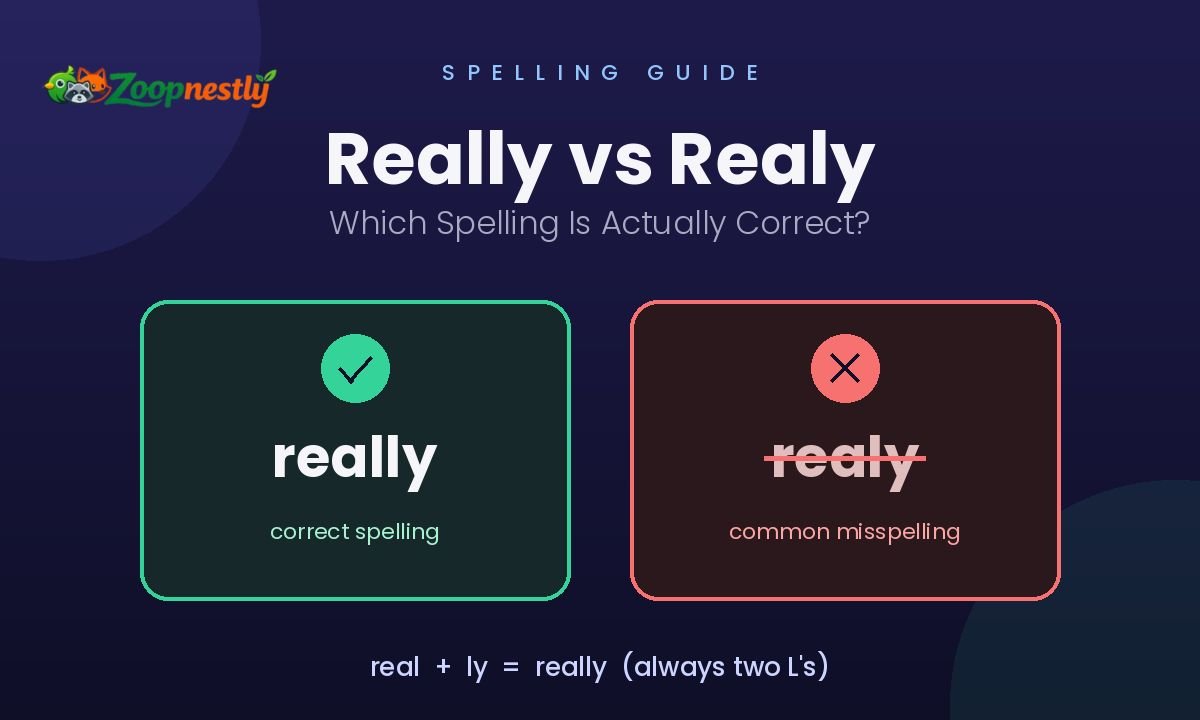
Really is the only correct spelling in standard English. Realy is a misspelling and does not appear in any English dictionary. The word “really” is formed by adding “-ly” to the adjective “real,” which doubles the L to “really.” Whenever you’re unsure, just remember: two Ls, always.
What Does “Really” Mean?
“Really” is an adverb that intensifies or confirms what’s being said. It can mean “truly,” “genuinely,” or “in actual fact,” depending on the sentence.
You’ll usually see it doing one of two jobs:
- Adding emphasis: “That movie was really good.”
- Confirming truth: “Is that really what happened?”
It’s one of the most common adverbs in everyday English, showing up in casual conversation, formal writing, and everything in between.
Is “Realy” a Word?
No. Realy is not a word in English. It has no dictionary entry, no accepted usage, and no grammatical function. If you see it in writing, it’s almost always a typo or a spelling error caused by dropping one of the two Ls.
Some writers assume “realy” might be a shortened or informal version of “really,” similar to how “til” works for “until.” That’s not the case here. Unlike genuine informal contractions, “realy” isn’t recognized in any style guide, dictionary, or standard usage pattern. It’s simply incorrect.
Why Does “Really” Have Two Ls?
This is where the confusion usually starts. English spelling rules explain it clearly once you break it down.
“Really” comes from the adjective real plus the suffix -ly, which is commonly used to turn adjectives into adverbs (think “quick” to “quickly” or “slow” to “slowly”). Since “real” already ends in an L, adding “-ly” creates a double L: real + ly = really.
This is a normal pattern in English. Other words follow it too:
| Base Word | + ly | Result |
| real | ly | really |
| final | ly | finally |
| usual | ly | usually |
| natural | ly | naturally |
Notice the pattern? Any adjective ending in L keeps that L and adds another one when “-ly” is attached. “Really” isn’t an exception. It’s following a rule that shows up across dozens of common English words.
Really vs Realy: The Core Difference
The difference isn’t about meaning or usage. It’s purely about spelling.
- Really = correct, standard English spelling
- Realy = incorrect, a spelling mistake with no valid use
There’s no context, tone, or region where “realy” becomes acceptable. It’s not a British vs American variation, not an abbreviation, and not slang. It’s a typo that happens to look like it could be a real word because it’s so close to the correct one.
Really vs Realy in Sentences
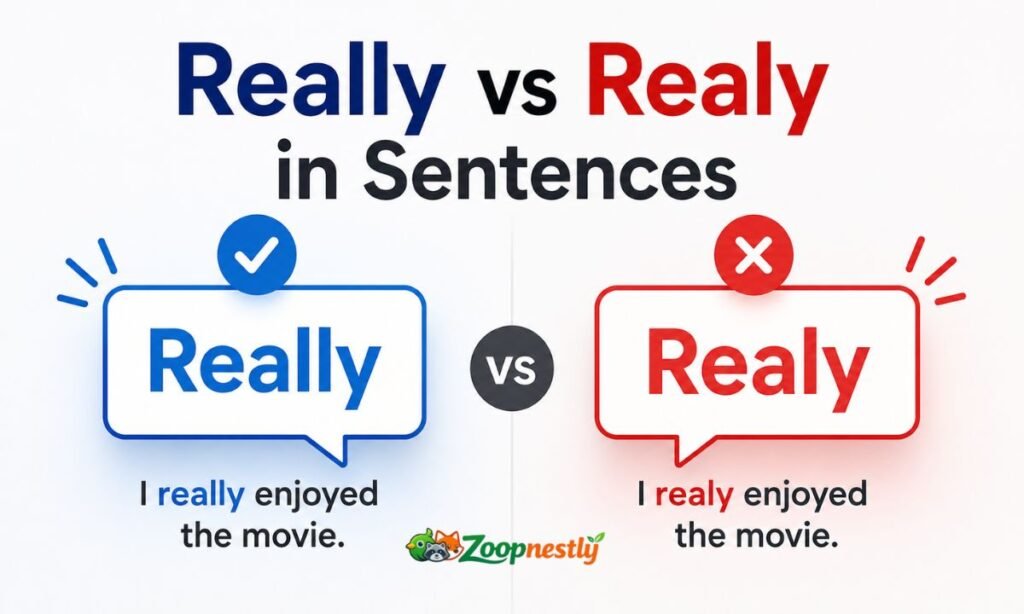
Seeing both side by side makes the error obvious.
Correct:
- I really appreciate your help.
- She was really excited about the trip.
- Do you really think that’s a good idea?
Incorrect:
- I realy appreciate your help.
- She was realy excited about the trip.
- Do you realy think that’s a good idea?
Reading the incorrect examples out loud usually makes the mistake stand out. The missing L breaks the rhythm of the word, even if it doesn’t change how you’d pronounce it in casual speech.
DISCOVER MORE : Emersion vs Immersion: What’s the Real Difference?
Why This Typo Happens So Often
A few reasons explain why “realy” shows up as often as it does:
- Fast typing: Double letters are easy to skip when you’re typing quickly, especially on mobile keyboards.
- Autocorrect gaps: Some autocorrect systems catch it, but not all, especially in messaging apps with lighter spell check.
- Visual similarity: “Realy” looks close enough to “really” that the eye can skim right past the error, both when writing and proofreading.
- Confusion with similar words: Words like “rely” (one L, different meaning entirely) can blend together with “really” in a writer’s mind, making the double L easy to forget.
None of these reasons make “realy” correct, but they explain why it’s such a persistent mistake.
How to Remember the Correct Spelling
A few simple memory tricks can lock this in for good:
- Break it into parts: real + ly. If you can spell “real,” you already have most of the word.
- Say it slowly: Really has a slight double-L sound when pronounced carefully, even if it blends together in fast speech.
- Compare it to similar words: “Finally,” “usually,” and “naturally” all double the L before “-ly.” Really follows the same pattern.
- Spot check before sending: If a word looks slightly “off” or too short, it’s worth a second glance, especially with words you type often.
Really vs Actually: A Related Mix-Up
“Really” and “actually” often get used interchangeably, but they’re not identical in meaning.
- Really emphasizes degree or confirms truth: “This is really important.”
- Actually points out a fact, often correcting an assumption: “I actually finished early.”
They can overlap in casual speech, but “actually” carries a slightly more corrective or factual tone, while “really” leans toward intensity or emphasis.
Really vs Very vs Truly
These three words are close cousins, and knowing when to use each one sharpens your writing.
| Word | Function | Example |
| Really | Emphasis or confirmation | “That’s really impressive.” |
| Very | Pure intensifier | “That’s very impressive.” |
| Truly | Sincerity or genuineness | “I’m truly grateful.” |
“Very” is the most neutral intensifier. “Really” adds a slightly more conversational tone. “Truly” leans formal and often signals sincerity rather than simple emphasis.
Pronunciation: How Is “Really” Said?
“Really” is pronounced REE-uh-lee in most American English, though casual speech often blends it closer to REE-lee. British English pronunciation follows a similar pattern, with some regional variation in vowel length.
Regardless of pronunciation differences across dialects, the spelling stays the same everywhere. “Realy” isn’t a regional variant. It’s simply not used in any English-speaking country as a standard spelling.
Can You Use “Really” in Formal Writing?
Yes, but with a bit of caution. “Really” is grammatically correct in formal writing, but it can sometimes weaken a sentence if overused, since it’s a filler-style intensifier.
Casual: “This report is really thorough.” Stronger formal alternative: “This report is exceptionally thorough.”
In academic or professional writing, swapping “really” for a more precise word often sharpens your tone. It’s not wrong to use it, but variety helps your writing feel more polished.
Common Mistakes Involving “Really”
Beyond the “realy” typo, a few other errors show up often:
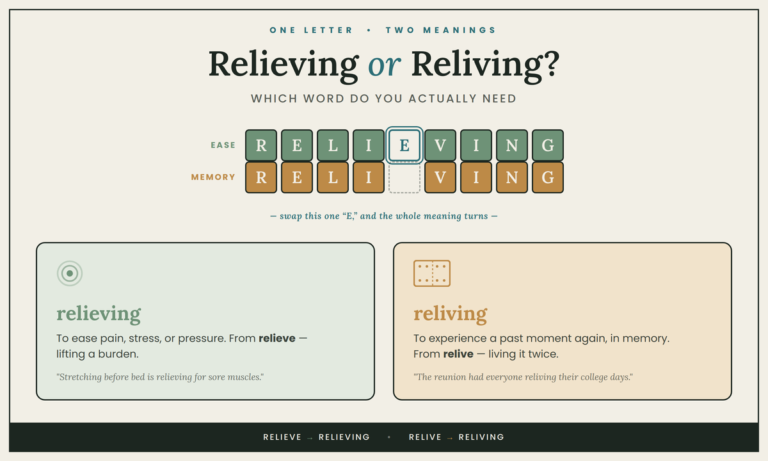
- Confusing it with “rely”: “Rely” means to depend on something. “I rely on my alarm clock” has nothing to do with “really.”
- Overusing it as a filler: Sentences packed with “really” in every line can feel repetitive. Save it for genuine emphasis.
- Doubling it unnecessarily: “Really really good” is casual speech, not standard written English.
Practice: Test Your Understanding
Fill in the blank:
- I ___ enjoyed the concert last night. (really / realy)
- She’s ___ talented at painting. (really / realy)
Spot the mistake: 3. “That was realy kind of you.” — Find and fix the error.
Answers: 1. really, 2. really, 3. “Realy” should be “really.”
FAQs
Is “realy” ever correct in British English?
No. British English and American English both use “really” exclusively. “Realy” isn’t a recognized spelling variation in any English-speaking region.
What’s the difference between “really” and “rely”?
“Really” is an adverb meaning “truly” or “genuinely.” “Rely” is a verb meaning to depend on someone or something. They sound similar but serve completely different grammatical roles.
Why do people confuse “really” with “realy” so often?
It usually comes down to fast typing and the double L being easy to miss, especially since dropping one letter doesn’t drastically change how the word looks or sounds in casual reading.
Is “really” considered informal or formal?
“Really” works in both casual and formal contexts, though heavy use in professional writing can weaken your tone. Precise word choices often read as more polished in formal settings.
How can I stop making this spelling mistake?
Remembering the “real + ly” breakdown is the fastest fix. If you can spell “real” correctly, adding the second L becomes automatic with a little practice.
Final Thoughts
The really vs realy debate has a simple resolution: “really” is correct, and “realy” is a spelling error with no valid use in English. The double L comes from a predictable pattern, adding “-ly” to an adjective that already ends in L. Once that rule clicks, the mistake becomes easy to catch and even easier to avoid going forward.

James Walker is a content writer and language researcher with over 5 years of experience in meanings, definitions, and language-related topics. He enjoys simplifying complex terms into clear, easy-to-understand explanations. Through ZoopNestly.com, he helps readers find accurate and reliable information.