Commit vs Comit: Which Spelling Is Actually Correct?
You’re halfway through an email, a resume, or a Git command when your fingers hesitate. Is it commit or comit? One letter shouldn’t cause this much stress, but a wrong spelling in a job application or a client message can quietly hurt your credibility. The confusion around commit vs comit is more common than people admit, and it usually comes down to one missing consonant. Here’s how to get it right every time.
Quick Answer
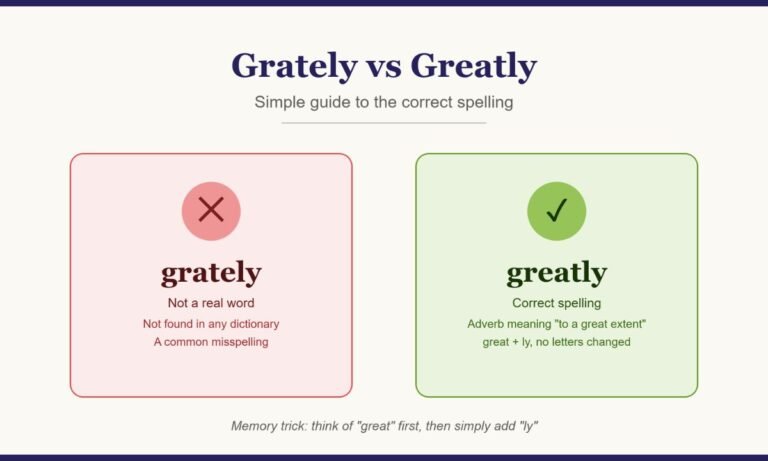
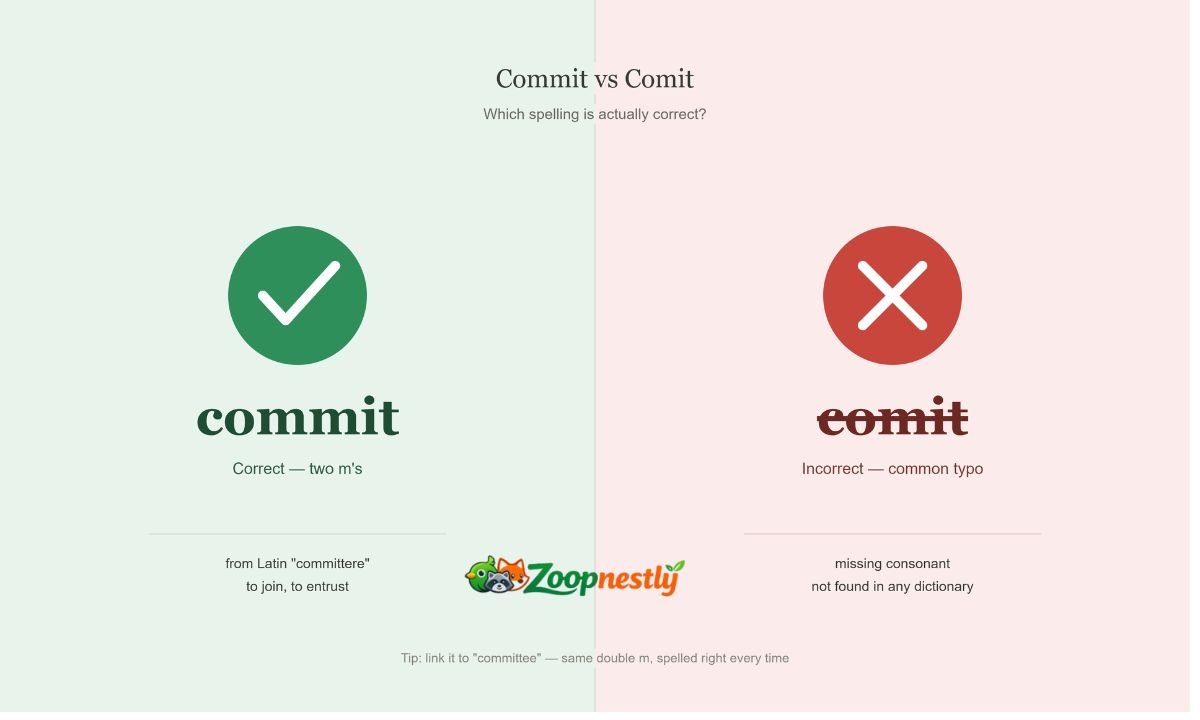
Commit is the only correct spelling in standard English. Comit is not a real word, it’s simply a common misspelling caused by dropping the second “m.” Commit means to dedicate yourself to something, carry out an action, or save changes (in tech contexts). If you’re ever unsure, remember: two M’s, one correct word.
What Does “Commit” Actually Mean?

At its core, commit means to pledge yourself to a course of action, a decision, or a relationship. It can also mean to carry out an act, especially a serious or negative one, or to formally record and finalize something.
The word works as a verb in most cases, though related forms like “commitment” and “committed” show up constantly in everyday language.
Common meanings include:
- To promise or dedicate yourself to something (“She committed to the training program.”)
- To carry out an action, often a crime or mistake (“He committed a minor error.”)
- To formally send or transfer something (“The judge committed the case to trial.”)
- To save or finalize digital changes (“Commit the code before you leave for the day.”)
Why “Comit” Isn’t a Real Word
Comit shows up in casual writing, texts, and even some resumes, but it has no dictionary entry and no accepted usage in formal or informal English. It’s a typo, not a variant spelling.
Most of the time, people write “comit” because they’re typing fast, mishearing the word, or simply forgetting that “commit” has a doubled consonant. It’s an easy slip, similar to writing “recomend” instead of “recommend.”
DISCOVER MORE : Suing vs Sueing: Which Word Should You Use?
Why “Commit” Has a Double “M”
English has a long list of words that double a consonant before adding a suffix, and “commit” itself follows a Latin-based spelling pattern rather than a suffix rule. The word comes from the Latin committere, meaning “to join” or “to entrust,” and that double “m” carried straight through into modern English.
This matters because once you add endings like “-ed,” “-ing,” or “-ment,” English grammar rules require doubling the final consonant when a short vowel comes right before it in a stressed syllable. That’s why you get:
- commit → committed
- commit → committing
- commit → commitment (this one actually keeps a single “t” before “-ment,” which trips people up even more)
Similar double-consonant words: occur/occurred, refer/referred, admit/admitted, permit/permitted.
If you can remember one example from this group, the “commit” spelling becomes much easier to recall.
Commit vs Comit: Side-by-Side Comparison
| Feature | Commit | Comit |
| Correct spelling | Yes | No |
| Found in dictionaries | Yes | No |
| Part of speech | Verb | Not applicable |
| Common usage | Everyday, business, legal, tech | Typo only |
| Example sentence | “I commit to finishing this project.” | Incorrect usage |
How “Commit” Is Used in Real Life
The word shows up across very different fields, and the meaning shifts slightly depending on context.
Commit in Everyday Conversation
In daily speech, “commit” usually relates to promises, relationships, or personal goals.
Example: “I finally committed to a morning workout routine.”
Commit in Business and Professional Writing
In workplace communication, “commit” often signals accountability or a formal agreement.
Example: “Our team is committed to delivering the report by Friday.”
Commit in Technology and Programming
In software development, a commit refers to saving a set of changes to a version control system like Git. This is one of the most frequent modern uses of the word.
Example: “Don’t forget to commit your changes before pushing to the main branch.”
Commit in Legal Contexts
In legal writing, “commit” often refers to carrying out an offense or being formally sent to an institution.
Example: “The defendant was accused of committing fraud.”
Commit vs Committed: What’s the Difference?

“Commit” is the base verb, while “committed” is its past tense and past participle form. “Committed” can also function as an adjective describing someone’s level of dedication.
Correct examples:
- “She commits to her goals every year.” (present tense)
- “He was committed to the cause.” (past tense/adjective)
Incorrect examples:
- “She comits to her goals.” ❌
- “He was commited to the cause.” ❌ (missing the second “t”)
That second mistake, “commited” instead of “committed,” is almost as common as “comit” itself, so it’s worth watching for both.
Real-World Impact of Spelling Mistakes
Small spelling errors can carry a bigger cost than people expect, especially in professional settings. A resume, cover letter, or client proposal with a spelling mistake like “comit” can make a reader question attention to detail, even if the rest of the writing is strong.
Recruiters and hiring managers often scan documents quickly, and a misspelled word near the top of a resume or email subject line is one of the fastest ways to lose credibility before your qualifications even get a fair read.
In professional and academic writing, consistent, correct spelling signals reliability. That’s true whether you’re sending a job application, a business proposal, or a customer support message.
Practical Ways to Remember the Correct Spelling
If “commit” keeps tripping you up, try one of these tricks:
- Say it in two parts: “com” + “mit.” Hearing the syllables separately makes the double “m” easier to recall.
- Link it to “committee.” Most people spell “committee” correctly without thinking twice, and it shares the same double “m” pattern.
- Use a spell-checker as a backup, not a crutch. Most word processors and browsers will flag “comit” automatically, but building the habit of spelling it correctly matters more long term.
- Write it out by hand a few times. Muscle memory helps with words you frequently misspell.
Common Mistakes to Avoid
Beyond the basic commit/comit confusion, a few related errors show up often:
- Dropping the second “t” in “committed” (commited)
- Misspelling “commitment” as “committment” (adding an extra “t” that doesn’t belong)
- Confusing “commit” with “submit” in casual writing, since both can relate to sending or finalizing something
- Using “comit” in code comments or documentation, which can confuse other developers reading the project
Commit Meaning in a Relationship

When people talk about “committing” in a relationship, they mean choosing to stay loyal, invest time, and prioritize the partnership over other options. It reflects an emotional and practical decision, not just a word choice.
Example: “After two years of dating, they decided to commit to a long-term relationship.”
Common Synonyms for Commit
Depending on context, you can swap “commit” for words like:
- Pledge
- Dedicate
- Promise
- Devote
- Bind (yourself)
- Carry out (for actions like crimes)
Choosing the right synonym depends on whether you’re talking about a promise, an action, or a formal process.
“Commit a Crime” Meaning
When paired with “crime,” commit means to carry out an illegal act. This phrasing is standard in legal, journalistic, and everyday English.
Example: “The suspect was charged with committing a crime in the downtown area.”
This is one of the most searched phrases involving the word, largely because it appears constantly in news reporting and legal documents.
Frequently Asked Questions
Is “comit” ever an acceptable alternative spelling?
No. “Comit” is not recognized in any standard English dictionary. It’s always a misspelling of “commit.”
Why does “commit” have two M’s but “commitment” doesn’t double the T?
“Commitment” keeps a single “t” because the stress pattern and suffix rules differ from words like “committed” or “committing.” English spelling rules aren’t always consistent, which is part of why this word trips people up.
What is a “commit” in Git or GitHub?
A commit is a saved snapshot of changes made to a codebase. Developers commit changes regularly to track progress and collaborate with others.
How do I use “commit” correctly in a sentence?
Use it as a verb to describe dedicating yourself to something or performing an action. Example: “I commit to reviewing the document by tomorrow.”
Is “committed” the correct past tense of “commit”?
Yes. “Committed” is both the correct past tense and past participle form, and it also works as an adjective.
Final Thoughts
The debate over commit vs comit really isn’t a debate at all. “Commit” is the only correct spelling, backed by its Latin origin and consistent use across everyday language, business writing, legal contexts, and technology. “Comit” is simply a typo that can undercut your credibility in professional settings. Once you connect the word to familiar patterns, like “committee” or “committed,” the double “m” becomes second nature, and you’ll spell it correctly without a second thought.

James Walker is a content writer and language researcher with over 5 years of experience in meanings, definitions, and language-related topics. He enjoys simplifying complex terms into clear, easy-to-understand explanations. Through ZoopNestly.com, he helps readers find accurate and reliable information.