Suing vs Sueing: Which Word Should You Use?
You’re drafting an email to your lawyer, or maybe venting about a neighbor dispute online, and your fingers hesitate on the keyboard. Is it “sueing” or “suing”? Spellcheck might not catch it if you’re rushed, and typing the wrong version in a formal letter, a legal complaint, or even a text to a friend can make you look careless. The good news is that suing or sueing has one clear, simple answer, and once you know the rule, you’ll never second-guess it again.
Quick Answer
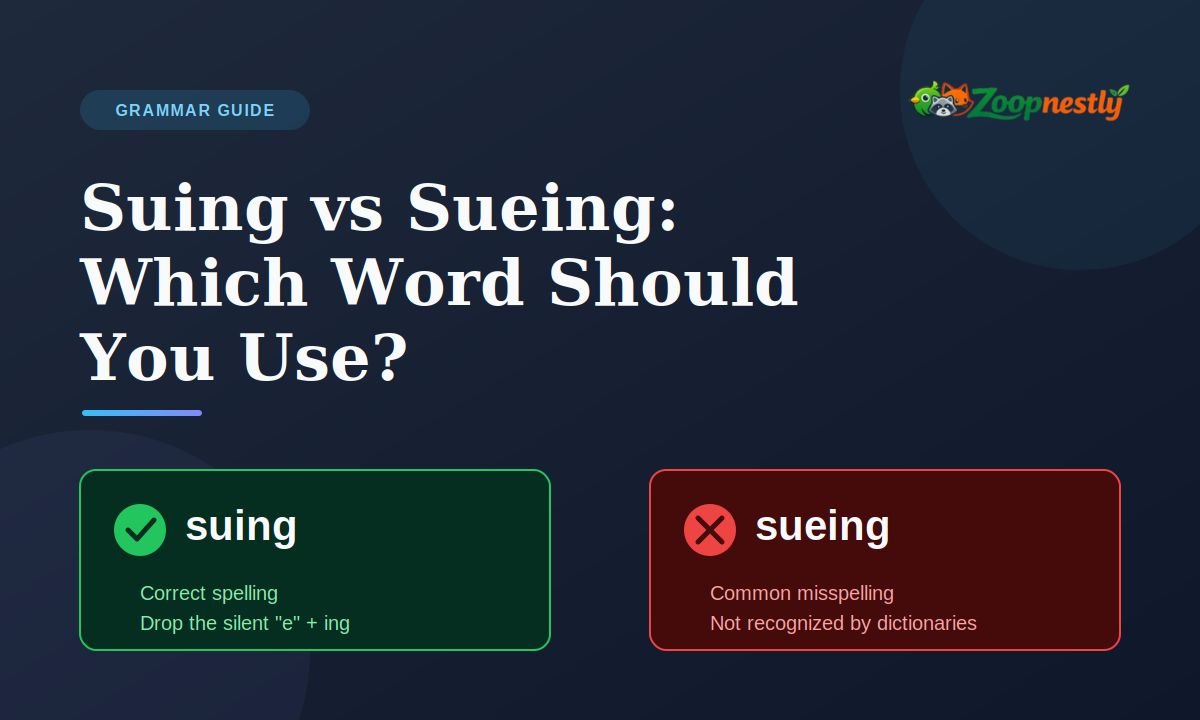
Suing is the correct spelling. Sueing is a common misspelling. When you add “-ing” to the verb “sue,” the silent e at the end gets dropped, giving you suing. This follows a standard English spelling rule that applies to most verbs ending in a silent e.
What “Sue” Actually Means
Before diving into spelling, it helps to know what the word means. To sue means to start a legal case against someone, usually to seek money or another form of justice for a wrong they’ve done to you. It’s a verb rooted in legal action, and it shows up constantly in news headlines, courtroom dramas, and everyday conversations about disputes.
Suing is simply the present participle, or “-ing” form, of “sue.” It describes an ongoing action, like in “She is suing her former employer” or “They’re suing for damages.”
Why “Suing” Is Correct
English has a reliable pattern: when a verb ends in a silent e, that e usually disappears before you add “-ing.” Think of it as making room for the new ending.
- sue → su + ing → suing
- use → us + ing → using
- move → mov + ing → moving
- hope → hop + ing → hoping
The silent e in “sue” serves no pronunciation purpose once “-ing” is attached, so it’s dropped. That’s why suing looks the way it does, with no e sitting between the u and the i.
Why People Still Type “Sueing”
If the rule is so consistent, why do so many people write “sueing” by mistake? A few reasons show up again and again:
- Visual instinct. Writers assume keeping the “sue” spelling intact and just tacking on “-ing” looks more complete.
- Confusion with other words. Words like “seeing,” “dyeing,” or “agreeing” keep double vowels or extra letters, which can make “suing” feel like it’s missing something.
- Autocorrect gaps. Not every spellchecker flags “sueing” as wrong, especially in casual typing apps.
- Speed typing. People typing quickly on phones often add letters out of habit rather than checking the rule.
Once you see the pattern applied to familiar words like “use” and “move,” the logic behind “suing” becomes much easier to remember.
Suing in Legal and Everyday English
“Suing” appears constantly in both formal and casual English, but its meaning stays rooted in legal action.
Common Situations Where “Suing” Comes Up
- A customer suing a company over a faulty product
- An employee suing a former employer for wrongful termination
- A tenant suing a landlord over unsafe living conditions
- A business suing a competitor for breach of contract
Example Sentences
- “The company is suing its supplier for breach of contract.”
- “After the accident, she considered suing the driver for medical costs.”
- “He’s been suing his neighbor over the property line for months.”
- “They talked about suing the school district after the incident.”
Sue vs. Suing: What’s the Difference?
“Sue” is the base verb, used for simple present or future actions (“I will sue” or “They sue frequently”). “Suing” is the continuous form, used when the action is ongoing or being described as a current activity (“I am suing” or “The process of suing can take months”). Both words come from the same root, but they serve different grammatical roles in a sentence.
A Real Mistake That Costs Credibility

Spelling errors in professional or legal writing do more than look sloppy. A misspelled word like “sueing” in a formal complaint, a business email, or a published article can make readers question the writer’s attention to detail, even if the content itself is accurate. In legal and business contexts especially, precision matters. A single typo won’t change the outcome of a case, but it can undermine trust in a document meant to be taken seriously.
Suing vs Sueing: Quick Comparison
| Feature | Suing | Sueing |
| Correct spelling | Yes | No |
| Follows silent-e rule | Yes | No |
| Common in formal writing | Yes | Never |
| Recognized by dictionaries | Yes | No |
| Frequency in real usage | High | Rare (typo) |
The Grammar Rule for Words Ending in Silent “E”
Rule 1: Drop the Silent E Before “-ing”
Most verbs ending in a silent e drop that e when “-ing” is added. This keeps the word from having an awkward, unnecessary letter. Examples include write → writing, drive → driving, and of course, sue → suing.
Rule 2: Keep the E When Needed for Pronunciation or Meaning
Some words keep the e to avoid confusion with another word or to preserve pronunciation. For example, “dye” becomes “dyeing” (not “dying,” which means something else entirely) because dropping the e would create a completely different word with a different meaning.
The Dyeing vs. Dying Exception
This exception is worth calling out because it’s the opposite pattern from “suing.” “Dye” (to color something) becomes dyeing, keeping the e to distinguish it from dying (the verb form of “die,” meaning to stop living). “Sue” doesn’t have this conflict, so it follows the standard rule and drops the e cleanly.
How to Remember the Correct Spelling
- Compare it to similar verbs. If you know “use” becomes “using” and “move” becomes “moving,” then “sue” becoming “suing” follows the exact same pattern.
- Say the rule out loud. “Drop the silent e before adding -ing” is short enough to remember on the spot.
- Read the word after writing it. “Sueing” visually breaks the flow with an extra vowel; “suing” reads smoothly.
- Don’t rely solely on spellcheck. Some tools miss less common typos, so a quick manual check helps, especially in formal documents.
DISCOVER MORE : Label vs Lable: Which Word Is Right and Why?
Common Mistakes Writers Make
Mistake 1: Keeping the Silent E
Writing “sueing” instead of “suing” is the most frequent error, usually from assuming the base word should stay fully intact.
Mistake 2: Mixing Up Verb Tenses
Some writers use “suing” when they mean the simple past tense “sued,” or vice versa. Remember: “sued” is past tense (“She sued him last year”), while “suing” describes an ongoing or current action.
Mistake 3: Confusing “Sue” With “Sew”
“Sue” (legal action) and “sew” (to stitch fabric) sound different but are sometimes mixed up in quick typing, especially by non-native speakers or when autocorrect intervenes. Keep in mind that “sewing” (with fabric) and “suing” (with lawsuits) are entirely unrelated words that just happen to look similar.
Suing or Sueing: Synonyms and Related Terms
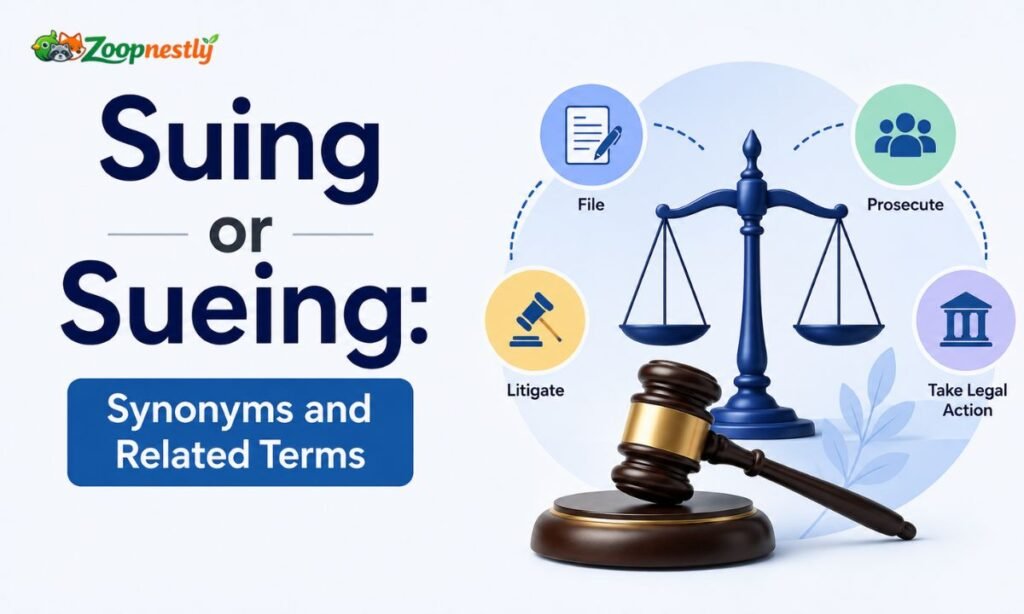
If you’re looking for alternative ways to express the same idea, common synonyms and related legal terms include:
- Filing a lawsuit
- Taking legal action
- Litigating
- Prosecuting a claim
- Bringing a case against someone
These phrases can add variety to writing while keeping the same core meaning as “suing.”
How to Pronounce “Suing”
Suing is pronounced “SOO-ing,” with two syllables and a long “oo” sound, similar to how “sue” itself is pronounced with a long u. There’s no separate sound for the dropped e, since it was silent to begin with.
Frequently Asked Questions
Is “sueing” ever correct in any context?
No. “Sueing” is not recognized as a correct spelling in standard English dictionaries or style guides. Suing is the only accepted form.
What is the past tense of “sue”?
The past tense is sued, as in “She sued the company last month.” No silent e drop is needed here since “-ed” attaches differently than “-ing.”
Why does “sue” drop the e but “dye” doesn’t?
“Dye” keeps its e in “dyeing” to avoid being confused with “dying” (from “die”). “Sue” has no such conflicting word, so it follows the standard rule and drops the e.
Is “suing” a formal or casual word?
“Suing” works in both formal legal writing and everyday conversation. It’s neutral enough for court documents, news articles, and casual discussions about disputes.
How can I quickly check if I’m using “suing” correctly?
Read your sentence aloud and confirm the action is ongoing or continuous, such as “is suing” or “considering suing.” If you mean a completed action, use “sued” instead.
Conclusion
The rule behind suing or sueing comes down to one simple grammar pattern: drop the silent e before adding “-ing.” Suing is correct, sueing is not, and remembering similar words like “use” and “move” makes the spelling easy to recall. Whether you’re writing a legal document, a news update, or a casual message, getting this word right adds a small but meaningful layer of polish to your writing.

James Walker is a content writer and language researcher with over 5 years of experience in meanings, definitions, and language-related topics. He enjoys simplifying complex terms into clear, easy-to-understand explanations. Through ZoopNestly.com, he helps readers find accurate and reliable information.