Authorization or Authorisation: Which Spelling Is Correct?
You’re filling out a form, writing an email to a client in London, or drafting a policy document, and suddenly you freeze on one word. Is it authorization or authorisation? The spelling looks almost identical, but picking the wrong one in the wrong context can make a document feel off to your reader. The good news: this comes down to a simple regional rule, not a grammar mystery, and once you know it, you’ll never second-guess it again.
Quick Answer
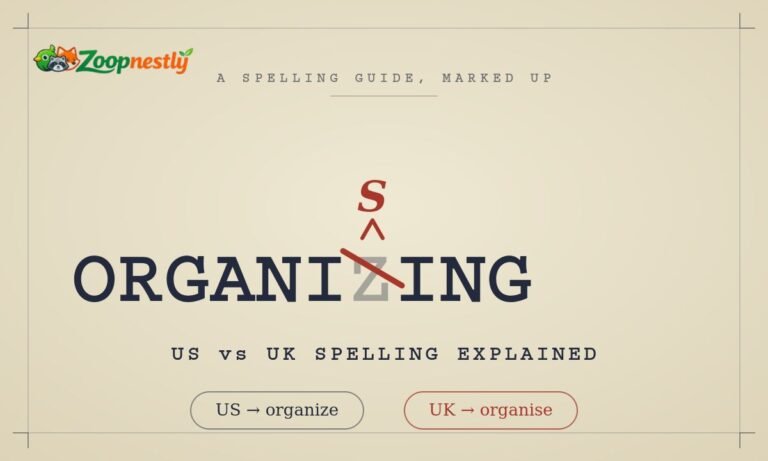
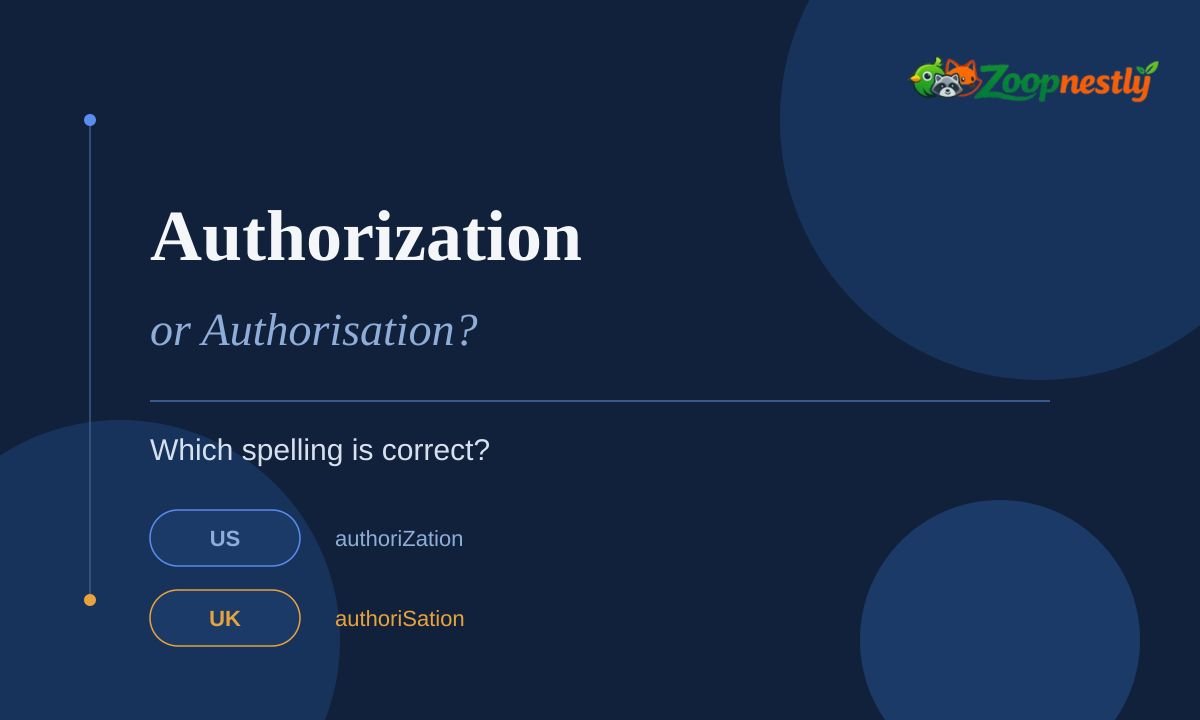
Authorization is the American English spelling, while authorisation is the British English spelling. Both mean the same thing: official permission or approval to do something. The only difference is the “z” versus “s,” based on which English dialect you’re writing in.
Why Does the Spelling Change At All?

The “z” versus “s” difference isn’t random. It goes back to how English spelling evolved differently in the US and UK over the past two centuries.
Words like authorization end in the suffix -ize or -ise, which traces back to Greek verbs. British English later adopted the French-influenced -ise spelling for many of these words, while American English, largely shaped by Noah Webster’s 19th-century dictionary reforms, kept closer to the original Greek-based -ize form. That’s why you’ll see the same “s vs z” pattern in words like organize/organise and recognize/recognise.
Interestingly, “-ize” is actually the older, more traditional spelling. Some British style guides (like Oxford’s) still permit “-ize” endings, which is why you might spot “authorization” in certain British academic or publishing contexts too.
Authorization vs Authorisation: A Side-by-Side Comparison
| Feature | Authorization | Authorisation |
| Region | American English (US) | British English (UK) |
| Also used in | Canada (mixed usage) | Australia, New Zealand, India, South Africa |
| Style guide preference | AP Style, Chicago Manual | Oxford Style (allows both), Cambridge Style |
| Common in | US business, tech, legal writing | UK, Commonwealth business and legal writing |
| Pronunciation | Identical | Identical |
What Does Authorization Actually Mean?
At its core, authorization means giving someone official permission, approval, or the legal right to do something. It can refer to a formal process (like authorizing a bank transaction) or a general act of granting access or consent.
The word functions as a noun, built from the verb “authorize” (or “authorise” in British English), which itself comes from the idea of granting authority. You’ll see it used across law, finance, technology, and everyday workplace communication.
Choosing the Right Spelling for Your Audience
The rule of thumb is straightforward: match the spelling to your audience, not your personal habit.
- Writing for a US-based company, client, or platform? Use authorization.
- Writing for a UK, Australian, or Commonwealth audience? Use authorisation.
- Writing for a global or mixed audience? Pick one spelling and stay consistent throughout the entire document. Mixing both looks like a typo, not a style choice.
Most word processors and grammar checkers will flag the “wrong” spelling based on your language settings, so it helps to set your document’s language (US English or UK English) before you start typing.
Authorization in Business and Professional Writing
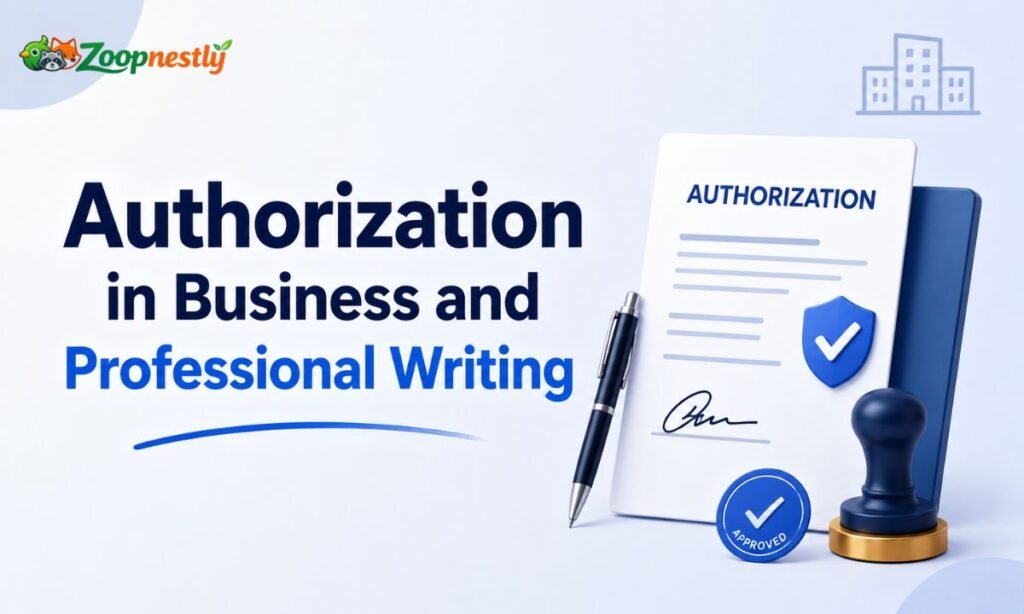
In business communication, authorization usually refers to formal permission needed to move forward with an action. This might be a manager authorizing a purchase order, an HR department authorizing a new hire’s start date, or a company authorizing a vendor to act on its behalf.
Example sentence: “The finance director must provide written authorization before any invoice over $5,000 is processed.”
Getting this word right matters here because business documents often carry legal weight. A contract or internal memo with inconsistent spelling can look unpolished, even if the meaning is perfectly clear.
Authorization in Banking and Payments
This is one of the most common everyday uses of the word. When you swipe a card, the transaction goes through an authorization step, where the bank confirms you have sufficient funds and approves the charge before it’s finalized.
You’ll often see the term “pending authorization” on a bank statement. This means the charge has been approved but hasn’t fully settled yet.
Example sentence: “Your card issuer sent an authorization request to confirm the $45 purchase.”
Authorization in Law and Government
In legal and governmental contexts, authorization refers to the formal, often written, granting of power or permission. This could be a government authorizing a construction project, a court authorizing a search, or a person authorizing someone else to act on their behalf through a power of attorney.
Example sentence: “The agency received authorization from the state government to begin the environmental review.”
This is also where an authorization letter becomes relevant. It’s a written document granting someone the right to act on your behalf, such as picking up a package, accessing a bank account, or representing you at a meeting. These letters typically include the names of both parties, the specific action being authorized, and a signature.
Authorization in Technology and Cybersecurity
In tech, authorization has a slightly more specific meaning than everyday usage. It refers to the process of determining what a verified user is allowed to do or access, after they’ve already logged in.
This is different from authentication, which confirms who someone is (like entering a password). Authorization decides what that verified person can actually do once they’re in the system, such as viewing certain files or editing specific settings.
Example sentence: “The system flagged the request because the user lacked authorization to access admin settings.”
DISCOVER MORE : Gasses or Gases: Which Spelling Is Actually Correct?
Common Mistakes People Make With This Word
A few patterns show up again and again in writing:
- Mixing spellings in one document. Using “authorization” in one paragraph and “authorisation” in another is the most frequent error, especially in longer reports.
- Confusing authorization with authentication. These are related but distinct concepts, particularly in tech and security writing.
- Misspelling as “authorizasion” or “authorisazion.” These typos happen when writers blend the two regional spellings.
- Overcapitalizing. Unless it starts a sentence or is part of a formal title (like “Authorization Form”), the word doesn’t need a capital letter.
Related Words Worth Knowing

Understanding the word family helps you use it more naturally:
- Authorize / Authorise — the verb form, meaning to give official permission
- Authorized / Authorised — the adjective or past tense form
- Authority — the power or right to give orders or make decisions
- Unauthorized / Unauthorised — lacking permission or approval
- Pre-authorization / Pre-authorisation — approval obtained in advance, common in banking and healthcare
A Quick Note on Authorisation in Other Languages
If you’re working with international documents, it helps to know that French uses “autorisation,” which is spelled almost identically to the British English version, just without the “h.” This overlap is one reason British spelling can feel more familiar in European business contexts, since many Romance languages follow a similar “-isation” pattern.
Frequently Asked Questions
Is authorization or authorisation more commonly used worldwide?
Authorization is used more often overall, mainly because American English dominates global business, tech, and online content. However, authorisation remains the standard across the UK, Australia, and most Commonwealth countries.
Can I use both spellings in the same document?
No. Stick to one spelling throughout a single document based on your target audience or the style guide you’re following. Mixing the two looks inconsistent and unprofessional.
Is authorization the same as verification?
Not quite. Verification confirms that information is accurate or true, while authorization grants permission to do something. A system might verify your identity first, then authorize your access.
What’s the difference between authorization and authentication?
Authentication confirms who you are, usually through a password or ID check. Authorization determines what you’re allowed to do or access after that identity is confirmed.
Which spelling should I use for a resume or job application?
Match the spelling to the country you’re applying in. Use authorization for US-based applications and authorisation for UK, Australian, or other Commonwealth-based ones.
Final Thoughts
Both authorization and authorisation are correct. The only real difference is regional: American English uses the “z,” British English uses the “s.” The word itself carries the same meaning in banking, business, law, and technology no matter how you spell it. Pick the version that matches your audience, stay consistent within each document, and you’ll never trip over this one again.

James Walker is a content writer and language researcher with over 5 years of experience in meanings, definitions, and language-related topics. He enjoys simplifying complex terms into clear, easy-to-understand explanations. Through ZoopNestly.com, he helps readers find accurate and reliable information.