Courtesy vs Curtesy: The Ultimate Spelling Guide
You typed a polite email, hit spell check, and suddenly your screen is flagging a word you were sure was right. Is it courtesy or curtesy? One letter changes everything, and guessing wrong in a professional message can make you look careless. The confusion between courtesy vs curtesy trips up even confident writers, mostly because the two words look nearly identical but mean completely different things.
Quick Answer
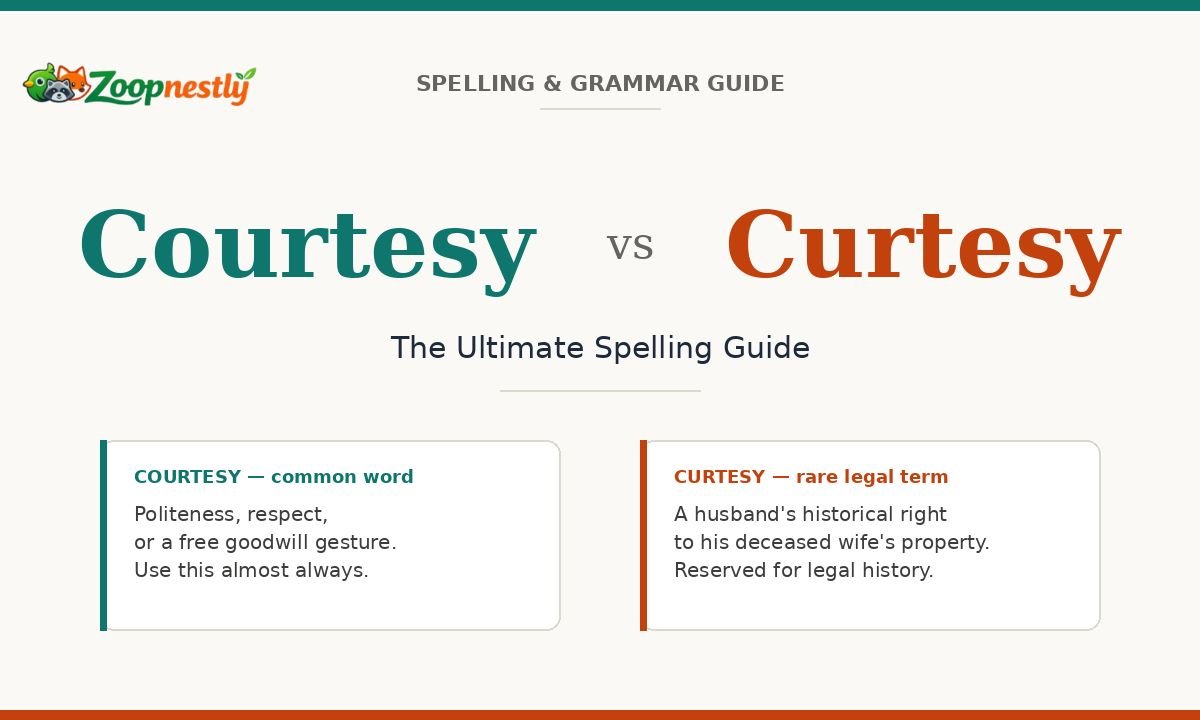
Courtesy is the common word for politeness, respect, and good manners, and it’s the one you’ll use in almost every situation. Curtesy is a rare legal term describing a husband’s historical right to his deceased wife’s property. Unless you’re writing about old property law, you want courtesy.
What Does “Courtesy” Mean?
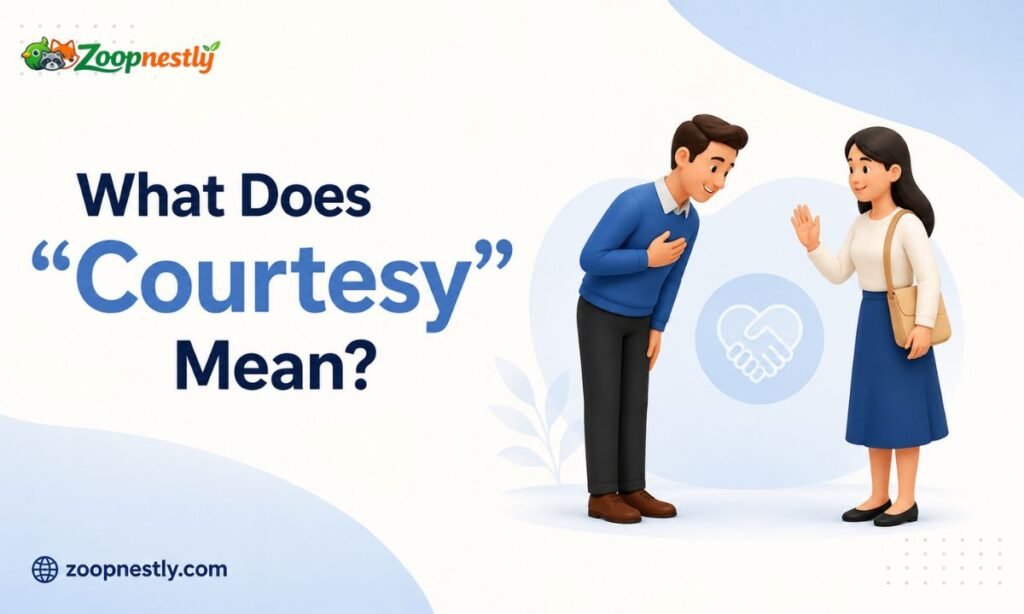
Courtesy refers to polite behavior, respect toward others, or a considerate gesture. It’s a noun you’ll see in everyday conversation, business writing, and customer service language.
It also has a second, related meaning: something offered for free as a goodwill gesture, like a “courtesy shuttle” or “courtesy call.”
Common Examples
- “Thank you for your courtesy during the delay.”
- “She held the door out of courtesy.”
- “The hotel offers a courtesy breakfast to all guests.”
Courtesy in Professional Communication
In business emails, meetings, and customer interactions, courtesy signals professionalism. Phrases like “as a courtesy” or “extend the courtesy of a reply” are standard in formal writing. Using this word correctly shows attention to detail, which matters more than people think in first impressions.
Why “Courtesy” Is Often Misspelled
Most spelling slips happen because writers confuse the “our” and “ur” sounds, or because autocorrect quietly “fixes” it into the wrong word. Since curtesy is a real word (just a rare one), spell check won’t always catch the mistake. That’s what makes this particular error sneaky.
What Does “Curtesy” Mean?
Curtesy is a historical legal term. It refers to a common law right that allowed a widower to inherit and control property that belonged to his deceased wife, provided they had a child together. This concept comes from English common law and is largely obsolete in modern legal systems, though it occasionally appears in legal history discussions or property law textbooks.
DISCOVER MORE : Persue or Pursue? The Correct Spelling Explained
Example Sentences
- “Under old common law, curtesy gave the husband a life estate in his wife’s land.”
- “Curtesy rights have been abolished or replaced by modern marital property laws in most jurisdictions.”
Why Most People Never Need This Word
Unless you study legal history, work in property law, or read historical legal texts, you will likely never need to use curtesy in your writing. It has essentially no place in everyday or business communication.
Where Do These Words Come From?

Understanding the origin makes the difference easier to remember for good.
Courtesy traces back to the Old French word courtoisie, meaning behavior fitting for a royal court, polished and respectful manners. Over time, English adopted and shortened it into courtesy, keeping the core meaning of politeness and good conduct.
Curtesy comes from a different legal tradition tied to English common law property terms. It’s related to the idea of a husband’s “curtesy of England,” a specific inheritance right, not a general concept of politeness at all. The two words simply evolved along separate paths that happened to end up looking similar.
Knowing this history explains why the words feel so close but serve such different purposes. One grew from court manners. The other grew from court law.
Courtesy vs Curtesy: Side-by-Side Comparison
| Feature | Courtesy | Curtesy |
| Meaning | Politeness, respect, free gesture | Historical property right for widowers |
| Usage | Everyday, business, customer service | Legal history, property law |
| Frequency | Extremely common | Rare, mostly obsolete |
| Part of speech | Noun | Noun (legal term) |
| Example | “Thank you for your courtesy.” | “He held curtesy rights over the estate.” |
Quick Rule to Remember
If you’re talking about manners, kindness, or a free perk, it’s courtesy. If you’re deep in a legal or historical property discussion, it might be curtesy. When in doubt, courtesy is almost always the answer.
Common Mistakes People Make
Mistake 1: Assuming “Curtesy” Is Just an Alternative Spelling
Many writers think curtesy is a casual or old-fashioned spelling of courtesy. It isn’t. They’re separate words with separate meanings, and swapping them changes what your sentence actually says.
Mistake 2: Trusting Spell Check Completely
Because curtesy is a valid dictionary word, spell check often won’t underline it. This is one of the few spelling errors that can slip through automated tools entirely, so a manual read-through still matters.
Mistake 3: Confusing Pronunciation with Spelling
Both words sound almost identical when spoken quickly, which leads to typos when writing from memory or dictating text. Slowing down while proofreading catches this instantly.
Courtesy in Everyday Communication
At Work
Courtesy shows up constantly in professional settings: courtesy copies (cc) on emails, courtesy meetings before a decision, and courtesy notices about schedule changes. It’s a signal of respect built into workplace culture.
In Customer Service
Businesses use courtesy language to build trust: “courtesy call,” “courtesy discount,” “courtesy vehicle.” These phrases tell customers they’re being treated with care, often at no extra cost.
In Daily Life
Simple acts like holding a door, saying thank you, or letting someone merge in traffic all fall under basic courtesy. It’s less about formality and more about everyday respect for others.
Courtesy Pronunciation
Courtesy is pronounced KUR-tuh-see, with the stress on the first syllable. Curtesy is pronounced almost the same way, which is exactly why the spelling mix-up happens so often even among native speakers. Since the ear can’t tell them apart, the eye has to do the work when writing.
“Courtesy Call” and Similar Phrases

A “courtesy call” is a phone call made out of politeness rather than necessity, often to check in, confirm something, or maintain a relationship. You’ll hear this phrase in business, diplomacy, and even everyday customer service. It should always be spelled with courtesy, never curtesy, since it has nothing to do with the legal term.
More Courtesy vs Curtesy Examples
- Correct: “Please accept this courtesy upgrade on your flight.”
- Incorrect: “Please accept this curtesy upgrade on your flight.”
- Correct: “The estate discussion referenced curtesy rights from the 1800s.”
- Incorrect: “The estate discussion referenced courtesy rights from the 1800s.”
Seeing both used correctly side by side makes the distinction stick faster than any rule alone.
Frequently Asked Questions
Is “curtesy” ever the correct spelling?
Yes, but only in a narrow legal or historical context describing a husband’s inheritance right to his wife’s property under old common law. In all other cases, use courtesy.
What is the easiest way to remember the difference?
Think of “courtesy” as containing the word “court,” as in courteous behavior fit for a royal court. “Curtesy” relates to a specific legal right and has no connection to manners at all.
Can spell check catch this mistake?
Not always. Because curtesy is a real word, most spell checkers won’t flag it, so proofreading by eye is the safer method.
Is “curtesy” still used in modern law?
Rarely. Most jurisdictions have replaced or abolished curtesy rights with modern marital and inheritance property laws, so the term mostly appears in legal history or older case law.
Which word should I use in a business email?
Always use courtesy. Whether you’re thanking someone, offering a free service, or copying someone on an email, courtesy is the correct and expected term.
Final Thoughts
The mix-up between courtesy vs curtesy comes down to two words that sound alike but live in completely different worlds. Courtesy belongs in everyday language, professional communication, and simple acts of respect. Curtesy belongs in law books and history lessons. Once you connect courtesy to “court manners” and curtesy to a specific legal right, the confusion tends to disappear for good.

James Walker is a content writer and language researcher with over 5 years of experience in meanings, definitions, and language-related topics. He enjoys simplifying complex terms into clear, easy-to-understand explanations. Through ZoopNestly.com, he helps readers find accurate and reliable information.