Holliday vs Holiday: What Is the Difference?
You typed a text message, hit send, and then froze. Did you write “holliday” or “holiday”? It looks fine either way, but something feels off. This mix-up trips up more people than you’d think, especially when autocorrect stays quiet and lets the wrong version slide through. The confusion around holliday vs holiday usually comes down to one thing: mixing up a surname with an everyday English word.
Quick Answer
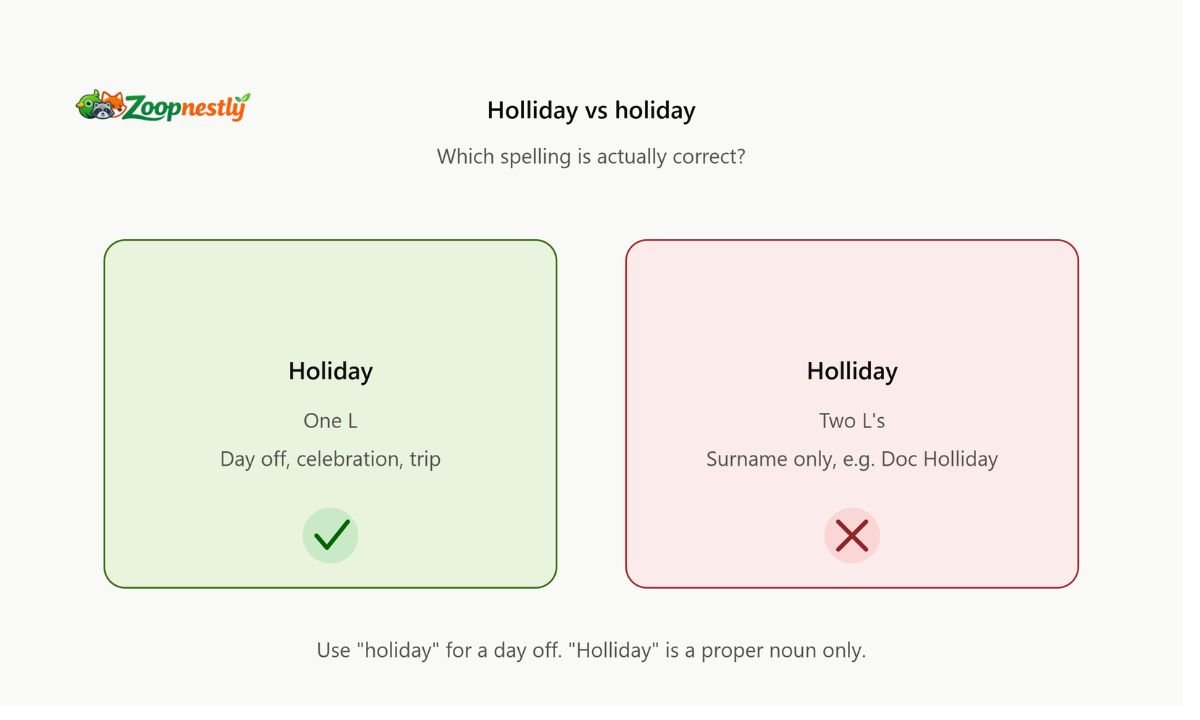
Holiday is the correct spelling for a day of celebration, rest, or travel. Holliday is not a standard English word. It only appears as a proper noun, such as a surname (Doc Holliday) or a first name. If you’re writing about a day off work, a festival, or a trip, always use holiday.
Holliday vs Holiday: The Correct Answer
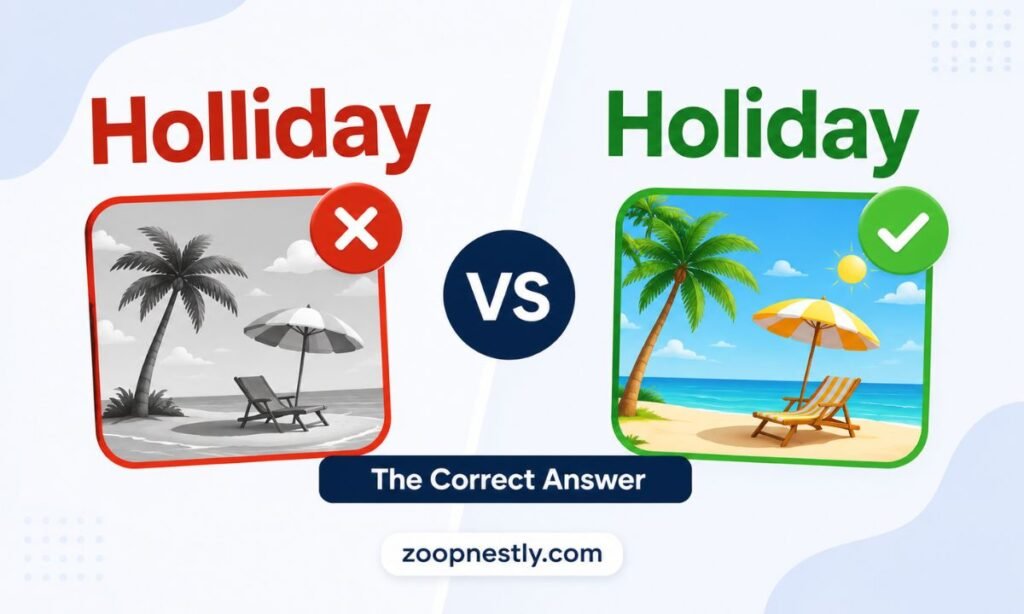
If you remember nothing else from this article, remember this: holiday is the word you want for describing time off, celebrations, or travel. Holliday with two L’s is not a recognized English word in any dictionary. It exists only as a proper noun, mostly as a last name.
So when someone asks “is it holliday or holiday,” the answer is simple. Use holiday every single time you’re talking about Christmas, a beach trip, a national celebration, or a day away from school or work.
Quick Reference Table
| Word | Valid English Word? | Common Use | Example |
| Holiday | Yes | Day off, celebration, vacation | “We’re flying out for the holiday.” |
| Holliday | No (proper noun only) | Surname, given name | “Doc Holliday was a famous gunfighter.” |
Is “Holliday” a Real Word?
No, holliday is not a standard dictionary word. It won’t show up in Merriam-Webster, Oxford, or Cambridge as a common noun. The only legitimate use is as a proper noun, typically a person’s last name.
Why People Think It’s a Word
The confusion usually starts because “Holliday” is a fairly recognizable surname. You might have seen it in a movie credit, a sports roster, or a news article, and your brain filed it away as an acceptable spelling of the everyday word. It isn’t.
Correct Usage Example
- Correct: “Judge Holliday presided over the case.” (surname)
- Incorrect: “We’re going on a holliday next week.” (should be holiday)
What Does Holiday Mean?
Holiday refers to a day set aside for rest, celebration, or freedom from work and school. It also refers to an extended period of travel or leisure, particularly in British English.
Holiday Definition
As a noun, holiday means a day of exemption from work, often tied to a religious, cultural, or national event. As a verb (mainly in British English), “to holiday” means to spend time away on vacation, as in “They holidayed in Spain last summer.”
Types of Holidays
Holidays generally fall into a few broad categories:
- National holidays – Independence Day, Labor Day
- Religious holidays – Christmas, Eid, Diwali, Hanukkah
- Cultural or seasonal holidays – New Year’s Day, Thanksgiving
- Personal holidays – time off work booked for travel or rest
- Bank holidays – official non-working days recognized by financial institutions, mostly in the UK
Summer Holiday or Summer Holidays?
Both are used, but they mean slightly different things depending on context. “Summer holiday” (singular) is common in American English when referring to a specific break or trip. “Summer holidays” (plural) is the standard British English term for the entire school break, similar to how Americans say “summer vacation.”
Example: A British student might say, “I can’t wait for the summer holidays,” while an American might say, “We’re planning a summer holiday to the coast.”
Where Did the Word “Holiday” Come From?
Etymology
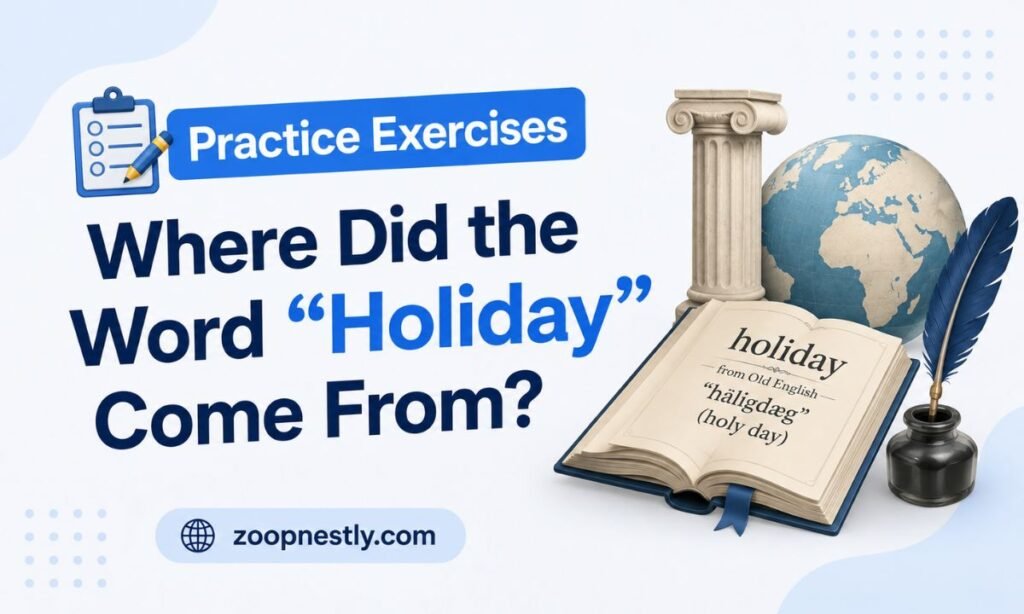
The word holiday traces back to the Old English “haligdaeg,” a combination of “halig” (holy) and “daeg” (day). Originally, it referred strictly to a religious feast day or a day set apart for worship.
How the Meaning Changed
Over centuries, the meaning broadened. What started as a purely religious term gradually came to include any day of rest or celebration, and eventually extended to cover vacations and trips. This shift happened because holy days were traditionally days people didn’t work, so the connection between “day off” and “holiday” became natural over time.
How to Spell Holiday Correctly
The safest way to remember the spelling is this: holiday has one L. Think of it as “holi” plus “day,” similar to how “holy” only has one L.
Common Spelling Errors
- Holliday (double L) — incorrect, unless referring to a proper noun
- Holaday — incorrect
- Hollyday — incorrect
Why These Errors Happen
Most spelling mistakes here come from visual association with surnames like “Holliday,” phonetic guessing since the word sounds like it could have a double letter, or simple typos that spellcheck tools miss because “Holliday” is a recognized proper noun.
DISCOVER MORE : Signer vs Signor: Understanding the Difference
British vs American English Usage
Key Fact
Both British and American English spell the word the same way: holiday. The spelling doesn’t change across dialects. What changes is the usage and frequency of certain meanings.
Usage Distinction
In British English, “holiday” is the everyday word for what Americans call “vacation.” A Brit might say, “We’re going on holiday to France,” while an American would say, “We’re going on vacation to France.” American English tends to reserve “holiday” for specific calendar days like Thanksgiving or the Fourth of July, rather than for trips.
Holliday vs Holiday: Key Differences
| Feature | Holiday | Holliday |
| Part of speech | Noun/Verb | Proper noun only |
| Dictionary entry | Yes | No |
| Common meaning | Day off, celebration, trip | Surname or first name |
| Frequency of use | Very common | Rare, name-specific |
Common Mistakes with Holliday vs Holiday
Frequent Mistakes
People often write “holliday” when texting quickly, when they’ve recently seen the surname somewhere, or when relying on autocomplete suggestions that don’t flag proper nouns as errors.
Example of the Mistake in Action
Incorrect: “Happy holliday season to you and your family!” Correct: “Happy holiday season to you and your family!”
This kind of typo can look unprofessional in emails, resumes, or business communication, so it’s worth double-checking before you hit send.
Holiday in Everyday Language
Common Expressions
- “On holiday” – away from work or home for leisure
- “Holiday season” – the period around major year-end celebrations
- “Public holiday” – an official non-working day
- “Holiday pay” – wages earned for time off during a recognized holiday
Example Sentences
- “The office is closed for the holiday on Monday.”
- “She’s on holiday in Italy this week.”
- “Retailers see a spike in sales during the holiday season.”
Holiday vs Vacation: What’s the Difference?
Key Insight
In American English, “vacation” typically means a leisure trip or extended time off, while “holiday” refers to a specific recognized day like Christmas or Memorial Day. In British English, “holiday” covers both meanings, and “vacation” is rarely used outside of academic contexts like a “university vacation.”
Holiday vs Holidays vs Vacation
| Term | Region | Meaning |
| Holiday (singular) | US/UK | A specific day of celebration or rest |
| Holidays (plural) | UK | An extended break, often from school |
| Vacation | US | A leisure trip or time off work |
When Is “Holliday” Actually Correct?
Appropriate Contexts
“Holliday” is correct only when referring to a proper noun, such as:
- A person’s surname (Doc Holliday, Billie Holliday)
- A place name that happens to use this spelling
- A brand or business name registered with that spelling
Example
“Billie Holliday” is sometimes seen, though the famous jazz singer’s name is actually spelled “Billie Holiday” with one L, which shows just how easy it is to get this wrong even with well-known names.
Why Does This Confusion Happen?
The core issue is that “Holliday” looks like a perfectly normal variant spelling, especially since English has plenty of words with double letters. Add in the fact that recognizable public figures share the surname, and it’s easy to see why people second-guess the one-L version.
Does Spellcheck Catch This Error?
Why It Often Doesn’t
Most spellcheck tools recognize “Holliday” as a valid proper noun, so they won’t flag it as a misspelling even when you meant to write “holiday.” This is one of the sneakiest parts of the mix-up.
What You Should Do Instead
Read your sentence back and ask whether you’re referring to a day off or a person’s name. If it’s a day off, celebration, or trip, it should always be holiday.
Why This Mistake Matters in Professional Writing
A misspelled word like “holliday” in a company newsletter, client email, or marketing campaign can quietly undercut your credibility. Readers may not consciously notice the error, but it can create a subtle impression of carelessness, especially in formal or customer-facing communication. Taking a few extra seconds to proofread pays off.
Practice Exercises

Fill in the Blanks
- We’re planning a summer _____ to the mountains.
- _____ was a well-known figure in Wild West history.
- The office will be closed for the _____ on Friday.
Answers & Explanations
- Holiday — refers to a trip or break.
- Holliday — refers to a surname.
- Holiday — refers to a day off work.
Multiple Choice
Which sentence is correct? a) I love the holliday season. b) I love the holiday season.
Answer: b. “Holiday” is the correct spelling for the season of celebrations.
Trick Question
Is “Doc Holliday’s holiday” grammatically correct?
Explanation: Yes. This sentence correctly uses both words: “Holliday” as the surname and “holiday” as the common noun meaning a day off or trip.
Quick Rule to Remember
One L, one day off. If you’re describing a break from work, school, or a special occasion, it’s always holiday.
A Pattern Worth Noticing
Many English words that trace back to “holy” or religious roots, like holiday, keep a single consonant where you might expect doubling. Comparing “holy” to “holiday” can help you remember the correct spelling almost automatically.
Final Tip
Before publishing or sending anything, do a quick search for “holliday” in your document. If it’s not referring to a person’s name, change it to holiday.
Key Takeaways
- Holiday is the correct spelling for a day off, celebration, or trip.
- Holliday is only correct as a proper noun, like a surname.
- Spellcheck often misses this error because “Holliday” is a valid name.
- British and American English spell it the same way, though usage differs.
- When in doubt, connect it back to “holy” to remember the single L.
FAQs
Is it spelled holiday or holliday?
It’s spelled holiday with one L when referring to a day off, celebration, or vacation. “Holliday” with two L’s is only correct as a proper noun.
Is Holliday a real last name?
Yes, Holliday is a real surname, most famously associated with the Old West figure Doc Holliday. It’s also used as a first name in some cases.
Why does my spellcheck not catch “holliday” as wrong?
Spellcheck tools often recognize “Holliday” as a valid proper noun, so they don’t flag it even when you meant the common word holiday.
Is “holiday” spelled the same in British and American English?
Yes, the spelling is identical in both. The difference lies in usage, since British English uses “holiday” for trips and vacations, while American English typically reserves it for specific calendar days.
What is the easiest way to remember the correct spelling?
Think of the word “holy,” which also has a single L. Since holiday comes from “holy day,” keeping that connection in mind makes the correct spelling easy to recall.
Final Thoughts
The difference between holliday vs holiday comes down to a simple rule: one is an everyday English word, and the other is a name. Once you connect “holiday” to its roots in “holy day,” the single-L spelling becomes second nature. Keep this guide handy the next time autocorrect stays silent and you’re not quite sure which version to trust.

James Walker is a content writer and language researcher with over 5 years of experience in meanings, definitions, and language-related topics. He enjoys simplifying complex terms into clear, easy-to-understand explanations. Through ZoopNestly.com, he helps readers find accurate and reliable information.