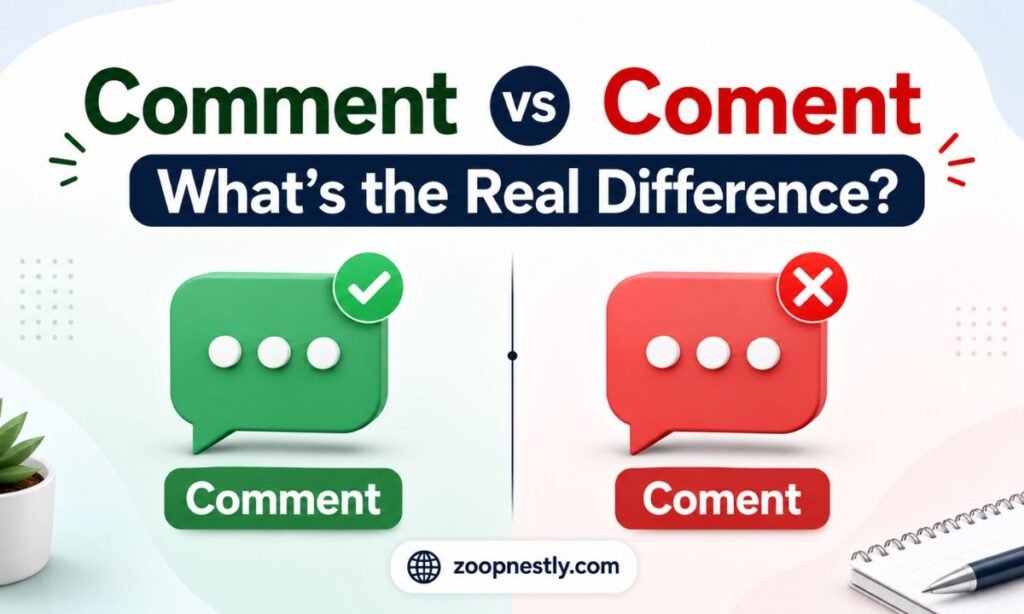
Comment vs Coment: Which Word Should You Use?
You typed a quick reply, hovered over the word, and something felt off. Was it “comment” or “coment”? One extra letter shouldn’t cause this much hesitation, but spelling doubts sneak up on even confident writers. The truth is simple: comment vs coment isn’t really a debate, because only one of these is a real English word. Getting it wrong in an email, a social post, or code can quietly hurt your credibility.
Quick Answer
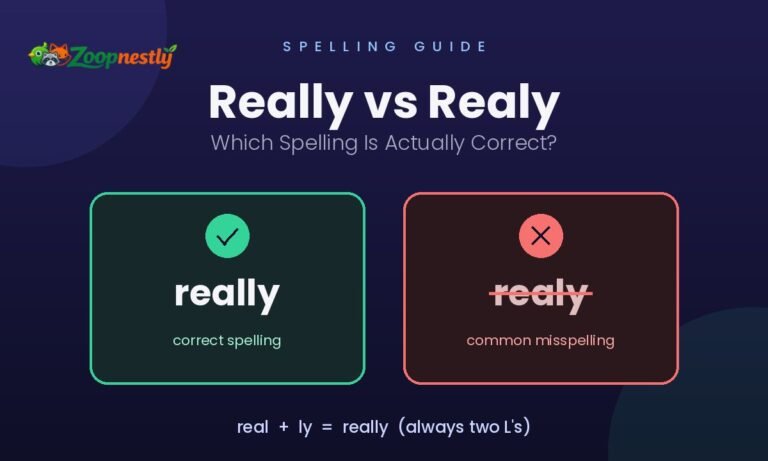
Comment is the correct spelling in English. It means a remark, note, or observation, and it’s also used in programming to describe lines of explanatory text. Coment is not a recognized word in any dictionary, it’s simply a common misspelling caused by dropping one “m.”
Comment vs Coment: What’s the Real Difference?
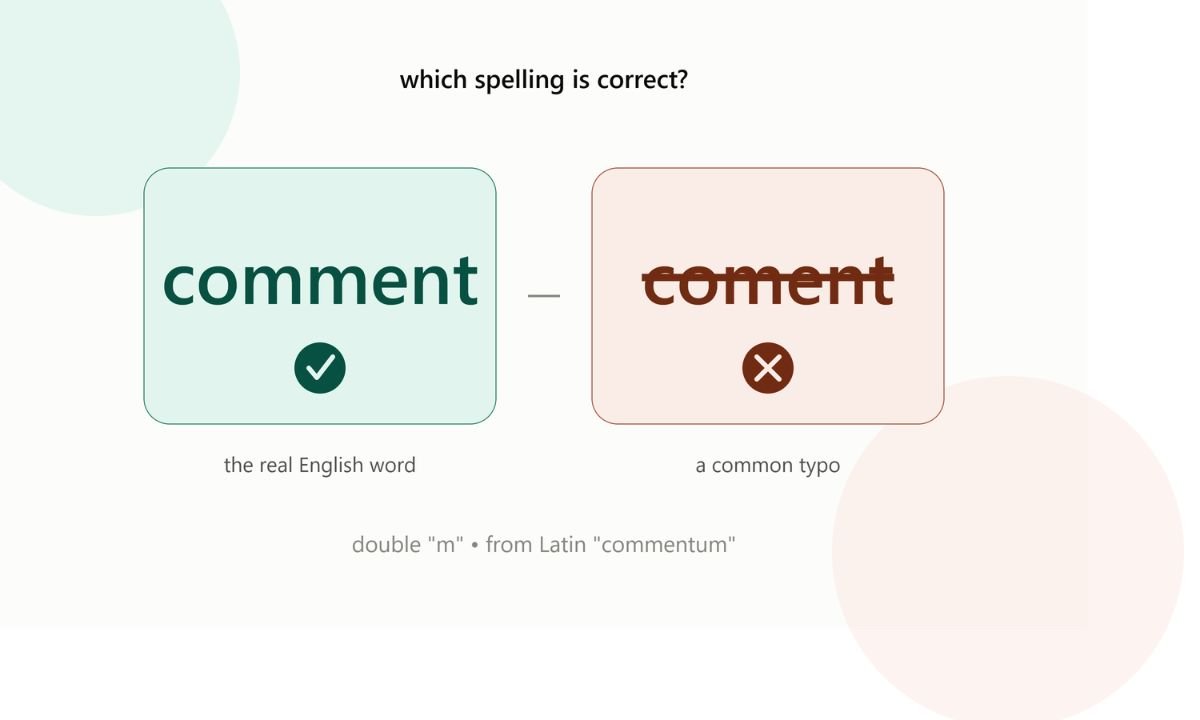
There’s no real difference in meaning because “coment” has no accepted meaning at all. It’s not slang, it’s not a regional spelling, and it’s not used in any professional or academic context. “Comment” carries the double “m” for a reason rooted in its Latin origin (commentum, meaning an invention or interpretation), and English kept that spelling intact.
So when people search “comment vs coment,” they’re usually just trying to confirm what already feels slightly wrong: the single-“m” version.
| Feature | Comment | Coment |
| Correct English word | Yes | No |
| Found in dictionaries | Yes | No |
| Used in programming | Yes | No |
| Common cause | Standard spelling | Typo or double-letter mistake |
Why the Double “M” Trips People Up
English has a habit of doubling consonants in ways that don’t always feel intuitive. Words like “recommend,” “accommodate,” and “comment” all keep double letters from their Latin roots, even though the pronunciation doesn’t hint at it. When you say “comment” out loud, the second “m” doesn’t sound emphasized, so your brain doesn’t flag it as important. That’s the main reason “coment” shows up so often in fast typing, autocorrect gaps, and non-native English writing.
What Does Comment Mean in English?
At its core, a comment is a spoken or written remark that expresses an opinion, observation, or reaction. It can be:
- A verbal reply during a conversation
- A written note added to a document
- A public reaction to a post, article, or video
Example sentences:
- She made a quick comment about the weather before leaving.
- Please leave a comment if you have questions about the report.
- His comment during the meeting sparked a longer discussion.
Comment as a Verb vs a Noun
“Comment” works as both a noun and a verb, and the meaning shifts slightly depending on use.
- As a noun: “His comment surprised everyone.”
- As a verb: “Feel free to comment on this post.”
This flexibility is part of why the word appears so often across writing, social media, and everyday conversation. Confusing the two forms isn’t a spelling issue, but it’s worth knowing the difference so your sentences read naturally.
Comment Section: What It Means on Social Media

The comment section is the space beneath a post, video, or article where users can respond publicly. It’s become one of the most active parts of online communication, often generating more engagement than the original content itself. Brands, creators, and everyday users treat comment sections as a place to ask questions, share opinions, or start conversations.
A well-written comment adds value. A rushed one, especially with a typo like “coment,” can look careless in a professional or branded account.
Comment Meaning in Programming
In coding, a comment is a line (or block) of text that the computer ignores during execution. Developers write comments to explain what the code does, leave reminders, or temporarily disable a piece of code without deleting it.
Comments don’t affect how a program runs. They exist purely for humans reading the code, whether that’s a teammate, a future version of yourself, or someone maintaining the project later.
Comment in C and Other Programming Languages
In the C language, comments follow specific syntax rules:
// This is a single-line comment
/* This is a
multi-line comment */
Most modern languages follow a similar pattern. Python uses #, JavaScript uses // and /* */, and HTML uses <!– –>. The symbols differ, but the purpose stays the same: explain the code without changing how it runs.
Single-Line, Multi-Line, and Inline Comments
Understanding comment types helps developers write cleaner, more readable code.
- Single-line comment: Explains one line or a short thought. // Calculate total price
- Multi-line comment: Covers longer explanations or temporarily disables blocks of code. /* This function handles user login validation */
- Inline comment: Sits at the end of a line of code to clarify that specific line. let total = price * quantity; // multiply price by quantity
Each type serves a different readability purpose, and mixing them appropriately makes code easier to maintain.
Comment Out vs Uncomment
“Comment out” means turning a line of active code into a comment so it stops running, without deleting it. “Uncomment” means reversing that, restoring the line back to active code.
This is one of the most practical habits in programming. Developers use it constantly while debugging, testing alternate logic, or temporarily disabling a feature.
Example:
# print(“Debug message”) # commented out, this line won’t run
print(“Debug message”) # uncommented, this line runs
Best Practices for Writing Comments in Code
Good comments make code easier to understand, not harder. A few habits that hold up across languages:
- Explain why the code does something, not just what it does
- Keep comments short and specific
- Update comments when the code changes
- Avoid commenting on obvious lines, like // add two numbers above a + b
- Use comments to flag unfinished work, such as // TODO: handle empty input
Comments that go stale or contradict the actual code cause more confusion than having no comment at all.
DISCOVER MORE : Ladel or Ladle: Easy Guide to the Correct Usage
Common Mistakes People Make With “Comment”
- Spelling it “coment” by dropping the second “m”
- Confusing “comment” with “commend” (to praise) or “comment” with “content” (material itself)
- Using “comment” when “commentary” (a longer, more detailed analysis) fits better
- Forgetting that “comment” as a verb often needs a preposition, as in “comment on this post,” not just “comment this post”
How to Remember the Correct Spelling
A simple trick: think of the phrase “com-MENT,” splitting it into two familiar chunks, “com” and “ment.” Picturing the word in two pieces makes the double “m” easier to recall, since each half looks complete on its own.
Comment vs Commend: Don’t Mix These Up
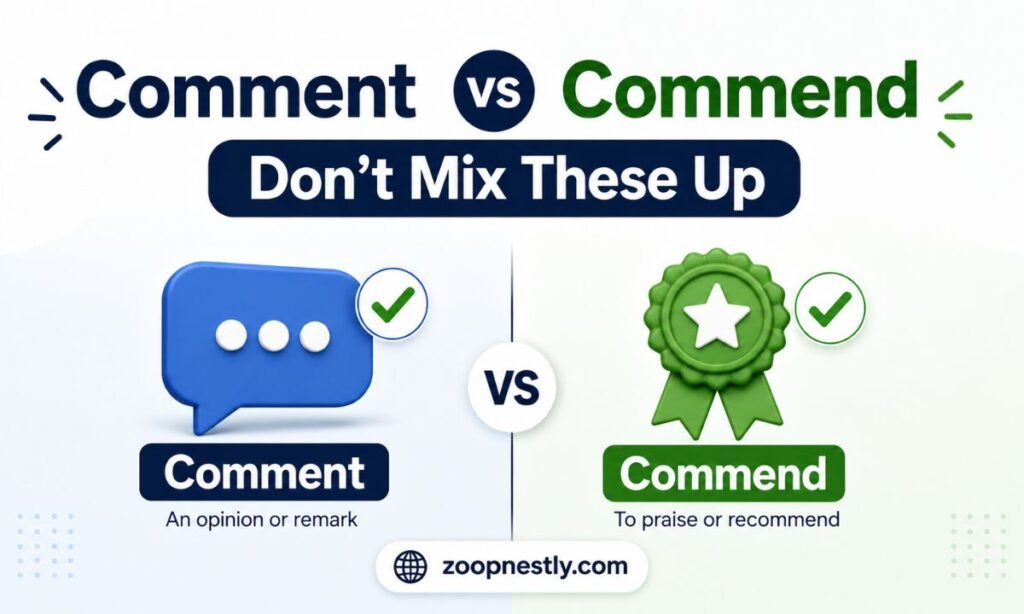
These two words look similar but mean very different things.
- Comment: a remark or note “She left a comment on my post.”
- Commend: to praise or officially recognize someone “The manager commended her for the great presentation.”
Since both words share a similar rhythm when spoken quickly, they sometimes get swapped in casual writing. Checking the intended meaning before typing helps avoid this mix-up.
How Is “Comment” Pronounced?
“Comment” is pronounced KOM-ent, with the stress on the first syllable. The double “m” doesn’t change the pronunciation, it’s purely a spelling convention carried over from its Latin root. This is part of why the misspelling “coment” is so common: nothing in the sound of the word signals that second “m.”
Quick Practice: Comment or Coment?
Test yourself with these short exercises.
Fill in the blank:
- Please leave a ______ below if you enjoyed the video.
- Her ______ during the interview impressed the panel.
Identify the correct spelling:
- coment ❌
- comment ✅
Answer key: 1. comment, 2. comment
Final Takeaway
When comparing comment vs coment, there’s no real contest. “Comment” is the only correct spelling, used across everyday writing, social media, and programming. “Coment” is simply a typo with no accepted meaning. Once you connect the double “m” to the word’s structure, the correct spelling becomes automatic, whether you’re replying to a post, writing documentation, or leaving a note in your code.
Frequently Asked Questions
Is “coment” ever correct in any context?
No. “Coment” is not recognized in standard English dictionaries or any technical field, including programming. It’s always a misspelling of “comment.”
Why does “comment” have a double “m”?
The double “m” comes from its Latin origin, commentum. English preserved this spelling even though the pronunciation doesn’t emphasize the second letter.
What is the difference between a comment and a reply?
A comment is typically an original remark added to a post or piece of content, while a reply responds directly to another comment or message within that thread.
How do you use “comment” correctly in a sentence?
Use it as a noun for a remark (“His comment was helpful”) or as a verb for the act of remarking (“Feel free to comment on this article”).
What’s the difference between commenting and commenting out code?
Commenting code means adding explanatory notes for readability. Commenting out code means disabling a specific line or block so it doesn’t execute, while keeping it visible for later use.

James Walker is a content writer and language researcher with over 5 years of experience in meanings, definitions, and language-related topics. He enjoys simplifying complex terms into clear, easy-to-understand explanations. Through ZoopNestly.com, he helps readers find accurate and reliable information.