Label vs Lable: Which Word Is Right and Why?
Ever typed a word so fast that it suddenly looks wrong, even though you’ve written it a hundred times before? That’s exactly what happens with label. You glance at it, something feels off, and you start wondering if it’s actually spelled “lable.”
This mix-up trips up more writers than you’d expect, especially when typing quickly or relying on autocorrect. If you’ve ever paused mid-sentence unsure which version to trust, this guide clears it up for good.
Quick Answer
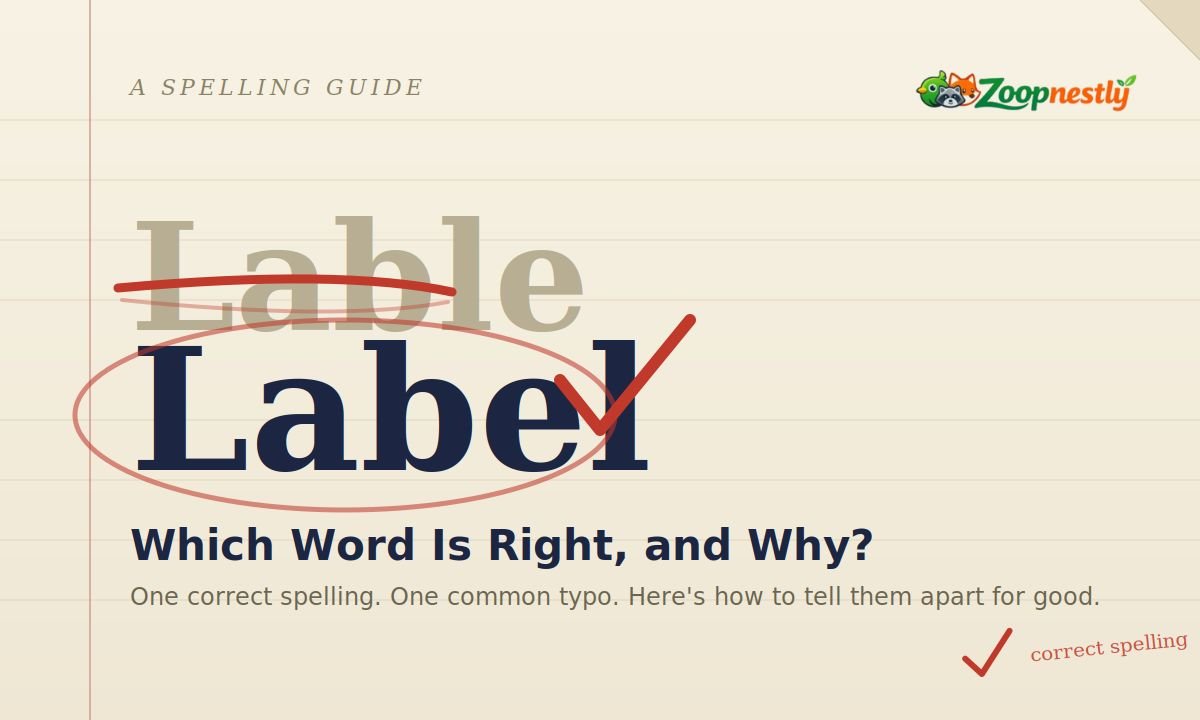
Label is the correct spelling. Lable is a common misspelling with no valid use in English. The confusion usually comes from how the word sounds when spoken quickly, plus a simple letter-order mix-up between “a” and “l.” Stick with label in every context, whether you mean a product tag or the act of naming something.
What Does “Label” Mean?
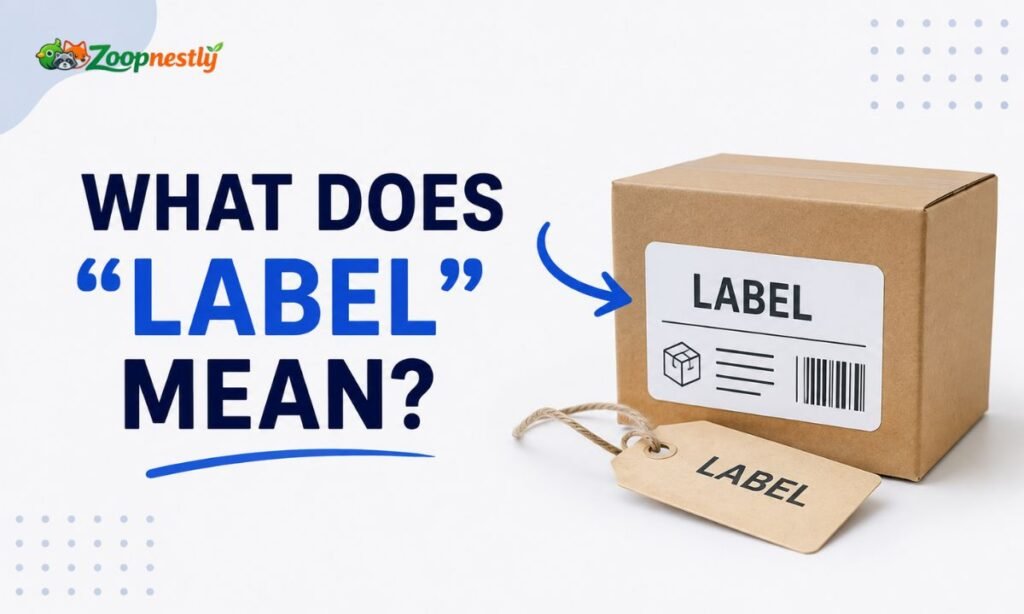
The word label has two main jobs in English: it works as a noun and as a verb.
As a noun, a label is a piece of paper, fabric, or digital tag that identifies something. Think of the tag on a water bottle or the name tag on a file folder.
As a verb, to label means to attach a name, category, or description to something. For example, “Please label each box before the move.”
Both uses are common in everyday writing, business communication, and casual conversation, so getting the spelling right matters across the board.
Why Is It “Label” and Not “Lable”?
English spelling doesn’t always follow strict phonetic rules, and label is a good example. The word comes from the Old French “label” or “lambel,” which itself traces back to a Germanic root related to strips of cloth. Over time, English kept the spelling close to its French origin: l-a-b-e-l.
“Lable” isn’t a recognized variation in any dictionary, style guide, or English-speaking region. It’s simply a spelling error, not an alternate or regional form like you might find with words such as “color” and “colour.”
Label vs Lable: Quick Comparison
| Feature | Label | Lable |
| Correct spelling | Yes | No |
| Found in dictionaries | Yes | No |
| Used in formal writing | Yes | Never |
| Common cause | N/A | Letter reversal, fast typing |
| Word origin | Old French “label” | Not a real word |
Common Reasons People Misspell “Label” as “Lable”
Understanding why this mistake happens makes it easier to avoid.
Pronunciation confusion. When spoken quickly, the “a” and “l” sounds can blend together, making the word sound like it starts with “la-ble” instead of clearly separating each syllable.
Letter reversal. Swapping two letters that are close together is one of the most common typing errors in English, and “label” is a frequent victim of this.
Speed typing. On phones and keyboards, fast typing often leads to small transpositions, especially in short, familiar words we don’t consciously think about spelling.
Autocorrect gaps. Not every keyboard catches this specific error, since “lable” still looks close enough to a real word that some spell checkers let it slide or suggest the wrong fix.
Label as a Noun vs a Verb: Real Examples
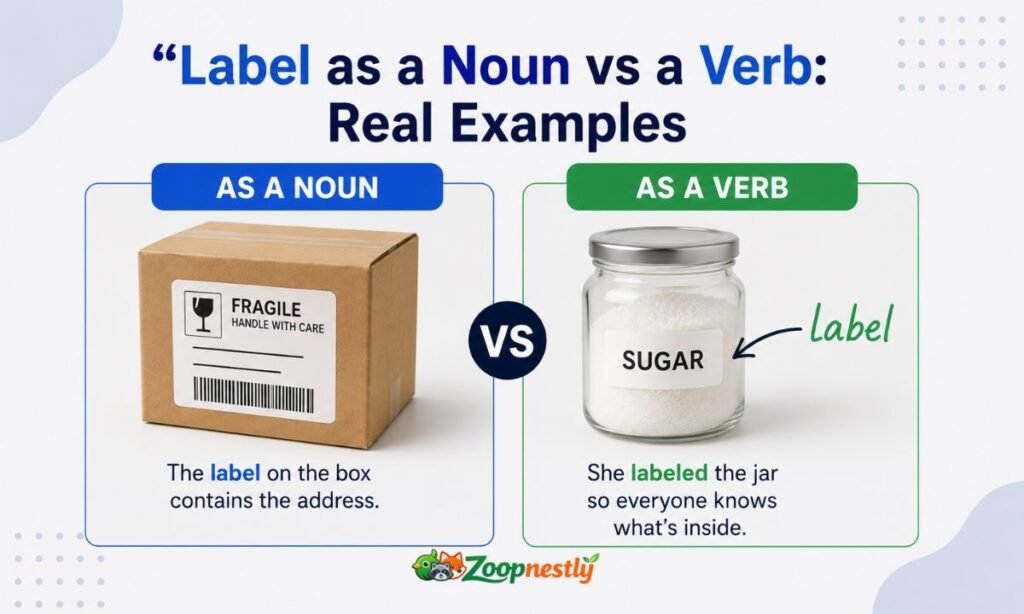
Seeing the word in context helps lock in the correct spelling.
As a noun:
- The label on the jar listed all the ingredients.
- She peeled the price label off the mug.
- His music label signed three new artists this year.
As a verb:
- Please label the folders by department.
- Teachers often label classroom supplies with student names.
- Doctors label medications clearly to avoid mix-ups.
Notice that the spelling never changes between the two uses, only the role the word plays in the sentence.
Common Grammar Mistakes Related to “Label”
A few grammar slip-ups tend to show up alongside the spelling issue.
Incorrect verb forms. The past tense is “labeled” in American English and “labelled” in British English (double “l”). Both are correct depending on the region, but mixing them within the same document looks inconsistent.
Using “lable” in professional writing. This one is a quick way to lose credibility in resumes, emails, or reports. Spell checkers usually catch it, but manual proofreading is still worth the extra minute.
Confusing “labeling” and “labelling.” Same rule applies here: American English drops the second “l,” British English keeps it. Pick one style and stay consistent throughout your writing.
How to Remember the Correct Spelling
A few simple tricks make this word stick.
- Break it into sounds: “la” + “bel.” Saying it slowly out loud helps separate the letters in your mind.
- Compare it to similar words: Words like “table” and “cable” follow a similar pattern and can serve as a mental anchor.
- Write it a few times by hand. Physical repetition helps with muscle memory, especially for words you type often but rarely write out.
- Read it in context. Seeing “label” used correctly in books, articles, or product packaging reinforces the correct pattern naturally.
DISCOVER MORE : It’s Called vs It Called: Which One Is Actually Correct?
Where You’ll See the Word “Label” Used
The word shows up in more places than most people realize.
Product packaging. Nutrition facts, ingredient lists, and warning tags all rely on clear, accurate labels.
Education and science. Diagrams, lab samples, and classroom materials often need to be labeled for clarity and accuracy.
Technology and file management. Digital files, folders, and email tags are frequently labeled to keep systems organized.
Social contexts. People sometimes talk about being “labeled” a certain way, referring to how others categorize or describe them based on limited information.
Frequently Confused Words Similar to “Label”
A few other commonly misspelled words follow a similar pattern to “label,” where letter order or pronunciation causes trouble:
- Table (not “tible” or “tabel”)
- Cable (not “cible”)
- Stable (not “stible”)
- Fable (not “fible”)
Recognizing this shared “-able/-abel” pattern can help you spell all of these correctly without much extra effort.
Quick Tips to Avoid Spelling Mistakes Like This
- Use built-in spell check tools, but don’t rely on them completely since they occasionally miss near-misses.
- Read your writing out loud before publishing or sending it. Errors are easier to catch by ear.
- Slow down while typing, especially on mobile devices where transpositions happen more often.
- Keep a short list of words you personally misspell often, and review it occasionally.
- Read well-edited content regularly. Exposure to correctly spelled words builds familiarity over time.
“Label” in Everyday and Professional Use
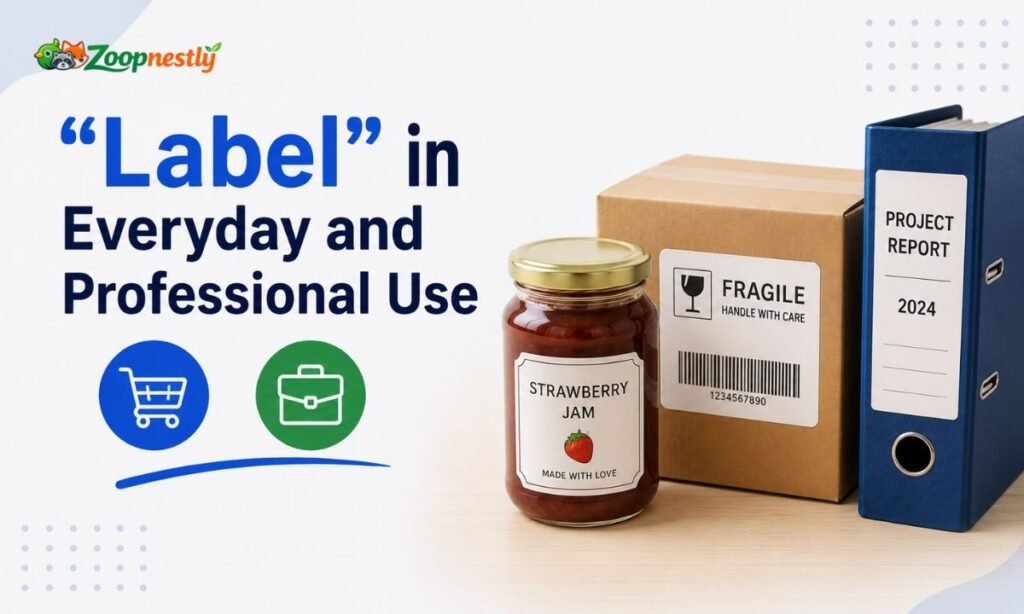
Beyond packaging and paperwork, the word carries weight in a few specific settings worth knowing.
Marketing and branding: Companies talk about “private label” products, meaning items manufactured by one company but sold under another’s brand name.
Music industry: A “record label” refers to a company that produces and distributes music, a completely different meaning from the physical tag sense.
Relationships: People sometimes ask whether they’re “official” or want to “put a label” on a relationship, meaning they want a clear, defined status.
File and email organization: Many email platforms let users create custom labels to sort and categorize messages instead of using traditional folders.
Frequently Asked Questions
Is “lable” ever a correct spelling in any dialect of English?
No. “Lable” isn’t recognized in American, British, Canadian, or Australian English. It’s a spelling mistake in every context.
What is the past tense of “label”?
In American English, it’s “labeled.” In British English, it’s “labelled” with a double “l.” Both are grammatically correct depending on the regional style you’re following.
Why do so many people misspell “label” as “lable”?
It usually comes down to fast typing, letter reversal, or the way the word sounds when spoken quickly. It’s one of the more common transposition errors in English.
Can “label” be used as both a noun and a verb?
Yes. As a noun, it refers to a tag or identifier. As a verb, it means to name, categorize, or mark something. The spelling stays the same either way.
Are there other words that follow the same “-abel” pattern as “label”?
Not many, since “label” is somewhat unique in its ending. However, words like “table,” “cable,” and “fable” share a similar rhythm and can help reinforce correct spelling through pattern recognition.
Final Thoughts
The rule here is simple: always use label, never “lable.” The correct spelling has deep roots in English through its Old French origin, and it stays consistent whether you’re using it as a noun or a verb. Once you understand why the mistake happens, whether it’s fast typing, pronunciation, or a simple letter swap, it becomes much easier to catch and avoid. A little attention while writing or proofreading goes a long way toward keeping your work polished and accurate.

James Walker is a content writer and language researcher with over 5 years of experience in meanings, definitions, and language-related topics. He enjoys simplifying complex terms into clear, easy-to-understand explanations. Through ZoopNestly.com, he helps readers find accurate and reliable information.