Ingage vs Engage: Which Spelling Is Actually Correct?
You’re typing an email, a caption, or a college essay, and your fingers type “ingage” without even thinking about it. It looks almost right. It sounds identical when spoken. But something makes you pause and wonder if you just made a mistake in front of your boss or professor. That small hesitation is exactly why so many people search ingage vs engage before hitting send, and the answer is simpler than you think.
Quick Answer
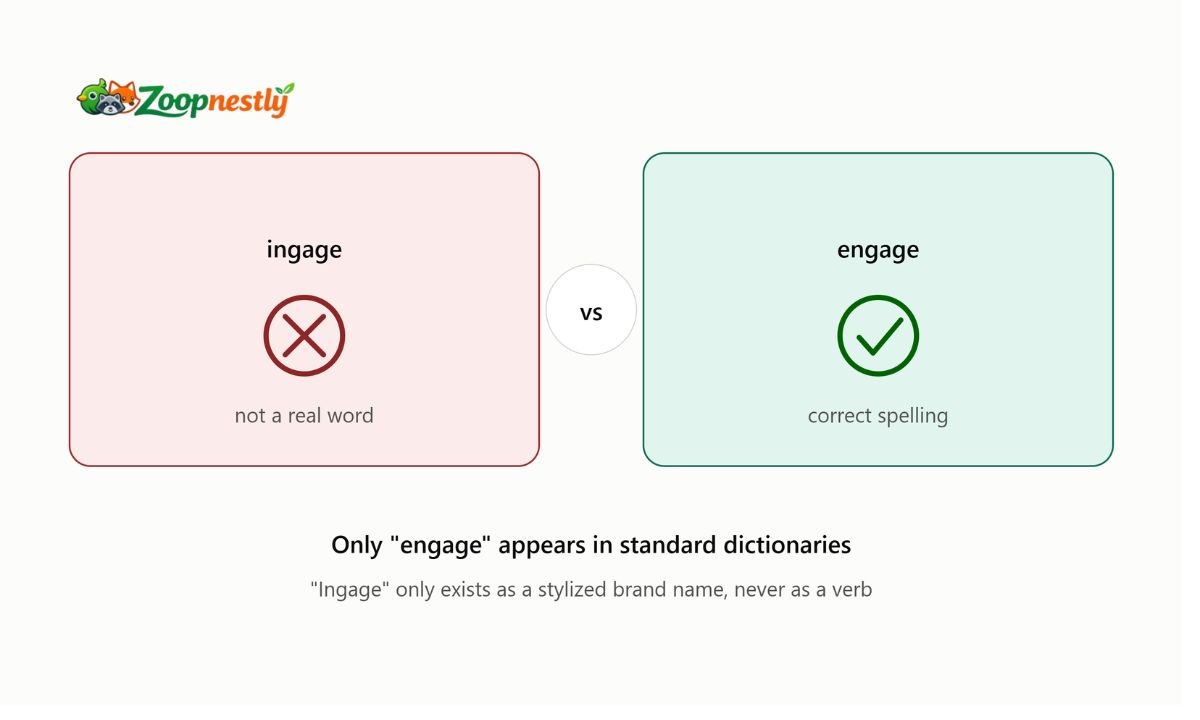
Engage is the only correct spelling in standard English. Ingage is not a recognized word in any major dictionary, though it appears as a brand name for a few companies and software products. If you’re writing a sentence, an email, or an assignment, always use “engage.”
Now let’s look at why this mix-up happens so often, and how to make sure you never second-guess yourself again.
Why Do People Confuse Ingage and Engage?
The confusion comes down to sound, not spelling. Both words are pronounced the same way, with the stress falling on the second syllable: en-GAGE. Because English speakers often write words the way they sound rather than checking the actual spelling, “in” gets swapped in for “en” without anyone noticing.
There’s also a pattern effect at play. English has plenty of words that start with “in” as a prefix, like inactive, insert, and inform. Your brain sees a familiar pattern and assumes “ingage” should follow the same rule. It doesn’t, because “engage” was never built from that prefix in the first place.
Where Does the Word Engage Come From?
Engage traces back to Old French, from the word engager, which itself came from gage, meaning a pledge or a promise. Over time, English adopted the word to describe the act of committing to something, whether that meant a legal pledge, a battle, or simply paying attention to someone. That French-derived “en” prefix is why the correct spelling has always started with an “e,” not an “i.”
Knowing this small piece of word history makes the spelling much easier to remember, because there was never an “in” version to begin with.
What Does Engage Actually Mean?
At its core, engage means to involve yourself or someone else in an activity, to attract and hold attention, or to commit to a task, agreement, or relationship. The meaning shifts slightly depending on context, but the central idea stays the same: connection and involvement.
Here are the most common uses:
- To participate or get involved: “She decided to engage in the community project.”
- To capture attention: “The speaker knew how to engage the audience.”
- To commit or hire: “The company plans to engage a new marketing consultant.”
- To enter into conflict (formal or military use): “The troops were ordered to engage the enemy.”
- To become engaged for marriage: “They got engaged last spring.”
Is Ingage Ever a Real Word?
No. “Ingage” is not listed in Merriam-Webster, Oxford, Cambridge, or any other standard English dictionary. It has no grammatical function, no accepted definition, and no historical root of its own. Any time you see “ingage” in a sentence, it’s a spelling error, not an alternate form of the word.
The one exception worth knowing: Ingage does exist as a proper noun, used as the brand name for certain software platforms, marketing tools, and business names. Companies sometimes choose stylized spellings like this to make their brand name stand out and easier to trademark. This is branding, not grammar, and it should never be treated as a correct way to spell the verb “engage” in everyday writing.
Ingage vs Engage: Side-by-Side Comparison
| Feature | Engage | Ingage |
|---|---|---|
| Dictionary word | Yes | No |
| Correct in formal writing | Yes | No |
| Grammatically valid | Yes | No |
| Used as a brand name | Rare | Yes |
| Origin | Old French engager | None (misspelling) |
| Recommended usage | Always | Only as a proper brand name |
Common Mistakes People Make With Engage
Writing “Ingage” Instead of “Engage”
This is the most frequent error, usually caused by mishearing the word or typing on autopilot.
Incorrect: The teacher tried to ingage the students. Correct: The teacher tried to engage the students.
Confusing Engage With Engagement
“Engage” is a verb describing an action. “Engagement” is a noun describing the state, event, or result of engaging. Mixing the two up changes the grammar of the whole sentence.
Incorrect: They announced their engage last weekend. Correct: They announced their engagement last weekend.
Overusing Engage in Marketing Copy
Marketers often lean on “engage” so heavily that it loses meaning. Repeating it in every sentence makes writing feel generic instead of persuasive.
Weak: Engage your customers to engage more and boost engagement. Improved: Give your customers reasons to interact, respond, and stay connected with your brand.
How Engage Is Used in Business and Marketing
In professional settings, “engagement” has become a key performance term, especially online.
- Customer engagement refers to how customers interact with a brand across purchases, support, reviews, and social media.
- Audience engagement measures how people respond to content through likes, comments, shares, watch time, or click-through rates.
- Employee engagement describes how motivated, connected, and invested employees feel toward their work and company.
Each of these terms uses “engage” as its root because they all describe active involvement rather than passive presence.
Why Employee Engagement Matters at Work
Employee engagement affects morale, productivity, and retention. Teams that feel genuinely engaged tend to communicate better and take more ownership of their work. Managers often measure this through surveys, one-on-one check-ins, and feedback sessions rather than guesswork.
Example: “The new onboarding process helped new hires engage with the company culture much faster.”
How Teachers Use the Word Engage
In education, “engage” describes how well a lesson holds a student’s attention and encourages participation. A teacher might use group discussions, real-world examples, or interactive activities specifically to engage a class that’s losing focus.
Example: “The professor used real case studies to engage students who usually stayed quiet during lectures.”
DISCOVER MORE : Home Made or Homemade: Which Is Correct?
Engage in a Relationship or Personal Context
Outside of work, “engage” often shows up in personal and romantic contexts. Getting “engaged” means agreeing to marry someone, while “engaging with someone” in conversation means being present, attentive, and responsive rather than distracted.
Example: “He finally proposed, and they got engaged on New Year’s Eve.”
Synonyms for Engage
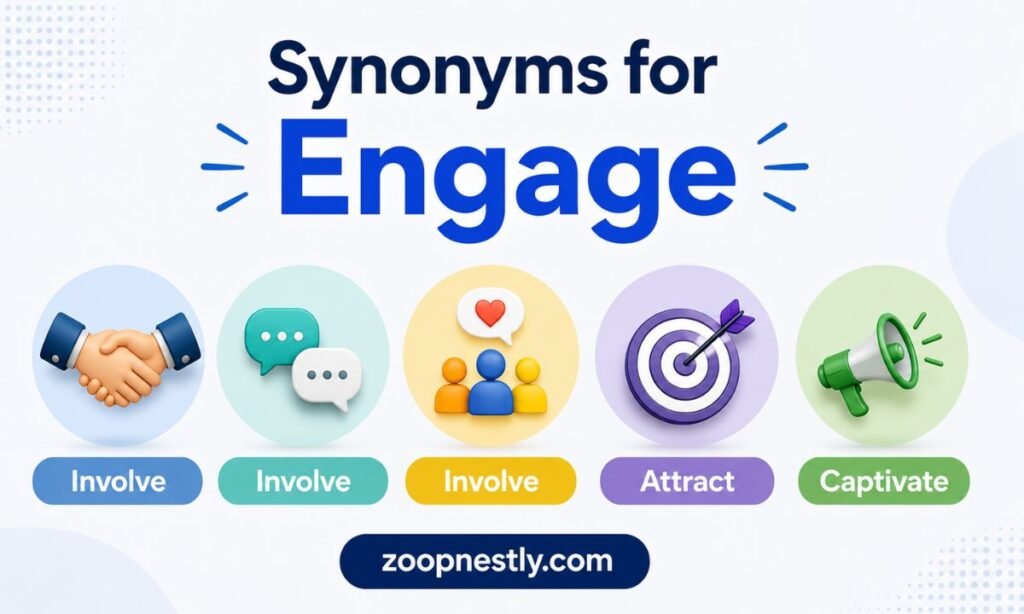
Depending on the context, several words can replace “engage” without losing meaning:
- Involve
- Participate
- Captivate
- Attract
- Commit
- Hire
- Connect
- Occupy
Choosing the right synonym depends on tone. “Captivate” works well for storytelling, while “hire” fits better in a business or legal sentence.
A Simple Trick to Remember the Correct Spelling
If you keep mixing up ingage vs engage, try this memory trick: think of the word “enter.” Both “enter” and “engage” start with “en,” and both involve stepping into something, whether that’s a room or an activity. If you can remember “enter,” you can remember “engage.”
Another shortcut: say the word slowly and picture the French root engager, which starts with an “e.” There was never an “i” version to begin with, so there’s nothing extra to memorize, only the correct spelling to reinforce.
Practice: Test Your Understanding
Try these quick exercises to check what you’ve learned.
Fill in the blank:
- The volunteers were eager to ______ with the local charity event.
- She felt truly ______ during the workshop for the first time all year.
Spot the mistake: “The manager wants to ingage the whole team in the new project.”
Multiple choice: Which sentence is correct? A) They plan to ingage a consultant next month. B) They plan to engage a consultant next month.
(Answers: 1. engage, 2. engaged; the mistake sentence should read “engage”; the correct multiple choice answer is B.)
Frequently Asked Questions
Is “ingage” a misspelling of “engage”?
Yes. “Ingage” has no standard dictionary definition and is considered an incorrect spelling of “engage” in everyday English writing.
Why do some brands use the spelling “Ingage”?
Companies sometimes use stylized or altered spellings like “Ingage” to create a unique, trademarkable brand name. This is a marketing choice, not a grammar rule, and it doesn’t apply outside of that specific brand context.
What is the correct past tense of engage?
The correct past tense is engaged, as in “She engaged with the audience during her speech.”
What part of speech is engage?
Engage is primarily used as a verb, describing an action of involvement, attention, or commitment.
Can “engage” be used in casual conversation?
Yes. While it appears often in business and formal writing, “engage” works naturally in everyday conversation too, such as “I couldn’t engage with the movie” or “Let’s engage in a quick chat.”
Conclusion
When it comes to ingage vs engage, there’s really only one correct choice for standard writing: engage. “Ingage” only holds meaning as a stylized brand name, never as a proper English word. Once you understand the French root behind “engage” and practice using it in context, the spelling becomes second nature, and you’ll never have to second-guess that sentence again.

James Walker is a content writer and language researcher with over 5 years of experience in meanings, definitions, and language-related topics. He enjoys simplifying complex terms into clear, easy-to-understand explanations. Through ZoopNestly.com, he helps readers find accurate and reliable information.