Dammit or Damnit: Which Word Should You Use?
You’re texting a friend, you stub your toe, or you just missed your bus, and out comes that familiar word. But then your fingers hover over the keyboard for a second longer than they should. Is it dammit or damnit? The debate over dammit vs damnit trips up even confident writers, mostly because both versions look plausible once you stare at them long enough.
Quick Answer
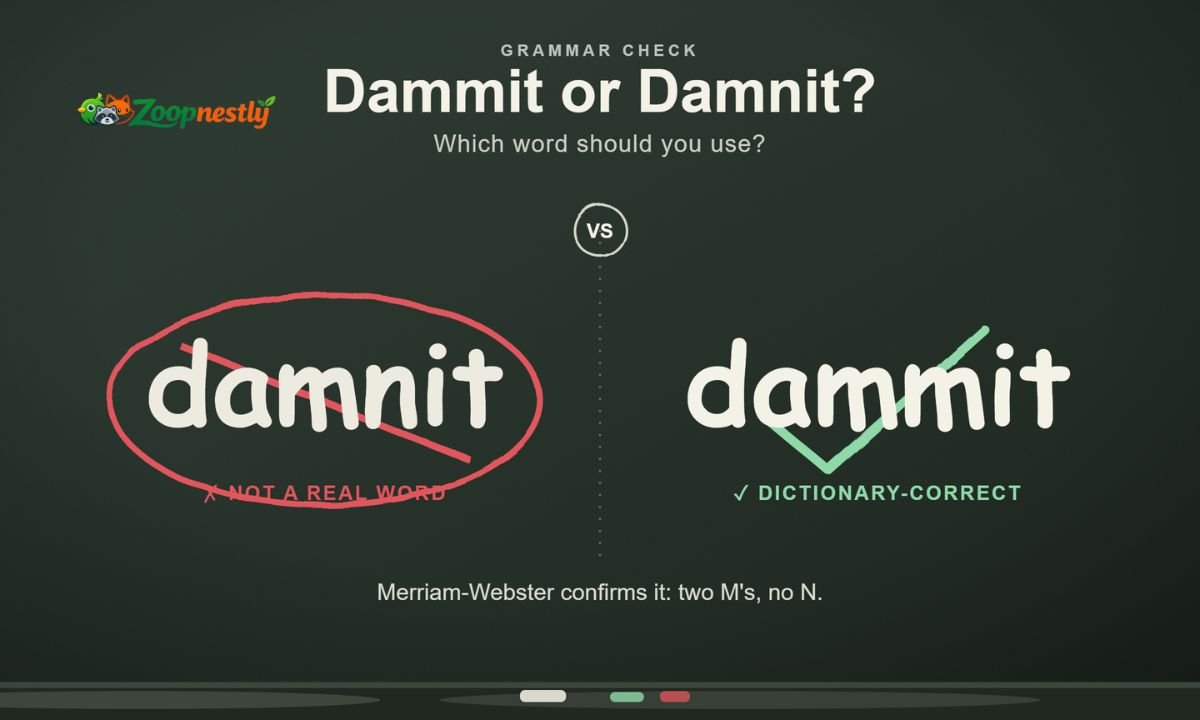
Dammit is the correct and standard spelling. It’s a contraction of “damn it,” formed the same way “don’t” comes from “do not.” Damnit is a common misspelling that shows up often in casual writing but isn’t recognized in standard dictionaries.
What Is the Correct Spelling?
The short answer: dammit wins. Every major dictionary that lists the word, including Merriam-Webster, spells it with two M’s and no N before the final syllable.
Here’s why that matters. English contractions usually drop letters to smooth out pronunciation, and “dammit” follows that pattern cleanly. Damnit tries to keep the N from “damn” visible, which feels logical on paper but doesn’t match how the word is actually built or said out loud.
If you’re writing anything formal, professional, or meant for publication, stick with dammit. Save “damnit” for situations where spelling precision genuinely doesn’t matter, like a private text to a friend who won’t notice either way.
Where Does the Word Come From?
Dammit comes directly from “damn it,” a phrase that’s been used as an exclamation of frustration in English for centuries. Over time, casual speech smashed the two words together, and the pronunciation naturally dropped the hard N sound before the T. Written language eventually caught up to how people were already saying it.
This is a common pattern in English. Words like “gonna” (going to) and “wanna” (want to) formed the same way, through everyday speech shaping spelling rather than the other way around.
Dammit vs Damnit: Side-by-Side Comparison
| Feature | Dammit | Damnit |
| Dictionary status | Recognized standard spelling | Not standard, treated as a misspelling |
| Origin | Contraction of “damn it” | Attempted respelling that keeps the N |
| Pronunciation match | Matches natural speech | Doesn’t match how it’s actually said |
| Formal writing | Acceptable in informal/creative contexts | Should be avoided |
| Scrabble validity | Not a valid word (see below) | Not a valid word |
Is Dammit a Scrabble Word?
No. Dammit is not a valid word in Scrabble under the official Tournament Word List or the dictionaries used in most Scrabble apps. Scrabble dictionaries generally exclude interjections and mild profanity-adjacent contractions like this one, even though the word is widely recognized in everyday English.
If you’re playing a word game and need a placeholder for those letters, you’ll need to look elsewhere. Neither “dammit” nor “damnit” will score you points.
What Does Dammit Mean?
Dammit is an interjection, a short exclamation used to express frustration, annoyance, disappointment, or sudden surprise. It’s a milder, more casual stand-in for stronger profanity, which is part of why it shows up so often in everyday speech and writing.
It doesn’t carry a literal meaning the way a regular verb or noun would. Instead, it functions almost like a verbal shrug, a quick release of emotion when something goes wrong.
Example sentences:
- “Dammit, I left my charger at home again.”
- “Well, dammit, that’s the third time this printer has jammed.”
- “Dammit! I forgot to save the document before it crashed.”
Is Dammit a Bad Word?
Dammit sits in a gray zone. It’s derived from “damn,” which some people consider mild profanity, especially in religious or formal contexts. In most everyday settings, though, it reads as casual and low intensity rather than genuinely offensive.
That said, context matters:
- Casual conversation with friends: Generally fine.
- Workplace emails or professional writing: Best avoided.
- Content for children or sensitive audiences: Skip it entirely.
- Creative writing or dialogue: Often used deliberately for realism.
If you’re unsure whether your audience will mind, err on the side of leaving it out or swapping in something neutral like “ugh” or “darn it.”
How Do You Use This Interjection in Writing?
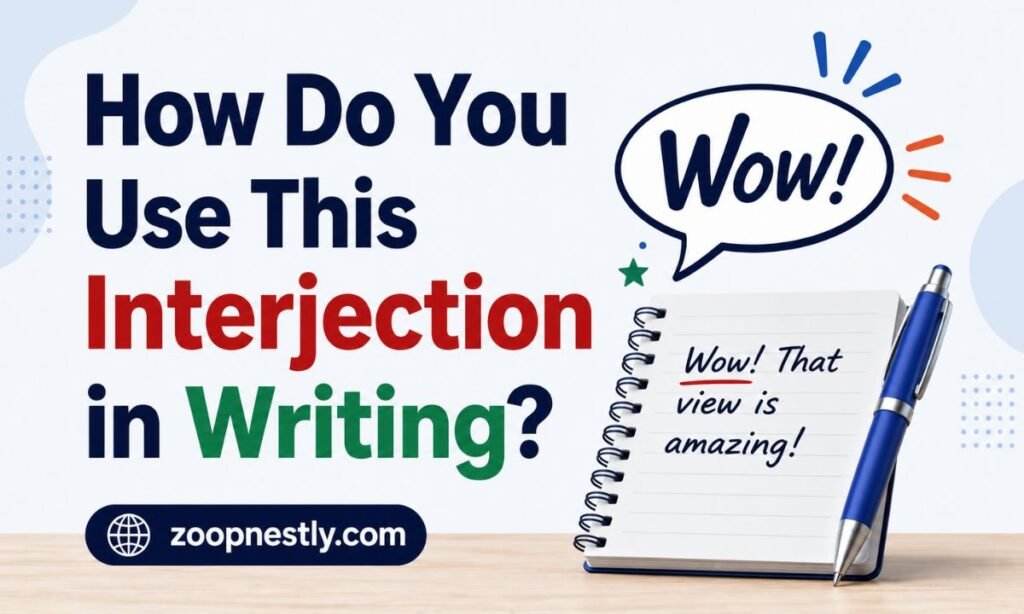
Using dammit correctly comes down to punctuation, placement, and tone. It usually stands alone or opens a sentence, followed by a comma or exclamation point depending on how much emphasis you want.
Correct Usage Examples
- “Dammit, I missed the deadline.”
- “I can’t find my keys, dammit.”
- “Dammit! Not again.”
Incorrect Usage Examples
- “Damnit, I missed the deadline.” (wrong spelling)
- “Dammit I missed the deadline.” (missing comma after the interjection)
- “I DAMMIT can’t believe this.” (misplaced mid-sentence without natural pause)
Context Variations
The word shifts slightly depending on where you place it:
- At the start: Sets an immediate frustrated tone. “Dammit, this isn’t working.”
- At the end: Adds emphasis after the main point. “This isn’t working, dammit.”
- Standing alone: Works as a full exclamation on its own. “Dammit!”
Common Spelling Mistakes to Avoid
Beyond the dammit vs damnit mix-up, a few related errors show up often:
- Damn it vs dammit: Both are technically fine, but “damn it” (two words) is more formal, while “dammit” (one word) reads as casual and contracted.
- Dammnit: An extra N slipped in by mistake. Not correct in any context.
- Dammitt: Doubling the final T is another common typo, likely influenced by words like “commit.”
- Damit: Missing a letter entirely, often a simple typing slip rather than a real spelling belief.
A quick way to catch these: if your spell checker underlines it, trust it. “Dammit” is the only version most word processors will accept without flagging an error.
DISCOVER MORE : In the Street or On the Street? Learn the Difference Easily
When Should You Use or Avoid This Word?
Use dammit when you want a natural, conversational expression of frustration in writing that’s already informal, like texts, social posts, casual blog content, or dialogue in fiction.
Avoid it in:
- Resumes, cover letters, and job applications
- Business correspondence
- Academic writing
- Content aimed at younger audiences or general/family audiences
When in doubt, ask who’s reading. A close friend won’t blink. A hiring manager might.
How Do You Remember the Correct Spelling?
A simple memory trick: think of the phrase “damn it” and picture the two words getting squeezed together. When they merge, the N quietly disappears and an extra M steps in to hold the sound together, similar to how “cannot” becomes “can’t.”
Another trick: say the word out loud slowly. You’ll notice your mouth doesn’t actually pause on an N sound before the T. That absence is a good clue that the N doesn’t belong in the written version either.
Similar Words That Follow the Same Pattern

Dammit isn’t alone in dropping a letter during contraction. A few other everyday words follow a similar logic:
- Gimme (give me)
- Lemme (let me)
- Gonna (going to)
In each case, spoken English smoothed out the sound first, and the written form eventually matched it. Recognizing this pattern makes it easier to remember why dammit looks the way it does, even if it feels a little unintuitive at first glance.
Frequently Asked Questions
Is it dammit or damnit?
Dammit is the correct, dictionary-recognized spelling. “Damnit” is a common misspelling and isn’t found in standard dictionaries.
Why is there no N in dammit?
Because the word is a contraction of “damn it,” and the pronunciation naturally drops the N sound when the two words merge. The spelling reflects how the word is actually spoken.
Is dammit a swear word?
It’s considered mild language rather than strong profanity. It’s generally acceptable in casual settings but is best avoided in formal or professional writing.
Can I use dammit in professional writing?
It’s not recommended. Even though it’s mild, “dammit” reads as casual and can feel out of place in resumes, business emails, or academic work.
Is dammit one word or two?
Dammit is written as one word. “Damn it,” written as two words, is the more formal, uncontracted version of the same phrase.
Final Thoughts
When you’re deciding between dammit vs damnit, the choice really comes down to one fact: dictionaries recognize dammit, not damnit. Understanding where the word comes from, how it’s pronounced, and when it fits your writing makes the spelling far easier to remember next time frustration strikes and you need the right word fast.

James Walker is a content writer and language researcher with over 5 years of experience in meanings, definitions, and language-related topics. He enjoys simplifying complex terms into clear, easy-to-understand explanations. Through ZoopNestly.com, he helps readers find accurate and reliable information.