Submission vs Submittion: Which Spelling Is Correct and Why?
You typed “submittion” into a search bar, hesitated, and now you’re wondering if you just made an embarrassing mistake in an email to your boss. It happens more often than you’d think. The debate over submission vs submittion trips up even confident writers, especially when autocorrect stays silent and doesn’t flag the error. Before you hit send on that report or job application, let’s clear up which spelling is correct and why the other one keeps sneaking into so many drafts.
Quick Answer
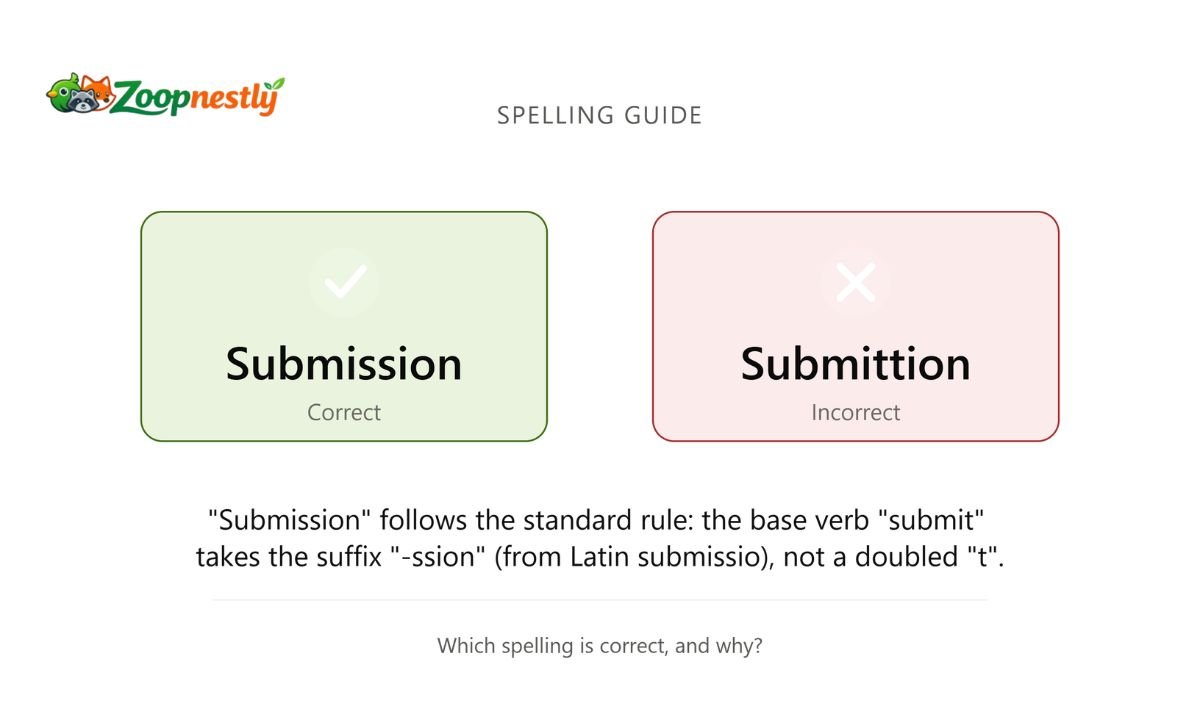
Submission is the only correct spelling. Submittion is a common misspelling that doesn’t exist in standard English dictionaries. The word submission comes from the Latin root “submittere,” and it always keeps the “-ssion” ending, never a double “t.”
What Does “Submission” Mean?
Submission is a noun with a few related meanings, all tied to the idea of giving something over or yielding to someone.
- The act of presenting something for review, such as a document, an application, or a manuscript.
- The act of yielding or giving in to authority, pressure, or another person’s control.
- A formal entry submitted for a contest, journal, or grant.
The word works across casual conversation, academic writing, business communication, and legal contexts, which is exactly why getting the spelling right matters so much.
Submission vs Submittion: Side-by-Side Comparison
| Feature | Submission | Submittion |
| Correct spelling | Yes | No |
| Found in dictionaries | Yes | No |
| Word origin | Latin “submittere” | Not a real word |
| Used in formal writing | Yes | Never |
| Common cause | Correct usage | Typing or pronunciation error |
There’s no gray area here. “Submittion” isn’t an alternate spelling, a regional variation, or an informal shortcut. It’s simply incorrect.
Why “Submittion” Is Never Correct
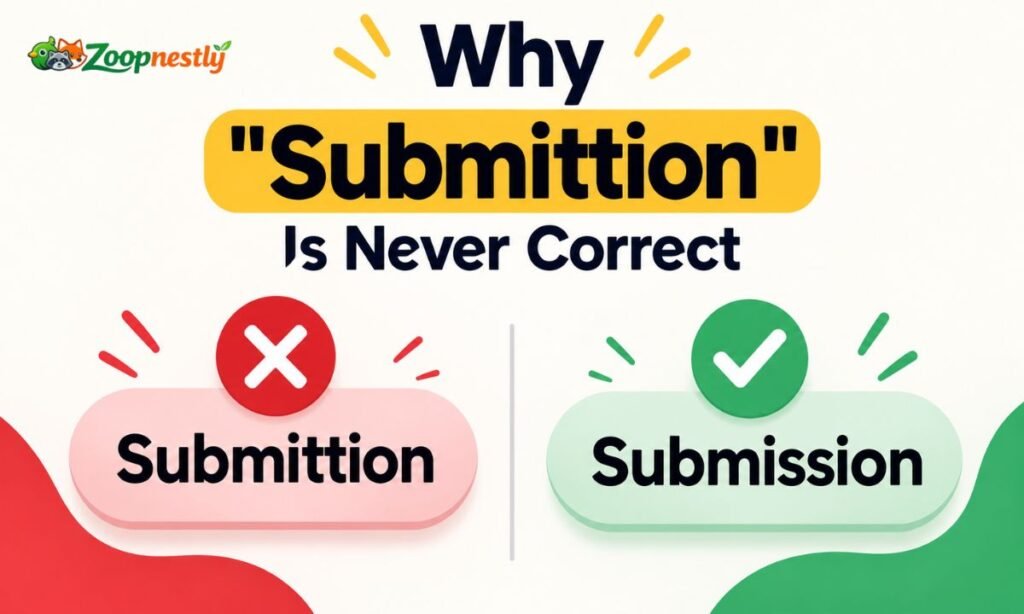
English has plenty of words that double a consonant before adding a suffix, like “admitted” or “committed.” That pattern is likely where the confusion starts.
But submission doesn’t follow that rule. It’s built from “submit” plus the suffix “-sion,” not “-tion” with an extra “t.” Swap in the wrong suffix and double the “t,” and you get a word that looks plausible but isn’t real. Dictionaries, style guides, and grammar checkers all confirm the same thing: submission is the only accepted form.
Why This Word Trips People Up
A few different factors combine to make this mistake so common.
Double consonant confusion. Writers often assume that if “commit” becomes “committed,” then “submit” should become “submittion.” The logic feels reasonable, but it doesn’t hold here.
Pronunciation overlap. When spoken quickly, “submission” and an imagined “submittion” sound almost identical. The ear doesn’t catch the difference the way the eye would on a printed page.
Typing speed and autocorrect gaps. Many spell-checkers flag obvious typos but occasionally miss words that look close enough to a real one. If autocorrect doesn’t catch it, the error can slip into a final draft unnoticed.
How to Spell Submission Correctly Every Time
A few simple habits make this an easy fix.
- Remember the root. Submission comes from “submit,” not “submitt.”
- Picture the suffix. It’s always “-ssion,” matching words like “mission,” “permission,” and “discussion.”
- Read it out loud slowly. Slowing down often reveals the correct rhythm of the word.
- Trust your spell-checker, but double-check anyway. Tools help, but they aren’t perfect.
Submission in Different Contexts

Academic Writing
Students talk about paper submissions, assignment submissions, and submission deadlines. In this context, it simply means turning in work for grading or review.
Business and Professional Use
In the workplace, submission often refers to submitting reports, proposals, expense forms, or job applications. Missing a submission deadline can carry real consequences, from late fees to lost opportunities.
Legal and Formal Contexts
Legal documents use submission to describe formally presenting evidence, arguments, or filings to a court or governing body.
Relationships and Everyday Use
Outside of formal writing, submission can describe yielding to another person’s wishes or authority in a relationship or negotiation. This usage leans more toward the “giving in” meaning of the word rather than the “presenting a document” meaning.
DISCOVER MORE : Commit vs Comit: Which Spelling Is Actually Correct?
Example Sentences Using Submission
- She completed her scholarship submission before the midnight deadline.
- The editor reviewed every short story submission carefully before responding.
- His quiet submission to the new policy surprised his coworkers.
- The contest allows only one submission per participant.
- Late submission of the tax forms resulted in a small penalty.
None of these sentences would make sense with “submittion” in place of “submission,” which is a useful gut check if you’re ever unsure.
Common Mistakes to Avoid
Beyond the spelling itself, a few related errors show up often:
- Writing “submition” (single “t,” missing the second “s”)
- Writing “submision” (single “s,” missing letters entirely)
- Confusing “submission” with “submittal,” which is a less common but technically valid word used mainly in construction and engineering documents
If you’re ever unsure, sticking with “submission” is the safe, standard choice in nearly every context.
Submission Synonyms
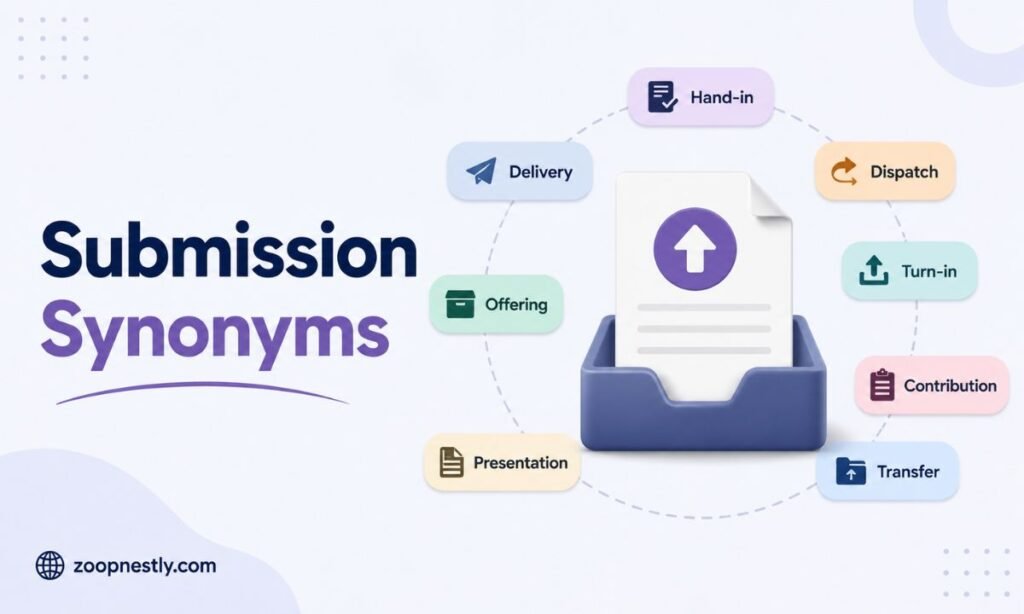
Depending on the meaning you’re going for, a few synonyms can work as alternatives:
- For presenting work: entry, filing, application
- For yielding or giving in: surrender, compliance, acquiescence
Choosing the right synonym depends on context, so it’s worth checking that the replacement word fits the sentence’s tone and meaning.
Submission Date: A Related Term Worth Knowing
A “submission date” is the deadline by which something must be turned in, whether that’s a job application, a grant proposal, a school assignment, or a legal filing. Missing a submission date can mean disqualification, late penalties, or a lost chance entirely, so this term shows up constantly in academic and professional writing right alongside the word itself.
“Submission” is the correct spelling, confirmed by Merriam-Webster.
Frequently Asked Questions
Is “submittion” ever an accepted spelling?
No. “Submittion” is not recognized in any major English dictionary. It’s a misspelling of “submission,” not a variant or alternate form.
Why do people confuse submission with submittion?
The confusion usually comes from double-consonant patterns in other words, similar pronunciation, and occasional gaps in spell-checking tools.
What is the correct plural form?
The plural is “submissions,” following the standard rule for nouns ending in “-sion.”
Does “submission” have more than one meaning?
Yes. It can mean presenting something for review, such as a form or document, or it can mean yielding to authority or pressure. Context makes the intended meaning clear.
Is “submittal” the same as “submission”?
Not exactly. “Submittal” is a real word, but it’s mostly used in technical fields like construction and engineering to describe formal documents submitted for approval. “Submission” is far more common and works in nearly every other context.
Conclusion
Only one spelling is correct, and it’s submission, not “submittion.” The mix-up usually comes down to sound-alike pronunciation or muscle memory from other double-consonant words, not a real grammar rule. Once you remember that submission pairs with “-ssion” the same way as mission and permission, the correct spelling becomes second nature. Whether you’re submitting a paper, a job application, or a legal document, using the right spelling helps your writing come across as polished and professional.

James Walker is a content writer and language researcher with over 5 years of experience in meanings, definitions, and language-related topics. He enjoys simplifying complex terms into clear, easy-to-understand explanations. Through ZoopNestly.com, he helps readers find accurate and reliable information.