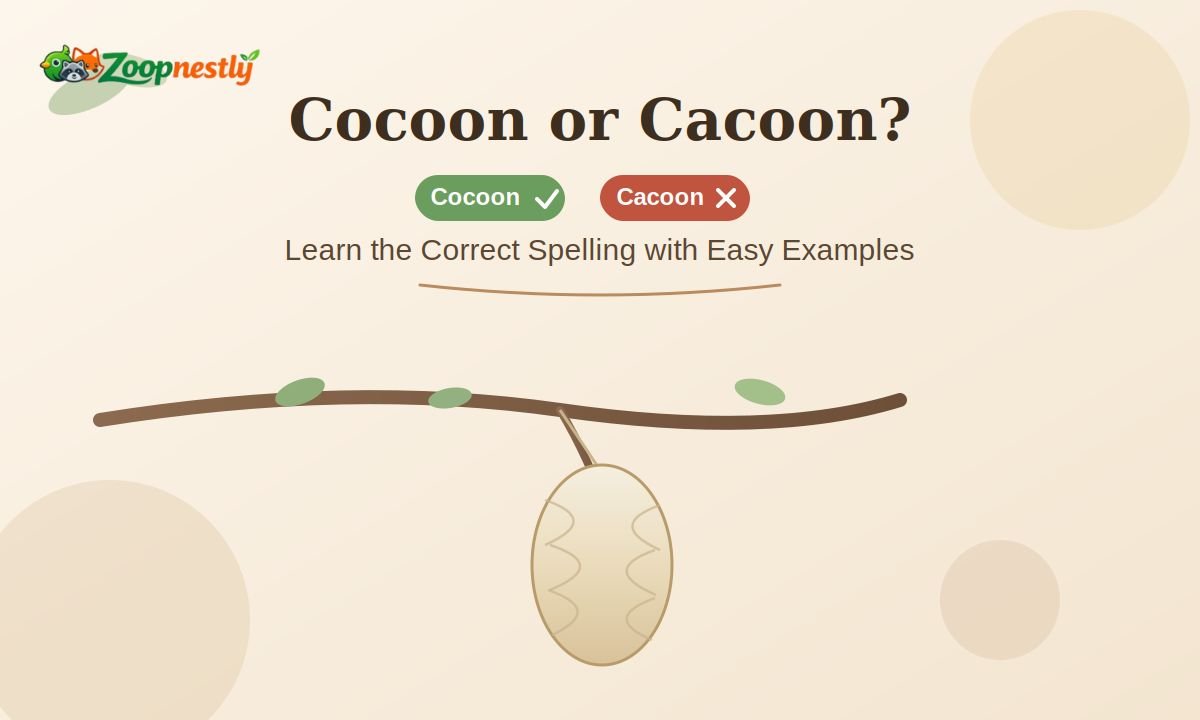
Cocoon or Cacoon? Learn the Correct Spelling with Easy Examples
You’ve typed it, deleted it, and typed it again. Something about that word just looks off no matter how you spell it. You’re not alone. The mix-up between cocoon and cacoon trips up writers, students, and even native speakers constantly. The good news is the answer is simple, and once you know the reason behind the confusion, you’ll never second-guess it again.
Quick Answer
Cocoon is the correct spelling. Cacoon is not a recognized word in standard English dictionaries and is considered a common misspelling. A cocoon is the protective silk casing an insect larva spins around itself before becoming a moth or butterfly, and the word is also used figuratively to describe a safe, sheltered space.
What Does Cocoon Mean?
The word cocoon has two main uses.
In its literal sense, a cocoon is a protective covering, usually made of silk, that certain insects (most famously moths) spin around themselves during the pupal stage. It shields the developing insect while it transforms.
In its figurative sense, cocoon describes a state of being wrapped up, protected, or isolated from the outside world. People talk about “cocooning” at home during a storm, or feeling emotionally cocooned after a hard week.
Both meanings share the same core idea: protection through enclosure.
Why Do People Write “Cacoon” Instead?

There’s no mystery here. It comes down to how the word sounds when spoken quickly. The unstressed first syllable can blur, making “co” and “ca” nearly indistinguishable in casual speech. Add in the fact that many English words follow unpredictable spelling patterns, and it’s easy to see why someone might guess “cacoon” and assume it’s right.
It’s worth noting that Cacoon does exist as a proper noun in a few contexts, most notably as a place name (Cacoon River in Jamaica) and occasionally as a surname. But as a common noun referring to the insect casing, it’s simply incorrect.
Cocoon vs Cacoon: Side-by-Side Comparison
| Feature | Cocoon | Cacoon |
| Correct spelling | Yes | No |
| Found in standard dictionaries | Yes | No |
| Refers to insect silk casing | Yes | No |
| Used as a proper noun (place/surname) | No | Yes, in rare cases |
| Recommended for writing | Yes | No |
How to Remember the Correct Spelling
A few simple memory tricks can lock this in for good.
Think of two O’s for protection. Picture the cocoon itself as a rounded, oval shape, similar to the two O’s sitting side by side in the word. The shape of the letters mirrors the shape of the object.
Connect it to familiar words. Words like “cool,” “cool down,” or “cozy” all start with “co” and relate loosely to comfort or protection, which is exactly what a cocoon provides.
Use visual memory. If you’re a visual learner, picture a caterpillar wrapped snugly inside a silky cocoon. The image alone can help the correct spelling stick.
Cocoon in a Sentence: Real Examples
Seeing the word in context makes it easier to use correctly in your own writing.
Biological usage:
- The caterpillar spent two weeks inside its cocoon before emerging as a moth.
- Scientists studied how temperature affects the development of a cocoon.
Everyday, figurative usage:
- After the breakup, she wrapped herself in a cocoon of blankets and bad movies.
- The small town felt like a cocoon, safe and disconnected from city chaos.
Professional or lifestyle usage:
- The spa’s new treatment promises a “cocoon experience” of total relaxation.
- Remote work let him build a productive cocoon away from office distractions.
Common Mistakes to Avoid
Mistake 1: Spelling it “cacoon.” This is the single most common error tied to this word. If you’re ever unsure, default to cocoon.
Mistake 2: Spelling based on how it sounds. English pronunciation is notoriously inconsistent with spelling. Relying on sound alone leads to guesses like “cacoon” or even “cocune.”
Mistake 3: Ignoring spell-check suggestions. Most spell checkers will flag “cacoon” automatically. If you see a red underline, trust it rather than dismissing it as a technical glitch.
Mistake 4: Confusing cocoon with “cacao.” Because both words start similarly and relate loosely to nature, some writers accidentally blend the two. Cacao refers to the seed used to make chocolate and has nothing to do with insects or protection.
Why This Spelling Mix-Up Persists
Spelling confusion around words like cocoon isn’t new, but it shows up constantly in search behavior, casual writing, and even marketing copy. A few contributing factors explain why:
- Silent-sounding vowels. The first syllable is easy to mishear.
- Autocorrect inconsistency. Not every device or app catches the error the same way.
- Lack of exposure. Many people encounter the word “cocoon” mostly in casual or spoken contexts rather than reading it often in print, so the correct spelling doesn’t get reinforced visually.
Understanding these root causes makes it easier to consciously correct the habit rather than just memorizing a rule.
DISCOVER MORE : Transferred vs Transfered: Which Spelling Is Actually Correct?
How a Small Spelling Mistake Can Affect Your Writing
A single misspelled word rarely ruins a piece of writing, but it can quietly undercut credibility. In professional emails, resumes, product descriptions, or blog content, a mistake like “cacoon” can make a reader pause, even briefly, and question the writer’s attention to detail. In fields like publishing, marketing, or academic writing, small errors like this can affect how polished and trustworthy a piece feels. Getting it right isn’t about perfection for its own sake. It’s about making sure your message lands without distraction.
Cocoon Pronunciation
Cocoon is pronounced kuh-KOON, with the stress on the second syllable. The first syllable is short and soft, which is exactly why it’s easy to mishear as “ca” instead of “co.” Saying the word slowly and breaking it into its two syllables can help reinforce both the correct pronunciation and spelling at the same time.
Cocoon and the Butterfly Life Cycle
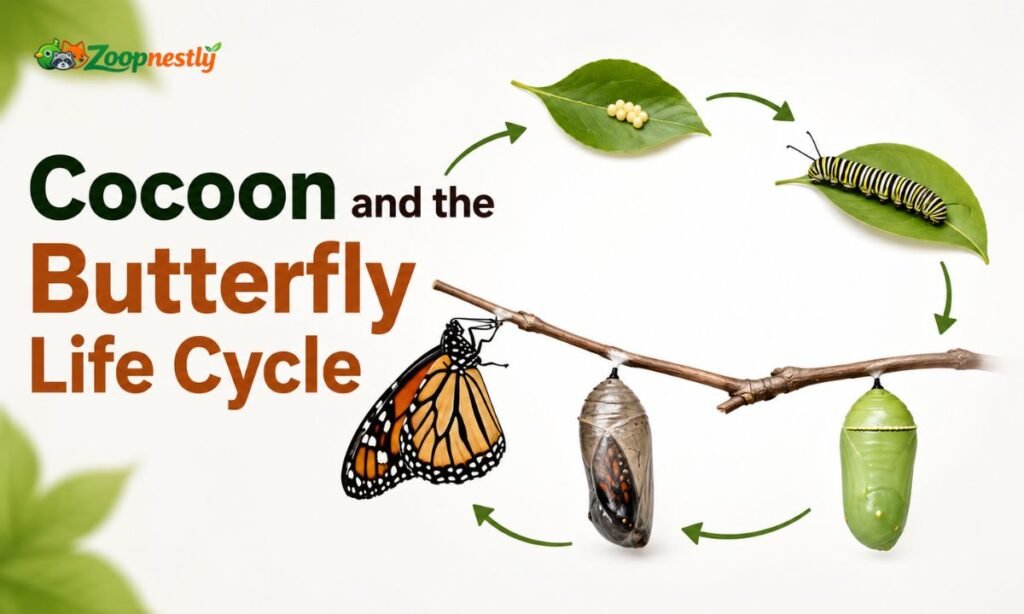
Cocoons are most closely associated with moths, though many people mistakenly connect the word directly to butterflies. Technically, butterflies form a chrysalis, a hardened protective shell, while moths spin a silk cocoon. Both serve the same biological purpose: protecting the insect during its transformation from larva to adult. Knowing this distinction adds useful context and helps clear up another common area of confusion between the two terms.
Mini Quiz: Test Your Understanding
1. Which spelling is correct? A) Cacoon B) Cocoon Answer: B
2. Fill in the blank: The caterpillar formed a ______ on the tree branch. Answer: cocoon
3. True or False: “Cacoon” is an accepted alternate spelling in most dictionaries. Answer: False
4. What does a butterfly form instead of a cocoon? Answer: A chrysalis
5. Fill in the blank: She felt ______ in the warmth of her favorite blanket. Answer: cocooned
Frequently Asked Questions
Is “cacoon” ever correct?
No, not as a common noun. “Cacoon” only appears correctly as a proper noun, such as a place name or surname, never as a word describing the insect casing.
What is the difference between a cocoon and a chrysalis?
A cocoon is made of silk and spun by moths, while a chrysalis is a hardened shell formed by butterflies. Both protect the insect during metamorphosis, but the materials and insect types differ.
Can “cocoon” be used as a verb?
Yes. “To cocoon” means to wrap oneself up or retreat into a protected, comfortable state, as in “They chose to cocoon at home during the holidays.”
Why does spell check sometimes miss “cacoon”?
Most spell checkers do catch it, but in rare cases, autocorrect settings, custom dictionaries, or certain apps may not flag uncommon proper nouns that share the spelling, leading to confusion.
Is cocoon a plural or singular word?
Cocoon is singular. The plural form is cocoons, as in “The garden was full of cocoons hanging from the branches.”
Final Thoughts
The next time you’re unsure whether to write cocoon or cacoon, remember there’s really only one correct choice for everyday use. Cocoon is the standard, dictionary-recognized spelling, while cacoon only applies in rare, specific proper-noun cases. With the memory tricks and examples above, this is one spelling mistake you won’t have to worry about again.

James Walker is a content writer and language researcher with over 5 years of experience in meanings, definitions, and language-related topics. He enjoys simplifying complex terms into clear, easy-to-understand explanations. Through ZoopNestly.com, he helps readers find accurate and reliable information.