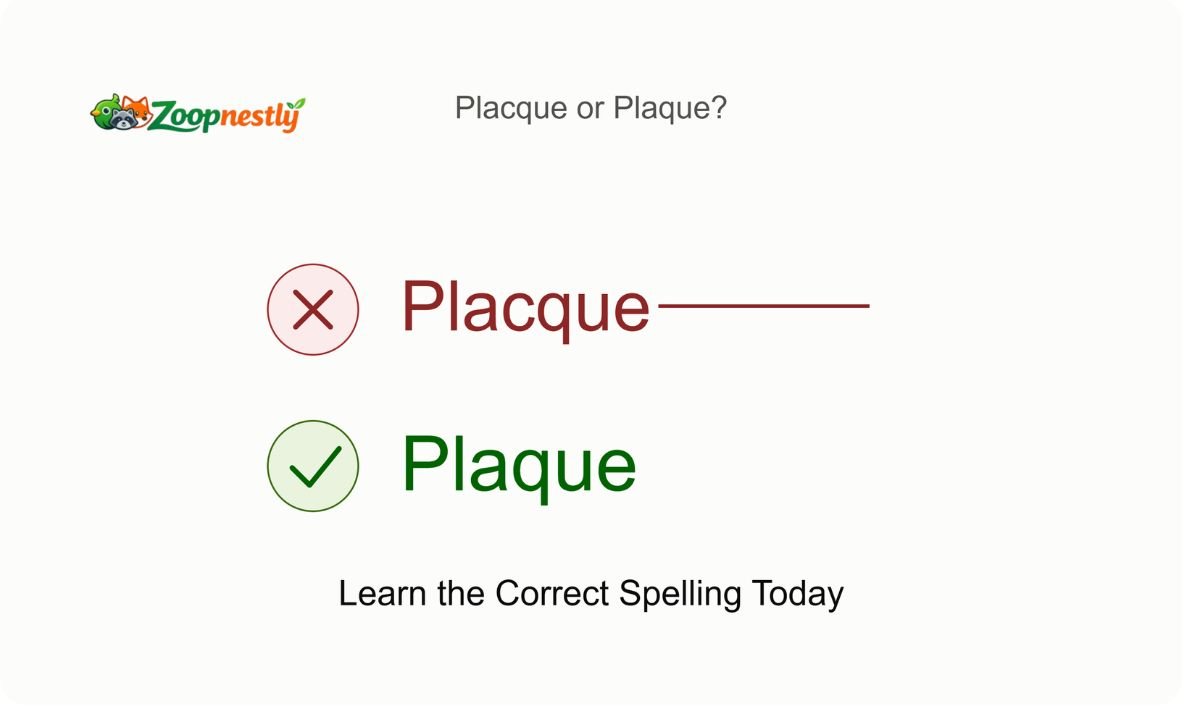
Placque or Plaque? Learn the Correct Spelling Today
You typed it, stared at it, and something felt off. Was it “placque” or “plaque”? You’re not alone. This mix-up trips up students, business owners ordering awards, and even native speakers who just haven’t thought about the word in years. The confusion usually starts with the silent “c” sound that makes placque look like it should be real. In the placque vs plaque debate, only one spelling actually exists in standard English, and getting it wrong can look unprofessional in emails, engravings, or school papers.
Quick Answer
Plaque is the correct spelling in English. Placque is a common misspelling and is not recognized in standard dictionaries. The word “plaque” covers several meanings, including an award or memorial plate, a substance that builds up on teeth, and a buildup in arteries. If you’ve been searching “placque vs plaque,” the answer is simple: always use plaque.
Is Placque a Real Word?
No, placque is not a real word. It does not appear in Merriam-Webster, Cambridge Dictionary, or Oxford English Dictionary. It’s a spelling error that happens because the “que” ending at the end of “plaque” makes people assume there should be a “c” before the “q” too, similar to words like “lacquer.”
If you search for “placque” online, most results will actually redirect you to explanations of “plaque,” which confirms it isn’t an accepted alternate spelling. Autocorrect tools will typically flag or fix it automatically.
Why Do People Confuse Placque and Plaque?

A few patterns explain why this mistake is so common:
- Visual assumption: Words like “lacquer” and “racquet” contain “cqu,” so writers assume “plaque” follows the same pattern.
- Pronunciation guesswork: The silent letters in “plaque” don’t offer an obvious clue about spelling, so people guess based on similar-sounding words.
- Auto-fill and typing habits: Fast typing sometimes adds an extra letter without the writer noticing.
- Regional unfamiliarity: People who don’t use the word often, especially non-native speakers, are more likely to guess the spelling instead of recalling it.
Understanding these causes makes the correct spelling easier to remember going forward.
What Does Plaque Mean?
At its core, plaque is a noun with multiple related meanings, all tied to the idea of a flat surface or a layer of buildup. The exact meaning depends on context.
Simple Definition
A plaque is either:
- A flat piece of metal, wood, or other material inscribed with words, often used for awards or memorials.
- A thin, sticky layer of bacteria that forms on teeth.
- A buildup of fatty deposits inside arteries.
The word is pronounced “plak”, rhyming with “back,” not “plah-kew” or “plak-yoo.”
Plaque Meaning for Awards and Recognition
One of the most common uses of plaque is as a physical award. Companies, schools, and organizations use plaques to recognize achievements, milestones, or service.
Where It’s Used
Award plaques show up in offices, trophy cases, graduation ceremonies, and employee recognition events. They’re a step above a certificate because they’re more durable and often display-worthy.
Real Example
“The company presented Sarah with a plaque for ten years of dedicated service.”
Common Features of Award Plaques
Most award plaques share a few traits:
| Feature | Typical Detail |
| Material | Wood, acrylic, metal, or glass |
| Engraving | Name, date, and reason for the award |
| Mounting | Often includes a metal plate attached to a base |
| Purpose | Recognition, achievement, or appreciation |
Memorial Plaque Meaning
A memorial plaque honors a person, event, or historical moment. Unlike award plaques, these are usually mounted in public or semi-public spaces rather than handed to an individual.
Common Locations
You’ll often find memorial plaques on building walls, park benches, monuments, and battlefields.
Purpose
They serve as a lasting marker, letting future visitors know who or what is being remembered and why it mattered.
Plaque in Medical Contexts
Outside of awards, plaque shows up frequently in medical and dental discussions. These uses are unrelated to engraved plates, but they share the same spelling because the word originally referred to any flat patch or layer.
DISCOVER MORE : Enable or Inable? Learn the Correct Spelling and Meaning
Dental Plaque Meaning
What Does Plaque Mean in Dentistry?
In dentistry, plaque refers to a soft, sticky film of bacteria that forms on teeth throughout the day. It builds up from food particles, saliva, and natural bacteria in the mouth.
Important Facts
- Plaque forms constantly, even after brushing.
- It hardens into tartar if not removed regularly.
- Brushing and flossing are the main ways to control it.
Consequences of Plaque Buildup
Left untreated, plaque contributes to cavities, gum disease, and bad breath. Dentists recommend regular cleanings to prevent buildup from causing long-term damage.
Example
“The dentist reminded him to floss daily to reduce plaque buildup between his teeth.”
Plaque in Arteries
What Is Arterial Plaque?
In cardiology, plaque refers to a buildup of fat, cholesterol, and other substances inside artery walls. Over time, this can narrow the arteries and restrict blood flow.
Why It’s Dangerous
Arterial plaque buildup is linked to heart disease and stroke risk because it can block or reduce blood flow to vital organs.
Medical Insight
Doctors often recommend diet changes, exercise, and sometimes medication to manage plaque buildup in arteries, especially for patients with risk factors like high cholesterol.
Plaque Pronunciation Guide

Correct Pronunciation
Plaque is pronounced “plak” (rhymes with “back” or “sack”). The final “que” is silent on the “u” and “e,” similar to how “unique” ends in a hard “k” sound.
Quick Tips
- Think of it like “plak,” not “play-kew.”
- The “que” ending is common in English but doesn’t add extra syllables here.
- If you can say “unique” correctly, you can say “plaque” correctly.
Plaque vs Placard
These two words look similar but mean different things. A placard is typically a temporary sign, often made of cardboard or lightweight material, used for protests, notices, or displays. A plaque is usually permanent and made of more durable material like metal or wood. Placards inform or announce something short-term; plaques commemorate or recognize something long-term.
Why Is Plaque Spelled This Way?
Plaque Word Origin
The word plaque comes from the French word “plaque,” meaning a flat plate or sheet. French borrowed it from the Dutch word “plak,” which also referred to a flat object. English adopted the French spelling directly, which explains the silent letters at the end.
What This Means
Because the word came from French rather than developing naturally within English, its spelling doesn’t follow typical English phonetic rules. That’s part of why “placque” feels like a reasonable guess even though it’s incorrect.
Plaque Synonyms by Context
Since plaque covers different meanings, its synonyms change depending on the situation.
For Awards
- Plate
- Tablet
- Commemorative marker
For Medical Context
- Film (dental)
- Deposit (arterial)
- Buildup
Using the right synonym depends entirely on which meaning of plaque you’re referring to.
Plaque vs Plate
Another mix-up worth clearing up: plaque and plate are not interchangeable. A plate is a broad term for any flat piece of material, often functional, like a license plate or dinner plate. A plaque is specifically decorative or inscribed, usually meant for display or recognition. All plaques could loosely be called plates, but not all plates are plaques.
How to Use Plaque in a Sentence
Examples
- “The museum installed a plaque explaining the artifact’s history.”
- “Poor dental hygiene led to noticeable plaque on his teeth.”
- “Her cardiologist explained how plaque narrows the arteries over time.”
- “The team received a plaque for winning the regional championship.”
Placque vs Plaque: Correct and Incorrect Examples
Incorrect
- “They gave him a placque for his retirement.”
- “Brush your teeth to remove placque.”
Correct
- “They gave him a plaque for his retirement.”
- “Brush your teeth to remove plaque.”
Common Mistakes to Avoid
Using “Placque”
The single biggest mistake is simply adding an extra “c.” Remember: there is no “placque” in standard English.
Confusing Contexts
Some writers assume “plaque” only means the dental version, missing its use in awards, memorials, and medical descriptions.
Mispronouncing the Word
Saying “plah-kew” instead of “plak” is a common verbal mistake, especially among people who’ve only seen the word written down.
Case Study: A Small Error With Big Impact

Scenario
A small business ordered a custom award plaque for an employee milestone and submitted the engraving text online.
Problem
The order form was typed quickly, and “placque” was used instead of “plaque” in the engraving request.
Correct Version
The manufacturer caught the error before production and corrected it to “plaque” based on standard spelling guidelines.
Result
The final plaque was engraved correctly, but the mistake caused a delay and an extra round of email confirmation, something that could have been avoided with a quick spelling check.
Quick Practice
Fill in the Blank
“The dentist checked for ______ buildup during the appointment.” (plaque)
Fix the Sentence
“She received a placque for her volunteer work.” (Correct: plaque)
Challenge Round
Without looking back, write one sentence using “plaque” in a medical context and one in an award context.
Pro Tip
If you’re ever unsure, remember: plaque rhymes with “back,” and there’s no “c” before the “q.”
Frequently Asked Questions
Is placque ever an accepted spelling variant?
No. Placque is not recognized as a variant spelling in any major English dictionary. It’s considered a misspelling of plaque in every context.
What is the difference between plaque and tartar?
Plaque is soft and forms daily on teeth. If not removed, it hardens into tartar, which is much harder to remove and usually requires professional dental cleaning.
Can plaque in arteries be reversed?
Some plaque buildup can be slowed or partially managed through lifestyle changes and medication, but reversing it fully depends on individual health factors. A doctor can give personalized guidance.
Why does plaque have a silent ending?
Because plaque comes from French, which borrowed it from Dutch, it keeps a spelling pattern that doesn’t match typical English pronunciation rules.
Is plaque singular or plural?
Plaque is singular. The plural form is plaques, as in “The hallway displayed several plaques from past winners.”
Key Takeaways
- Plaque is the only correct spelling; placque is always a misspelling.
- The word has three main meanings: award/memorial plates, dental buildup, and arterial buildup.
- It’s pronounced “plak,” not “plah-kew.”
- The spelling comes from French, borrowed from Dutch, which is why it doesn’t follow typical English phonetics.
- Context determines which meaning of plaque applies in a sentence.
Final Thoughts
Once you know the origin and meaning behind plaque, the spelling makes a lot more sense, even if it still looks a little unusual at first glance. Whether you’re ordering an award, discussing dental health, or writing about heart disease, sticking with plaque keeps your writing accurate and professional. Skip the extra “c,” and you’ll never second-guess this word again.

James Walker is a content writer and language researcher with over 5 years of experience in meanings, definitions, and language-related topics. He enjoys simplifying complex terms into clear, easy-to-understand explanations. Through ZoopNestly.com, he helps readers find accurate and reliable information.