Wellbeing vs Well-Being: Which Version Should You Use?
You typed it one way in an email, then saw it written differently in an article, and now you’re second-guessing yourself. That small hesitation is common because wellbeing or well-being shows up in both forms across books, websites, and workplace documents.
The good news is that the confusion has a simple explanation, and once you understand it, you’ll never pause over the spelling again.
Quick Answer: Wellbeing or Well-Being
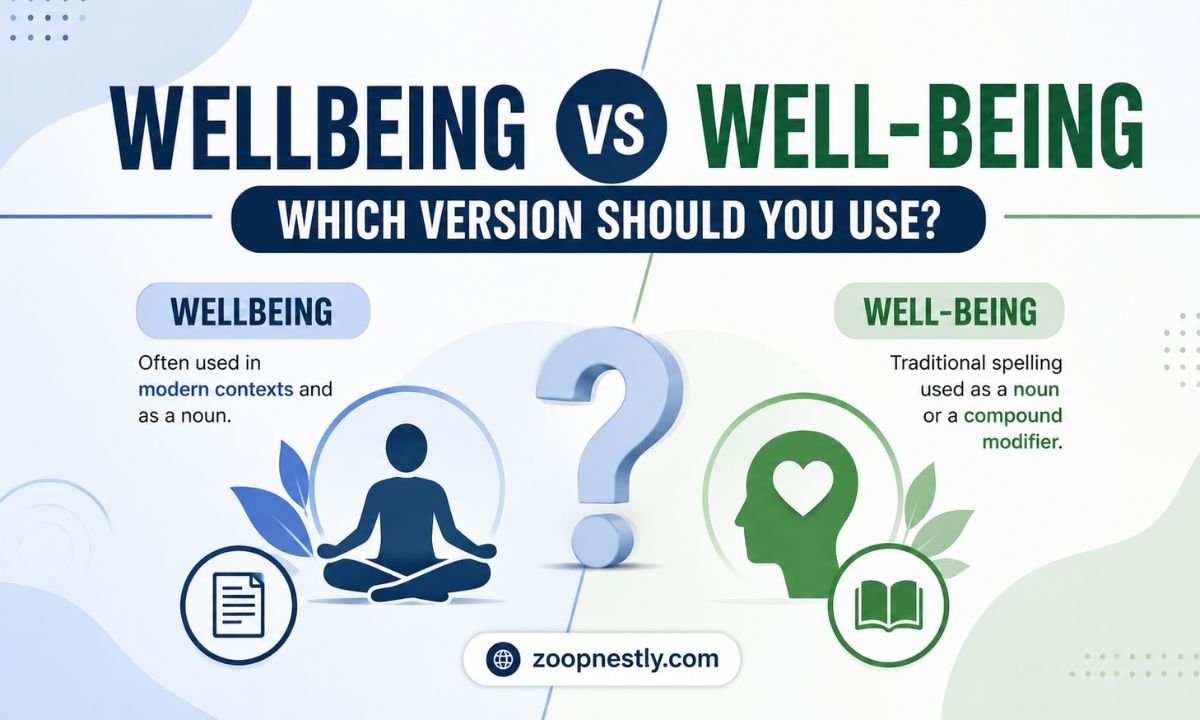
Both spellings are correct, and the right one depends on where you are and who you’re writing for. Wellbeing (one word) is the more common and modern spelling, especially in British English and in health, HR, and wellness content worldwide. Well-being (hyphenated) is still widely accepted, particularly in American English and formal or academic writing. Neither version is a spelling error.
What Does Wellbeing Mean?
Before choosing a spelling, it helps to be clear on the meaning. Wellbeing refers to a person’s overall state of health, happiness, and comfort. It covers physical health, mental health, emotional stability, and general life satisfaction.
For example:
- “Employee wellbeing programs reduce burnout.”
- “She focuses on her mental and physical wellbeing every morning.”
The word describes a state, not an action, which is why it functions as a noun in almost every sentence you’ll use it in.
Where Did the Word Come From?

The term traces back to the phrase “well” plus “being,” meaning the state of existing in a good or healthy condition. Early written English favored the hyphenated form, well-being, because English often hyphenates compound words when they first enter common use.
Over time, many hyphenated compounds naturally merge into single words as they become more familiar.
Words like “email” (once “e-mail”) and “online” (once “on-line”) followed the same pattern. Wellbeing is simply further along that same evolution, though the hyphenated form never fully disappeared.
British English vs American English Spelling
This is where most of the confusion starts. Regional preference plays a real role in which spelling looks “correct” to a reader.
| Region | Preferred Spelling | Common Usage |
| British English | Wellbeing | News, health sites, government publications |
| American English | Well-being | News outlets, academic journals, style guides |
| Global wellness industry | Wellbeing | Brand names, app content, marketing copy |
British publications, including the NHS and major UK news outlets, generally use wellbeing as one word. American style guides, including many still influenced by traditional dictionary formatting, tend to keep the hyphen in well-being. Neither is more “correct” grammatically. It’s a regional style choice, similar to “colour” versus “color.”
Which Spelling Should You Use?
The right choice depends on three things: your audience, your style guide, and consistency.
- If you’re writing for a British or international audience, use wellbeing.
- If you’re writing for a US-based or academic audience, well-being is a safer default.
- If your company, publication, or professor has a style guide, follow it over personal preference.
- If no guide exists, pick one spelling and use it consistently throughout the entire document.
Consistency matters more than which version you pick. Switching between the two spellings in the same piece of writing looks like a typo, even though both are technically valid.
Wellbeing or Well-Being: Common Mistakes to Avoid
A few small errors trip people up more than the spelling debate itself.
Mistake 1: Mixing spellings in one document Using “wellbeing” in paragraph one and “well-being” in paragraph three signals inconsistency, not flexibility.
Mistake 2: Treating “well being” as two separate words Written as two words with no hyphen and no connection (“well being”), it reads as incomplete or grammatically incorrect in most formal contexts. Stick to either the closed or hyphenated form.
Mistake 3: Confusing it with “welfare” Wellbeing refers to a state of health and happiness. Welfare often refers to financial or material support, especially in a legal or government context. They’re related but not interchangeable.
Mistake 4: Using it as a verb Wellbeing is a noun. You wouldn’t say “I wellbeing every day.” You’d say “I focus on my wellbeing every day.”
Wellbeing or Well-Being in Everyday Examples
Seeing the word in real context makes the choice easier to apply to your own writing.
Workplace example: “Our HR team launched a new wellbeing initiative to support remote employees.” (British/global style) “Our HR team launched a new well-being initiative to support remote employees.” (American style)
Healthcare example: “Doctors now consider emotional wellbeing as important as physical health.” “Doctors now consider emotional well-being as important as physical health.”
Everyday conversation: “I’ve been prioritizing my wellbeing lately, more sleep, less scrolling.” “I’ve been prioritizing my well-being lately, more sleep, less scrolling.”
Both sentences are grammatically sound. The only difference is regional style.
Wellbeing or Well-Being: Which One Is More Popular Today?
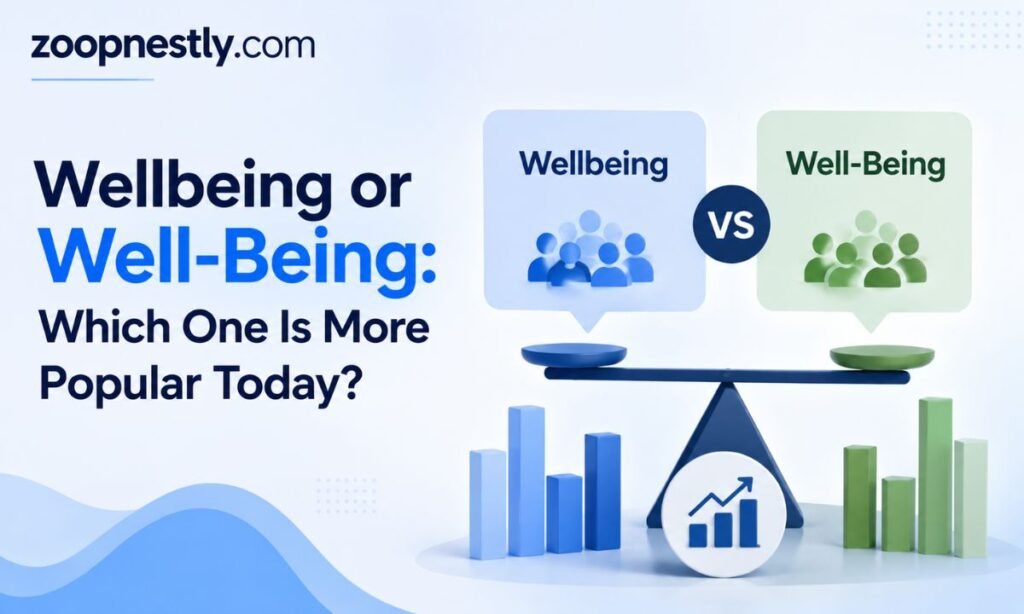
Usage patterns have shifted noticeably over the past two decades. The one-word form, wellbeing, has grown steadily in global use, largely driven by the wellness, fitness, and mental health industries, which tend to favor the shorter, cleaner spelling for branding and web content. Meanwhile, well-being remains dominant in traditional American journalism, academic writing, and formal government documents, where style guides move more slowly than everyday usage.
If you’re writing for search engines or a global online audience, wellbeing is increasingly the safer bet, since it mirrors how most people now type and search the term.
DISCOVER MORE : Vendor vs Vender: Understanding the Difference and Correct Usage
Does the Hyphen Matter for SEO or Search Behavior?
If you’re writing content for a website, this is worth knowing. Search engines generally treat wellbeing and well-being as closely related terms and can match either spelling to relevant search queries. Even so, matching your primary spelling to the version your target audience actually types tends to feel more natural to readers and keeps your content consistent with their expectations.
Is There a Difference Between Wellbeing and Well Being?
No meaningful difference exists in definition. The difference is purely stylistic:
- Wellbeing = one word, no hyphen
- Well-being = two words joined by a hyphen
- Well being = two separate words, generally considered incorrect in formal writing
All three refer to the same underlying concept: a state of health, happiness, and comfort. Only the first two are considered acceptable spellings.
Synonyms for Wellbeing
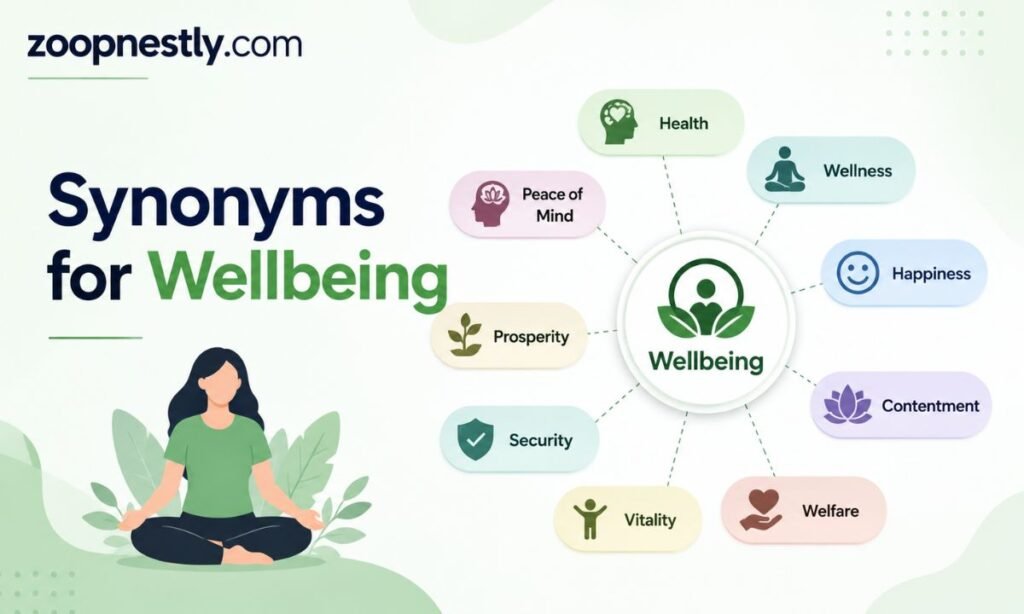
If you’re writing content and want to avoid repeating the word too often, several close synonyms work well depending on context:
- Health (general physical or mental condition)
- Welfare (often used in legal, social, or governmental contexts)
- Happiness (emotional focus)
- Contentment (life satisfaction focus)
- Flourishing (a more formal or academic alternative)
None of these are exact one-to-one replacements, so choose based on the specific meaning you want to convey.
Wellbeing vs Well-Being: Which Should You Use in Professional Writing?
For resumes, business reports, and formal proposals, follow whichever spelling matches your organization’s existing documents or your target market’s dictionary. When in doubt for a US-based professional audience, well-being is the traditionally expected form. For UK, Australian, or international audiences, wellbeing is the standard choice.
Frequently Asked Questions
Is it wellbeing or well-being in the dictionary?
Both spellings appear in major dictionaries. Merriam-Webster lists well-being as the primary American English form, while Oxford and Cambridge dictionaries commonly list wellbeing as the standard British form.
Which spelling should I use for a resume or cover letter?
Match the spelling to the region you’re applying in. Use well-being for US-based applications and wellbeing for UK, Australian, or international applications.
Is “well being” without a hyphen correct?
Writing it as two separate words with no hyphen is generally considered incorrect in formal writing. Use either wellbeing (one word) or well-being (hyphenated).
Can I switch between wellbeing and well-being in the same article?
It’s best to avoid this. Pick one spelling and use it consistently throughout your document, website, or publication for a polished, professional look.
Does Google penalize content for using either spelling?
No. Search engines recognize both wellbeing and well-being as valid and closely related terms, so using either spelling correctly will not hurt your content’s visibility.
Final Thoughts
There’s no single right answer to wellbeing or well-being, only the right answer for your audience. British and global writing leans toward wellbeing, while American and formal writing often keeps the hyphen in well-being. Whichever version you choose, the key is consistency. Pick one spelling, stick with it throughout your writing, and you’ll come across as clear, professional, and confident every time you use the word.

James Walker is a content writer and language researcher with over 5 years of experience in meanings, definitions, and language-related topics. He enjoys simplifying complex terms into clear, easy-to-understand explanations. Through ZoopNestly.com, he helps readers find accurate and reliable information.