It’s Called vs It Called: Which One Is Actually Correct?
You’re typing a message, you pause, and your cursor just sits there blinking. Should you write “it’s called” or “it called”? One letter and an apostrophe stand between sounding polished and sounding slightly off.
This mix-up trips up even confident writers, especially when a sentence is naming something rather than describing an action. The good news is that it’s called vs it called comes down to one simple test you can apply in seconds, and this guide walks you through exactly how.
Quick Answer
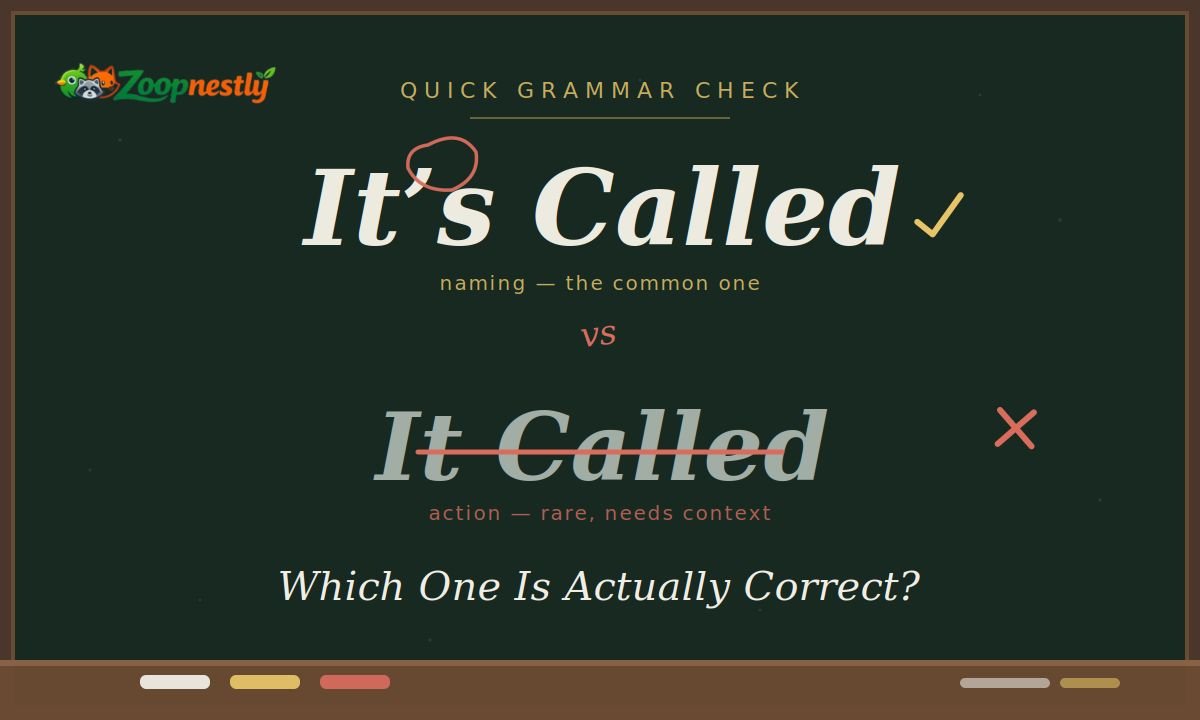
“It’s called” is the contraction of “it is called” and is used to name or identify something, as in “It’s called a compass.” “It called” means something (usually a person, animal, or device) performed the act of calling, as in “The dog it called earlier barked.” Use it’s called for naming and it called for an action that already happened.
What’s the Real Difference Between “It’s Called” and “It Called”?
The two phrases look almost identical, but they do completely different jobs in a sentence.
“It’s called” is a naming phrase. It tells the reader or listener what something is known as. It always includes a hidden “is,” because “it’s” is short for “it is.”
“It called” is an action phrase. It describes something that made a call, whether that’s a phone call, an animal’s cry, or a verbal announcement. There’s no hidden helping verb here; “called” is doing the work as a simple past tense verb.
So the fastest way to tell them apart is to ask: am I naming something, or is something performing the act of calling?
Breaking Down the Grammar
What “It’s” Actually Stands For
“It’s” is a contraction, not a possessive word. It always means “it is” or occasionally “it has.” In the phrase “it’s called,” it stands for “it is.”
So “it’s called a violin” literally means “it is called a violin.” Once you expand the contraction, the sentence structure becomes obvious.
Why “It’s Called” Uses Passive Voice
“It’s called” follows a passive sentence pattern: subject + is + past participle. The subject (it) doesn’t perform the action; instead, the action happens to it.
- It is called a violin.
- She is called Maria.
- This dish is called ramen.
Passive voice fits perfectly here because we’re not describing who named the thing. We’re just stating the name itself. That’s why native speakers reach for this structure automatically when introducing terms, foods, tools, or places.
Why “It Called” Needs an Active Subject
“It called” is active voice. The subject (it) actively performs the verb (called). This only makes sense when “it” refers to something capable of calling, like a phone, an animal, or a machine.
- The alarm it triggered called for immediate action. (awkward, needs rewording)
- It called out in the night. (an animal or creature made a sound)
- The number it called was disconnected. (a phone performed the calling)
Notice that “it called” rarely stands alone as a complete, natural sentence. It usually needs more context to make sense.
When Is “It Called” Actually Correct?
“It called” isn’t wrong, it’s just far less common because it requires a specific kind of subject.
“Called” as a True Action Verb
Use “it called” when “it” refers to something that literally makes a call or sound:
- The bird it called to was still asleep.
- The phone it called never picked up.
- The wolf howled, and it called back moments later.
Complete vs Incomplete Sentences
“It called” often shows up inside a longer sentence, not as a standalone statement. On its own, “It called.” feels incomplete because readers immediately ask, “Called what? Called who?”
Compare:
- Incomplete: It called.
- Complete: It called for backup.
- Complete: It called out three times before anyone answered.
Why Context Decides Everything
The word “called” can mean “named” or “phoned/cried out” depending on what surrounds it. Without context, “it called” is ambiguous. That’s part of why “it’s called” is so much more common in everyday writing; naming something rarely needs extra explanation.
DISCOVER MORE : Take Effect vs Take Affect: Which Phrase Is Correct?
Side-by-Side Comparison
| Feature | It’s Called | It Called |
| Full form | It is called | It called (simple past) |
| Voice | Passive | Active |
| Purpose | Naming or identifying | Describing an action |
| Common use | Everyday, very frequent | Rare, context-dependent |
| Example | It’s called a stethoscope. | It called for help. |
| Stands alone easily? | Yes | Usually needs more context |
A Simple Memory Trick
If you can replace the phrase with “is known as” and the sentence still makes sense, you need it’s called. If you can replace it with “made a call” or “cried out,” you need it called.
- “It’s called a boomerang” → “It is known as a boomerang.” ✅
- “It called twice” → “It made a call twice.” ✅
Common Mistakes People Make
Mistake 1: Dropping the Helping Verb
Writers sometimes drop the apostrophe and write “it called” when they mean naming, producing sentences like “It called a laptop.” This reads as broken because there’s no naming structure left.
Mistake 2: Misreading the Contraction
Some people mistake “it’s” for a possessive form, similar to “its” without the apostrophe. Remember: its (no apostrophe) shows possession, while it’s (with apostrophe) means “it is” or “it has.”
Mistake 3: Mixing Up Naming With Action
Writers occasionally use “it called” when they actually mean the item is named something, especially when translating thoughts quickly while typing.
Mistake 4: Direct Translation From Another Language
In many languages, naming structures don’t require a linking verb the way English does. Non-native speakers sometimes translate word for word and drop the “is,” which produces “it called” instead of “it’s called.”
How to Avoid These Errors
Read the sentence aloud. If it sounds like you’re introducing a name, you almost always need the contraction “it’s called.” If it sounds like something made a noise or dialed a number, “it called” is correct.
A Quick Real-World Scenario
Picture a product description for an online store. A writer types, “It called a multi-tool because it does five jobs at once.” Read aloud, that sentence stumbles. Swapping in “it’s called” instantly fixes the flow: “It’s called a multi-tool because it does five jobs at once.” This single fix, expanding the contraction mentally before publishing, is one of the fastest ways to catch this error before it goes live.
Why This Small Grammar Rule Actually Matters
Grammar accuracy shapes how trustworthy your writing feels. A misplaced apostrophe or dropped helping verb can distract readers from your message, even if the meaning is technically clear. In product listings, articles, emails, and social captions, small slips like “it called” instead of “it’s called” can make content look rushed.
Clear, correct grammar also helps search engines and AI tools understand your content more accurately, since naming structures like “it’s called” are common in definitions, explanations, and how-to content that readers and search tools rely on.
How to Remember the Correct Usage
Step 1: Look for a name. Is the sentence introducing what something is called?
Step 2: Expand the contraction. Say “it is called” out loud. If it fits, use “it’s called.”
Step 3: Check for an action. Is something making a call or a sound? If yes, “it called” likely fits.
Step 4: Read it aloud. Your ear often catches errors your eyes miss.
Quick Checklist
- Naming something? Use it’s called.
- Describing a call or cry? Use it called.
- Unsure? Expand “it’s” to “it is” and test the sentence.
“It Is Called” Meaning
“It is called” is simply the full, uncontracted form of “it’s called.” Both mean exactly the same thing; the only difference is formality. “It is called” fits more formal writing, like academic papers or official documentation, while “it’s called” fits casual writing, speech, and most everyday content.
“It’s Called” in Spanish
In Spanish, the naming structure works differently. Instead of a direct passive construction, Spanish typically uses “se llama” (for people or things referring to themselves) or “se le llama” / “lo llaman” for objects and general naming. For example, “It’s called a guitar” translates to “Se llama guitarra” in a general sense, though exact phrasing shifts depending on context and regional usage.
“That’s Called” Meaning
“That’s called” works exactly like “it’s called,” except it points to something more specific or previously mentioned. “That’s called irony” identifies a concept the speaker just described, while “it’s called” often introduces something new. Both follow the same naming, passive-voice pattern.
FAQs
Is it “it’s called” or “its called”?
It’s always “it’s called” with an apostrophe when you mean “it is called.” “Its called” without an apostrophe is incorrect because “its” alone is a possessive word and can’t stand in for “it is.”
Can you say “it called” in a sentence?
Yes, but only when something is actively making a call or sound, such as “It called out for help.” It rarely works as a naming phrase.
What is the difference between “it’s” and “its”?
“It’s” is a contraction for “it is” or “it has.” “Its” (no apostrophe) shows possession, like “The dog wagged its tail.”
Why do people confuse “it’s called” with “it called”?
The confusion usually comes from dropping the apostrophe by habit, or from translating naming phrases from another language that doesn’t use a linking verb the same way English does.
Is “it’s called” formal or informal?
“It’s called” works in both formal and informal writing. For very formal documents, some writers prefer the expanded form, “it is called,” though both are grammatically correct.
Conclusion
The difference between it’s called and it called really comes down to one question: are you naming something, or describing an action? “It’s called” introduces a name using a hidden “is,” while “it called” describes something actively making a call or sound. Once you get in the habit of expanding the contraction and reading your sentence aloud, this mix-up becomes easy to catch and even easier to avoid.

James Walker is a content writer and language researcher with over 5 years of experience in meanings, definitions, and language-related topics. He enjoys simplifying complex terms into clear, easy-to-understand explanations. Through ZoopNestly.com, he helps readers find accurate and reliable information.