Unconsolable or Inconsolable? Learn the Correct Usage in English
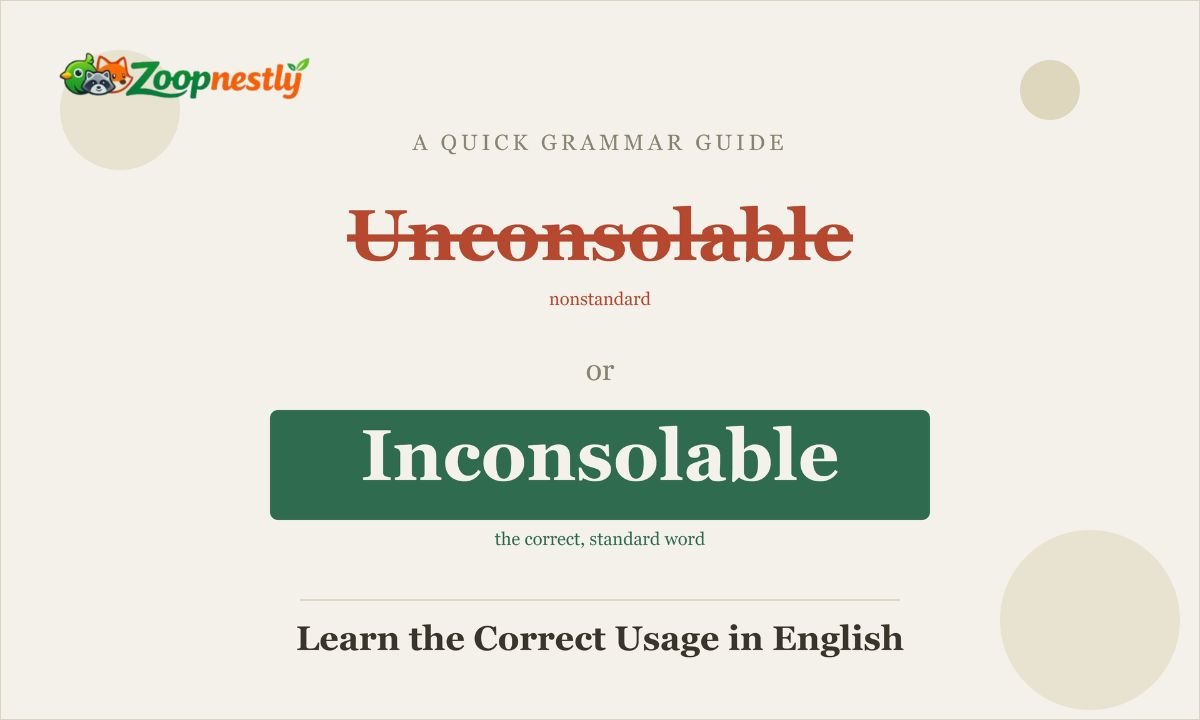
You just typed a sentence about someone who can’t stop crying, and now you’re stuck staring at the screen wondering if it’s unconsolable or inconsolable. You try both, and neither looks quite right anymore. That’s a common moment, and it happens because these two words look almost identical but only one of them is standard English. Here’s the problem, why it trips people up, and the simple fix so you never second guess it again.
Quick Answer
Inconsolable is the correct and standard word. It means someone cannot be comforted, usually because of deep grief or sadness. Unconsolable shows up occasionally in casual writing, but major dictionaries don’t recognize it as standard. If you’re writing anything formal, academic, or professional, always choose inconsolable.
What Inconsolable Actually Means
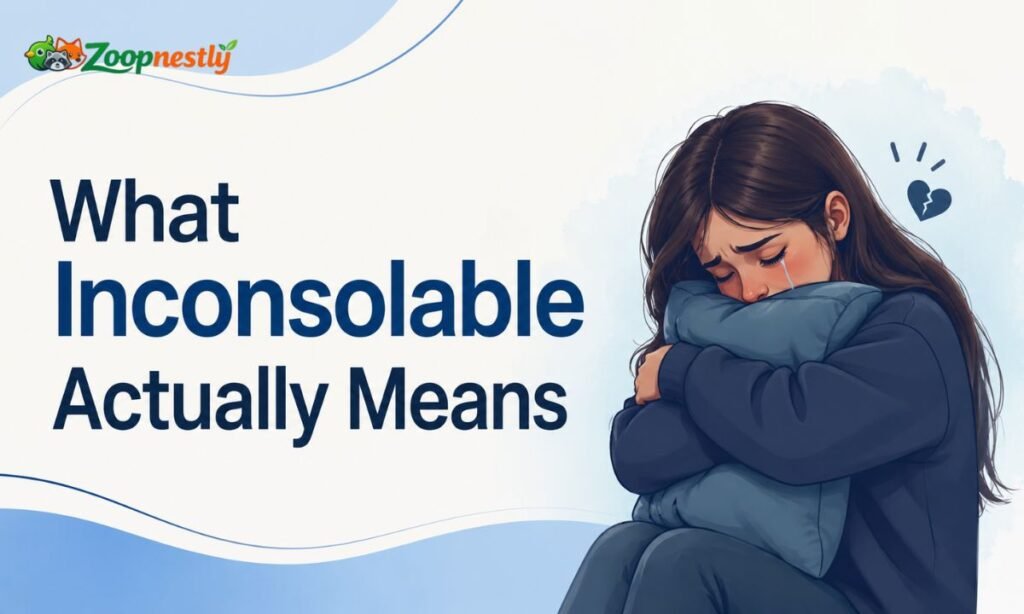
Inconsolable describes a level of sadness or grief so intense that comfort doesn’t help. It’s not just “sad.” It’s a specific kind of sadness where words, hugs, or reassurance don’t reach the person.
Think of a toddler who lost their favorite toy at the park, or a widow at a funeral who can’t be calmed down. That’s inconsolable grief. The word carries weight, so it’s usually reserved for genuinely painful situations rather than everyday disappointment.
Where the Word Comes From
Inconsolable traces back to Latin roots. The prefix in- means “not,” and consolabilis relates to “consolation” or comfort, from the verb consolari, meaning “to console.” Put together, the word literally means “not able to be consoled.”
This Latin-based prefix pattern shows up in plenty of English words: inaccurate, inadequate, incomplete. English tends to borrow the negative prefix in- (or its variants im-, il-, ir-) for words with Latin origins, while un- typically attaches to native Germanic roots or newer English words. That’s actually the core reason inconsolable won out over unconsolable.
Why “Unconsolable” Feels Right (But Isn’t Standard)
Here’s the confusing part. English uses un- constantly as a negative prefix: unhappy, unfair, unable. So your brain naturally reaches for “unconsolable” because that pattern feels familiar and logical.
The problem is that “console” came into English through French and Latin, and words with that lineage almost always pair with in- instead of un-. Native speakers don’t usually notice this rule consciously, but they’ve absorbed it from years of reading and hearing the correct form. That’s why inconsolable simply sounds right to most fluent readers, even if they couldn’t explain why.
Unconsolable vs Inconsolable: Side-by-Side Comparison
| Feature | Inconsolable | Unconsolable |
| Dictionary status | Standard, widely recognized | Nonstandard, rarely listed |
| Usage in formal writing | Correct choice | Should be avoided |
| Common in casual speech | Yes | Occasionally, as an error |
| Word origin | Latin (in- + consolabilis) | Not a recognized formation |
| Recommended for professional content | Yes | No |
Is Unconsolable a Real Word?
Not in any meaningful sense for formal or professional writing. Most major dictionaries don’t carry a standalone entry for “unconsolable.” When it appears in print or online, it’s typically a spelling mistake rather than an accepted variant.
That said, language is flexible, and enough people misuse a word over time that it can eventually gain informal recognition. Unconsolable hasn’t reached that point. If you use it in an essay, article, or business email, expect it to be flagged as incorrect.
British English vs American English
This isn’t a regional spelling split like color versus colour. Both American and British English use inconsolable as the standard form. You won’t find a version where “unconsolable” is the accepted British or American spelling. If you’ve seen both used interchangeably online, that’s inconsistency, not a genuine dialect difference.
Common Mistakes Writers Make
- Swapping the prefix automatically. Writers assume every negative word follows the un- pattern, which leads straight to “unconsolable.”
- Trusting autocorrect blindly. Some tools don’t flag unconsolable as an error, so writers assume it’s fine.
- Mixing it up with similar words. Words like unbearable and unforgivable use un-, which reinforces the wrong instinct for “console.”
- Overusing the word for minor sadness. Inconsolable is meant for deep grief, not mild disappointment. Save it for situations that genuinely call for it.
How to Remember the Correct Spelling
A simple trick: think of the word console itself. You console someone. If they can’t be consoled, they’re in-consolable, not un-consoled. Keeping the base word “console” in mind naturally nudges you toward the correct in- prefix.
Another shortcut is to link inconsolable with other Latin-based in- words you already know, like incurable or inseparable. If those feel natural to you, inconsolable will start to feel just as automatic.
Inconsolable Pronunciation
Inconsolable is pronounced in-kuhn-SOH-luh-buhl, with the stress landing on the third syllable, “SOH.” Saying it out loud a few times helps cement the spelling too, since the rhythm of the word makes the correct prefix easier to recall.
Inconsolable in a Sentence
- She was inconsolable after hearing the news of her grandfather’s passing.
- The child remained inconsolable for nearly an hour after dropping his ice cream.
- Fans were inconsolable when the band announced its final tour.
- He tried to comfort her, but she was completely inconsolable.
- The team looked inconsolable in the locker room after the last-minute loss.
Everyday Situations Where Inconsolable Fits
Inconsolable works best in emotionally heavy contexts:
- Grief and loss — after a death in the family
- Heartbreak — following a breakup or major relationship ending
- Childhood distress — a toddler mid-meltdown who won’t calm down
- Major disappointment — losing a job, a competition, or a long-awaited opportunity
- Collective sadness — a community or fan base reacting to sudden bad news
It’s not the right word for mild irritation or small letdowns. Save it for moments where comfort genuinely fails to help.
DISCOVER MORE : Babys or Babies: Which Spelling Is Correct?
Similar Words and Synonyms
If you want variety in your writing, these words carry a similar emotional weight to inconsolable:
- Heartbroken
- Devastated
- Grief-stricken
- Despondent
- Distraught
- Disconsolate
“Disconsolate” is especially close in meaning and origin, since it shares the same Latin root as inconsolable. It’s slightly less intense and works well as a softer alternative in writing.
Inconsolable in Music and Pop Culture

The word inconsolable, and its incorrect cousin “unconsolable,” both show up in music titles and lyrics from time to time. X Ambassadors, for example, released a song titled “Unconsolable.” This is a case where an artist chose the nonstandard spelling deliberately, likely for stylistic or emotional effect rather than grammatical accuracy.
This is a useful distinction to keep in mind: creative works sometimes bend grammar rules on purpose. That doesn’t make the nonstandard version correct for everyday writing, school assignments, or professional content. Song titles and artistic choices operate under different rules than a resume, article, or email.
Which Spelling Should You Use?
Always default to inconsolable unless you’re directly quoting a title, lyric, or brand name that intentionally uses the alternate spelling. For essays, business writing, journalism, and everyday communication, inconsolable is the only choice that won’t raise eyebrows or get marked as an error.
Frequently Asked Questions
Is it inconsolable or unconsolable?
Inconsolable is the correct and standard spelling. Unconsolable is not recognized in most dictionaries and is generally considered a spelling mistake.
What does inconsolable mean in simple terms?
It means someone is so sad or upset that nothing seems to comfort them. It’s typically used for grief, loss, or major emotional distress.
Can unconsolable ever be used correctly?
Only in specific creative contexts, like song titles or stylized branding, where the writer intentionally chooses the nonstandard form. For standard writing, stick with inconsolable.
What part of speech is inconsolable?
Inconsolable is an adjective. It describes a person’s emotional state, as in “an inconsolable child” or “she felt inconsolable.”
Is inconsolable the same as disconsolate?
They’re closely related and share the same Latin root, but disconsolate is often used for a milder, more prolonged sadness, while inconsolable usually points to intense, immediate grief that resists comfort.
Conclusion
When you’re deciding between unconsolable or inconsolable, the answer is straightforward: inconsolable is correct, and unconsolable is a common but nonstandard mistake. The confusion makes sense given how English mixes its negative prefixes, but once you connect the word back to “console,” the right spelling becomes much easier to remember. Stick with inconsolable in your writing, and save the alternate spelling for the rare cases where it’s used on purpose.

James Walker is a content writer and language researcher with over 5 years of experience in meanings, definitions, and language-related topics. He enjoys simplifying complex terms into clear, easy-to-understand explanations. Through ZoopNestly.com, he helps readers find accurate and reliable information.