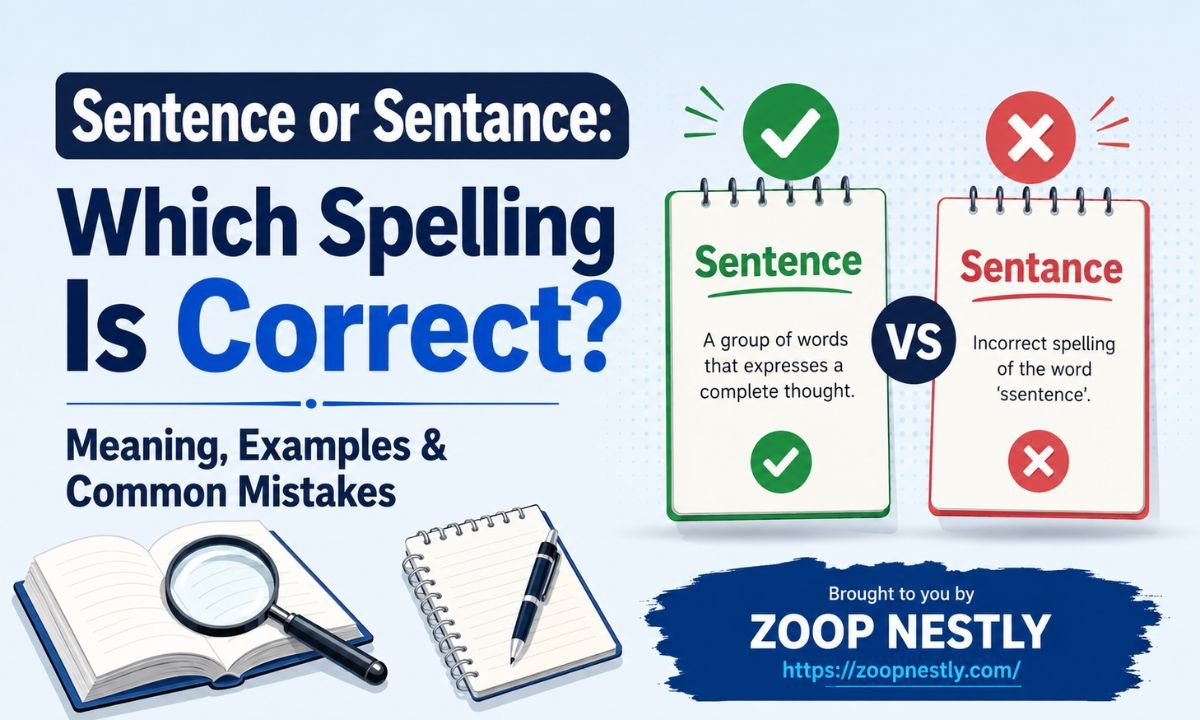
Sentence or Sentance: Which Spelling Is Correct? Meaning, Examples & Common Mistakes
You’re halfway through an email, you type the word, and suddenly it looks wrong. Is it “sentence” or “sentance”? You stare at it for a few seconds, maybe even try both spellings out loud, and still can’t decide.
This mix-up trips up more writers than you’d expect, and it happens because the word doesn’t sound the way it’s spelled. The good news is the answer to sentence or sentance is simple, and once you know why, you’ll never second-guess it again.
Quick Answer
Sentence is the only correct spelling in English. Sentance is a common misspelling with no dictionary standing, in either American or British English. The confusion happens because the unstressed middle vowel sounds like “ance” when spoken quickly, even though it’s written “ence.”
Why “Sentance” Feels Right (But Isn’t)
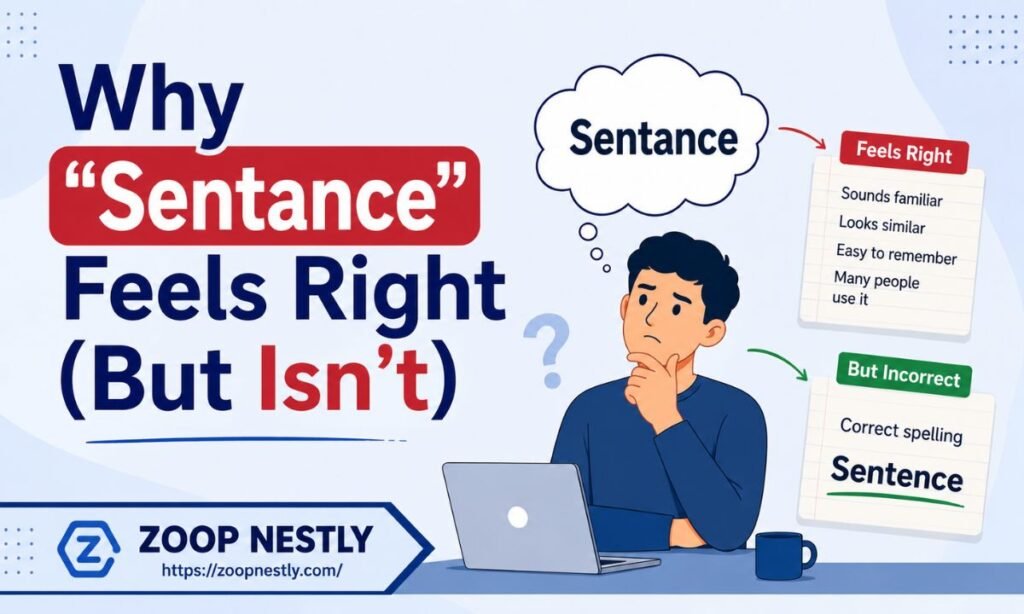
English is full of words where the spelling doesn’t match the sound, and “sentence” is a textbook example. When you say the word out loud, that middle syllable comes out soft and mumbled, somewhere between “ence” and “ance.”
Your brain fills in the gap with whichever pattern feels more familiar, and for a lot of people, “ance” just feels more natural because of words like “distance,” “chance,” and “romance.”
That’s the whole story. It’s not a regional variation, a modern shortcut, or an alternate form. It’s simply a spelling that doesn’t follow how the word is pronounced, and typing errors like this are extremely common with words that have a weak, unstressed vowel sound in the middle.
What Does “Sentence” Actually Mean?
The word “sentence” has two everyday meanings, and both are worth knowing since they explain why the word shows up so often in writing advice and grammar guides.
- Grammar sense: A group of words that expresses a complete thought, usually containing a subject and a verb. Example: She finished her homework before dinner.
- Legal sense: The punishment a court gives someone after a conviction. Example: The judge handed down a five-year sentence.
Both meanings use the exact same spelling. There’s no version where “sentance” applies, regardless of context.
Where Does “Sentence” Come From?
“Sentence” comes from the Latin word sententia, meaning opinion, judgment, or way of thinking. It moved into English through Old French, keeping the “-ence” ending that shows up in many words borrowed the same way, such as “difference,” “presence,” and “essence.” That Latin root also explains the legal meaning of the word: a judge’s sentence is literally their formal “judgment” on a case.
Knowing the word’s origin isn’t just trivia. It’s a useful anchor if you ever blank on the spelling, since “-ence” words with Latin roots are far more common in English than “-ance” endings in this particular pattern.
Sentence in American vs British English
Here’s some reassurance if you thought this might be a US versus UK spelling difference, like “color” and “colour.” It isn’t.
| Version | Spelling Used | Notes |
| American English | sentence | Standard in all contexts |
| British English | sentence | Standard in all contexts |
| Australian/Canadian English | sentence | Standard in all contexts |
| “Sentance” | Not used | Considered a misspelling everywhere |
Every major English-speaking country agrees on this one. There’s no dialect, style guide, or dictionary anywhere that lists “sentance” as acceptable.
Sentence or Sentance: Side-by-Side Comparison
Seeing both words next to each other in context makes the difference obvious.
| Correct | Incorrect |
| Write a complete sentence. | Write a complete sentance. |
| The sentence was too long. | The sentance was too long. |
| He received a harsh sentence. | He received a harsh sentance. |
| This sentence needs editing. | This sentance needs editing. |
If you ever want a quick gut check, try swapping in a related word like “essence” or “presence.” Since those share the same “-ence” pattern, they can help your eye catch the correct spelling faster.
Sentence Examples in Real Writing
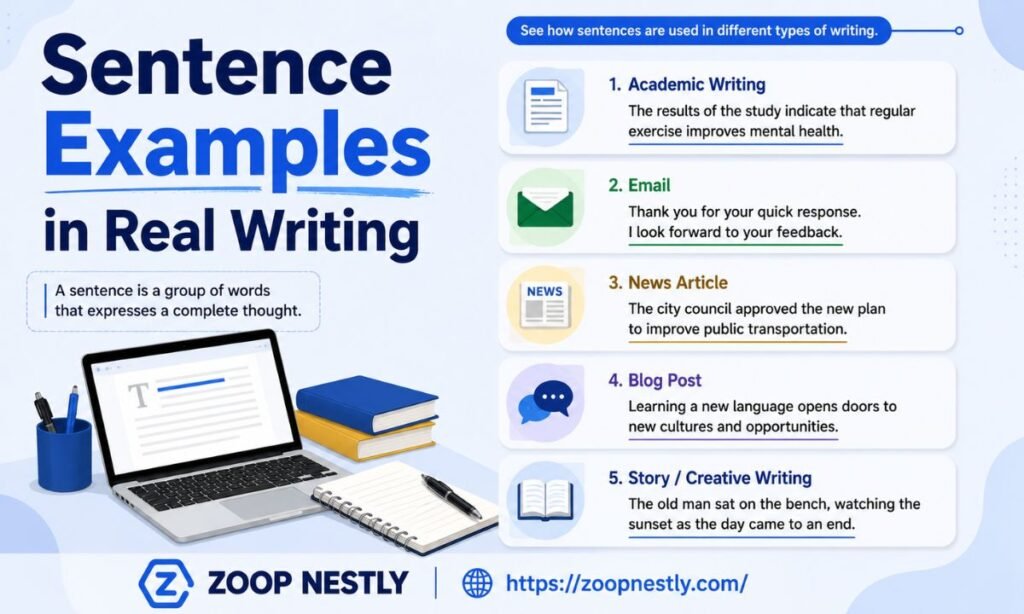
Seeing the word used correctly across different situations makes it easier to remember for good.
- Academic writing: Each sentence in the essay should support the main argument.
- Business emails: Please review the sentence I highlighted in yellow.
- Legal documents: The court reduced his sentence on appeal.
- Everyday conversation: Can you say that in one sentence?
- Creative writing: The final sentence of the story stayed with readers for years.
Notice that the spelling never changes, no matter how formal or casual the setting is.
Common Mistakes People Make with “Sentence”
Misspelling the word as “sentance” is the most frequent error, but it’s not the only one. Here are the mix-ups worth watching for.
1. Typing “sentance” from muscle memory This usually happens when someone types quickly and relies on how the word sounds rather than how it’s spelled.
2. Confusing “sentence” with “sentiment” These words look similar and share a Latin root, but they mean different things. “Sentiment” refers to a feeling or opinion, while “sentence” refers to a grammatical unit or a legal punishment.
3. Writing sentence fragments and calling them sentences A true sentence needs a subject and a verb expressing a complete thought. A fragment, like “Because it was raining,” is missing a piece and isn’t technically a full sentence.
4. Mixing up “sentence” and “sentance” in spell-check-free environments Texting apps, chat platforms, and some social media tools don’t always flag misspellings, so this error can slip through unnoticed more often than in a word processor.
DISCOVER MORE : Wiener vs. Weiner: Common Spelling Mistake Explained
How to Remember the Correct Spelling
A few simple tricks can lock this one in permanently:
- Think of the word “essence.” Both end in “-ence,” and if you remember one, you can remember the other.
- Break the word into syllables: sen-tence, not sen-tance. Saying it slowly out loud helps train your ear.
- Remember the Latin connection: words borrowed from Latin roots like sententia almost always keep the “-ence” ending.
- If you’re still unsure while typing, most spell-checkers will flag “sentance” instantly, so a quick scan before hitting send catches it.
Sentence Fragments vs Complete Sentences
Since spelling and grammar issues often show up together, it helps to know the difference between a fragment and a full sentence.
A complete sentence has a subject, a verb, and expresses a full thought: The dog barked loudly.
A sentence fragment is missing one of these parts: Barked loudly at the mailman. (no clear subject)
Fragments aren’t misspellings, but they’re a related grammar issue that often shows up in the same conversations about writing correctly. Recognizing both problems helps you produce cleaner, more polished writing overall.
Words That Get Confused with Sentence
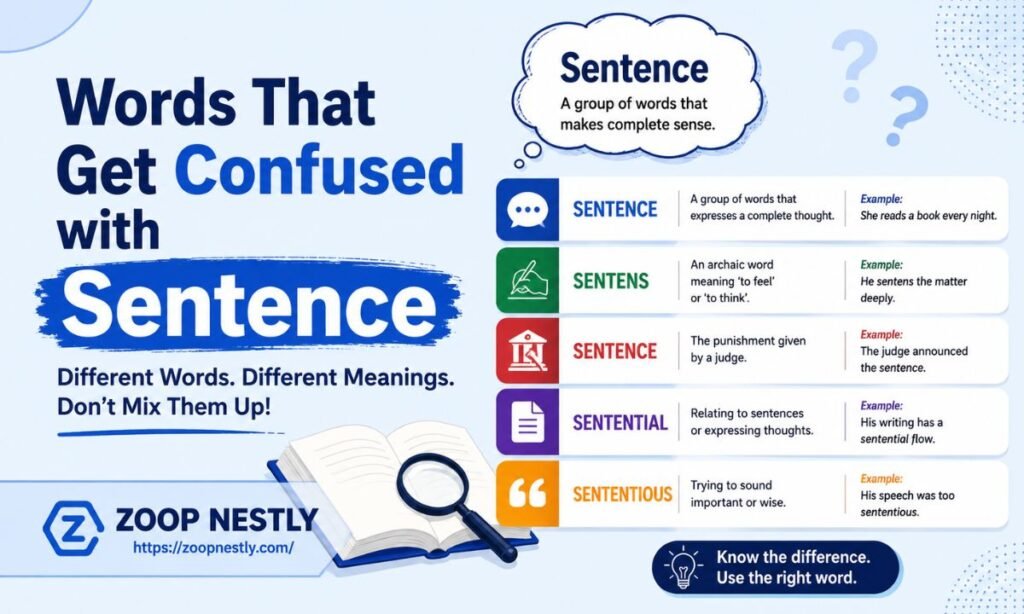
A few other words sometimes get tangled up with “sentence” because of similar sounds or spelling patterns.
| Word | Meaning |
| Sentiment | A feeling, opinion, or emotional attitude |
| Sentience | The capacity to feel or perceive things |
| Sequence | A particular order in which things follow one another |
| Essence | The most basic or important quality of something |
None of these are interchangeable with “sentence,” but recognizing the pattern of “-ence” endings can help you spell all of them correctly.
Quick Spelling Check Before You Hit Publish
Before you send that email, submit that assignment, or publish that post, run through this quick checklist:
- Does it end in -ence, not -ance?
- Are you using it to mean a grammatical unit or a legal punishment?
- Would “essence” or “presence” fit the same ending pattern?
If you answered yes to these, you’re spelling it correctly.
Frequently Asked Questions
Is “sentance” ever correct in any dialect of English?
No. “Sentance” isn’t recognized as correct in American, British, Australian, or Canadian English. It’s considered a spelling error in every standard dictionary.
Why do people misspell “sentence” as “sentance”?
The middle vowel sound in “sentence” is soft and unstressed when spoken, so it can sound like “ance” even though it’s written “ence.” This mismatch between sound and spelling is the main reason for the error.
What is the easiest way to remember how to spell “sentence”?
Connect it to a word you already spell correctly, like “essence” or “presence.” Since they share the same “-ence” ending, remembering one can help you remember the other.
Does “sentence” mean the same thing in grammar and in law?
Not exactly. In grammar, a sentence is a group of words expressing a complete thought. In law, a sentence is the punishment given by a court. The spelling stays the same in both cases.
Is a sentence fragment considered a type of sentence?
No. A sentence fragment is missing a subject, a verb, or a complete thought, so it doesn’t meet the definition of a full sentence, even though it may look like one at a glance.
Final Thoughts
The debate over sentence or sentance really comes down to one simple fact: only “sentence” is correct, in every context and every English-speaking country. The confusion is understandable since the word doesn’t sound the way it looks, but now that you know the reasoning behind the spelling, and have a few memory tricks in your back pocket, you won’t have to pause and second-guess it the next time you’re writing.

James Walker is a content writer and language researcher with over 5 years of experience in meanings, definitions, and language-related topics. He enjoys simplifying complex terms into clear, easy-to-understand explanations. Through ZoopNestly.com, he helps readers find accurate and reliable information.