Habbit or Habit Explained: Which Word Should You Use?
Ever typed “habbit” into a text message, hesitated, and then wondered if you just made a fool of yourself? You’re not alone. This mix-up shows up in emails, essays, and social posts every single day, and it’s one of those small errors that quietly chips away at how polished your writing looks. If you’ve been asking yourself habbit or habit, this guide settles it for good and shows you exactly how to use the word with confidence.
Quick Answer
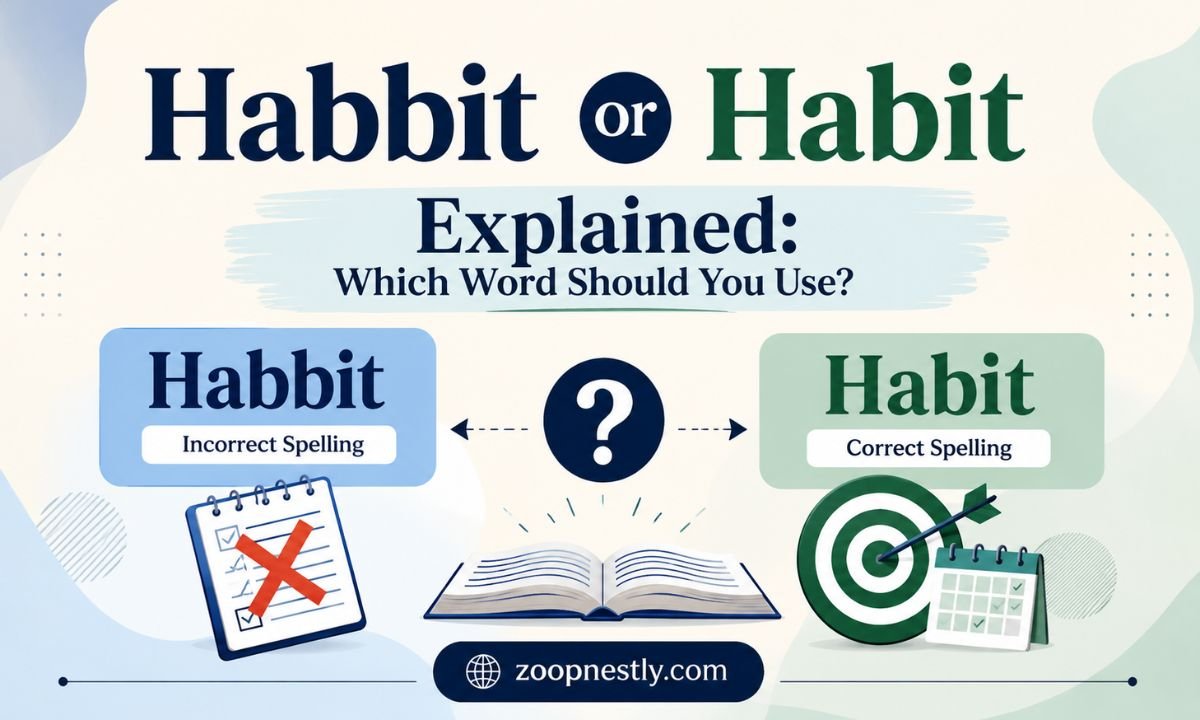
Habit is the correct spelling. Habbit is a common misspelling with no place in standard English dictionaries. The word comes from the Latin habitus, meaning “condition” or “way of being,” and it refers to a routine behavior repeated so often it becomes automatic. Remember: one “b,” not two.
What Does Habit Actually Mean?

A habit is something you do regularly, often without conscious thought, because you’ve done it so many times it feels automatic. Brushing your teeth before bed, checking your phone first thing in the morning, or saying “bless you” when someone sneezes are all habits.
Psychologically, habits form through repetition and reinforcement. The behavior becomes linked to a specific cue or trigger, and over time your brain stops treating it as a decision and starts treating it as a default response. That’s why habits can feel so hard to break, and also why building good ones pays off long term.
Why Do People Misspell It as “Habbit”?
There’s a simple reason this mistake happens so often: English spelling doesn’t always follow predictable rules. Many short words with a single vowel sound in the middle get doubled consonants when a suffix is added, like “run” becoming “running.” People instinctively apply that same pattern to “habit,” assuming it needs a double “b” to sound right.
But habit doesn’t follow that rule because the stress falls on the first syllable, not the second. Words like “rabbit,” “hobbit,” and “ribbon” reinforce the double-consonant pattern visually, which makes “habbit” feel oddly familiar even though it’s wrong.
Habit vs Habbit: Side-by-Side Comparison
| Feature | Habit (Correct) | Habbit (Incorrect) |
| Dictionary status | Found in all major English dictionaries | Not a recognized word |
| Origin | Latin habitus | No linguistic origin |
| Usage in writing | Standard, professional | Spelling error |
| Common context | Psychology, routines, behavior | Only appears as a typo |
Where the Word Habit Comes From
The word traces back to the Latin habitus, meaning appearance, condition, or state of being, which itself comes from habere, meaning “to have” or “to hold.”
It entered English through Old French in the 13th century, originally referring to clothing or outward appearance before shifting to mean a person’s characteristic way of behaving.
That older meaning still survives in phrases like a “riding habit,” which describes an outfit, or the religious habit worn by monks and nuns.
British English vs American English Spelling
Good news here: this is one spelling that doesn’t change across the pond. Both British and American English use habit, with no regional variation.
This differs from words like “colour” versus “color” or “organise” versus “organize,” where spelling genuinely splits by region.
With “habit,” there’s just one correct form worldwide, which makes the “habbit” mistake purely a spelling error rather than a dialect difference.
Habit vs Habitat: Don’t Confuse These Two

Another common mix-up happens between habit and habitat, and it’s worth clearing up since the words look related but mean completely different things.
- Habit refers to a repeated behavior or routine.
- Habitat refers to the natural environment where a plant or animal lives.
For example: “The bear’s morning habit was to forage near the river, which sat right in the middle of its natural habitat.” Same root idea of “a way of living,” but one describes behavior and the other describes a place.
How to Pronounce Habit
Habit is pronounced HAB-it, with the stress on the first syllable. It rhymes with “rabbit” and “abbot.” If you’re ever unsure while speaking, just remember the stress sits firmly on that first beat, and the second syllable is soft and quick.
Habit in a Sentence: Real Examples
Seeing the word in context makes it much easier to remember correctly. Here are a few natural examples:
- “Reading before bed became a nightly habit for her.”
- “He’s trying to break the habit of checking his phone every five minutes.”
- “Good financial habits start with tracking your spending.”
- “It’s just a habit of mine to double-check the locks before I leave.”
- “Building a workout habit takes consistency, not motivation.”
Plural Form: Habit or Habits?
The plural of habit is simply habits, formed by adding an “s,” since the word follows standard English pluralization rules. There’s no irregular form to memorize here.
- Singular: one habit
- Plural: several habits
Example: “Breaking old habits is harder than forming new ones.”
Synonyms for Habit
If you want to vary your vocabulary or find the right word for a specific tone, these synonyms work well depending on context:
- Routine – a fixed sequence of actions, often daily
- Custom – a practice specific to a person or culture
- Tendency – a natural inclination toward a behavior
- Practice – a regularly repeated action, often deliberate
- Ritual – a habit performed with more ceremony or meaning
- Pattern – a repeated way of behaving, often noticed over time
Each carries a slightly different shade of meaning, so choose based on whether you’re describing something automatic, cultural, or intentional.
DISCOVER MORE : Roster or Roaster: Which Word Do You Actually Need? Meaning, Differences & Correct Usage Guide
“My Habit” and Common Phrases That Use the Word
The phrase “my habit” shows up constantly in casual writing and conversation, usually referring to a personal routine or something someone does regularly, whether positive or negative. For example, “coffee in the morning is my habit” simply means it’s part of that person’s daily routine.
Other common expressions include:
- “Kick the habit” – to stop doing something, often used for addictions like smoking
- “Habit of mind” – a consistent way of thinking or approaching problems
- “Creature of habit” – someone who strongly prefers routine over change
- “Force of habit” – doing something automatically, without thinking, because you always do
Common Mistakes People Make with This Word
Beyond the “habbit” spelling error, a few other mistakes show up regularly:
- Doubling the consonant when adding suffixes. Some writers mistakenly write “habitting” instead of the correct “habituating” or simply “forming a habit.” There’s no verb form of “habit” that doubles the “b.”
- Confusing habit with habitat, as covered above.
- Using “habit” when “addiction” is more accurate. A habit is neutral or mildly repeated behavior, while addiction involves a compulsive, often harmful dependency. Calling a serious substance dependency a “habit” can understate the issue.
- Overusing “habitual” incorrectly, such as saying “habitual habit,” which is redundant since “habitual” already implies repetition.
Why This Spelling Confusion Is So Common

Search behavior shows that spelling confusion around simple, high-frequency words is surprisingly common, especially with words that have visual “twins” like “rabbit” or “hobbit.” This kind of mix-up isn’t a sign of poor writing skill. It’s a natural result of pattern recognition working against you rather than for you. Once you know the reasoning behind the correct spelling, it tends to stick.
Quick Memory Trick to Never Misspell It Again
Here’s a simple way to lock in the correct spelling: think of the phrase “a habit has a single life,” where “single” reminds you of a single “b.” Or associate it with the word “habitat,” which also uses one “b,” since both words share the same Latin root.
Frequently Asked Questions
Is “habbit” ever an acceptable spelling?
No. Habbit is not recognized in any standard English dictionary, formal or informal. It should always be corrected to habit.
What is the root word of habit?
The root is the Latin word habitus, meaning condition or state of being, which evolved from habere, meaning “to have” or “to hold.”
Is habit a noun or a verb?
Habit is primarily a noun. There is no standard verb form of “habit” itself, though related words like “habituate” function as verbs.
What’s the difference between a habit and a routine?
A habit is usually automatic and requires little conscious effort, while a routine is a deliberate sequence of actions someone chooses to follow, even if it later becomes habitual.
How long does it take to form a habit?
There’s no single fixed number that applies to everyone, since habit formation depends on the behavior’s complexity and how consistently it’s repeated. What matters most is consistent repetition over time, not hitting an exact day count.
Final Thoughts
The next time you’re typing and pause at “habbit or habit,” you now have a clear answer: habit is correct, always spelled with one “b,” and rooted in a word that’s been part of English for centuries. Whether you’re describing a morning routine, a personality trait, or something you’re trying to break, getting the spelling right helps your writing come across as polished and credible. Small details like this one add up, and now it’s officially a habit you won’t get wrong again.

James Walker is a content writer and language researcher with over 5 years of experience in meanings, definitions, and language-related topics. He enjoys simplifying complex terms into clear, easy-to-understand explanations. Through ZoopNestly.com, he helps readers find accurate and reliable information.