As Well vs Aswell: What’s the Difference and Which Is Correct?
You’re halfway through an email, you type “thanks aswell,” and something feels off. Is that even a word? Your spell checker might not flag it, but your reader could still notice.
This tiny mix-up shows up in texts, resumes, and social posts every day, and it quietly makes writing look less polished. The good news: aswell or as well has one clear, simple answer once you know the rule.
Quick Answer: Aswell or As Well?
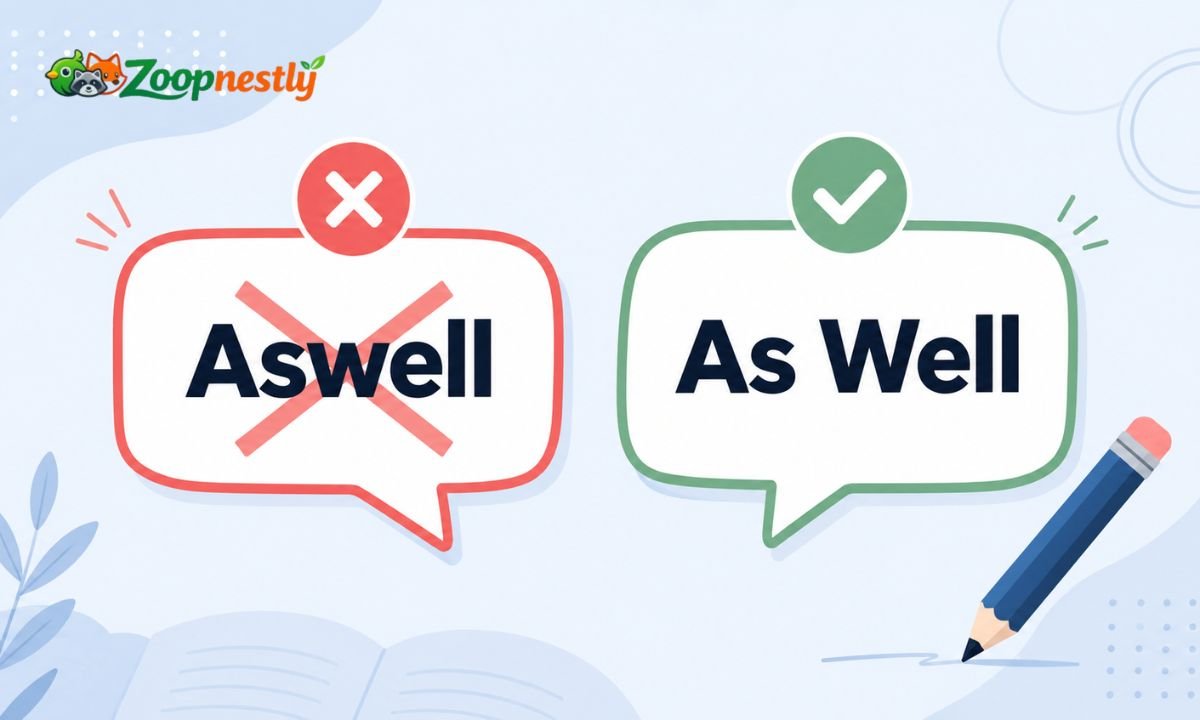
As well is the only correct spelling. Aswell is not a recognized word in standard English, no matter how often people type it that way online. Always write it as two separate words: “as” and “well.” If you remember one rule from this article, make it that one.
Why People Confuse Aswell and As Well
The confusion isn’t random. English has plenty of compound words that started as two separate words and eventually merged, like “into,” “already,” and “altogether.” Your brain naturally expects “as well” to follow the same path.
It hasn’t. Dictionaries, style guides, and grammar checkers all agree: “as well” has never merged into a single word. The mix-up mostly comes from speed typing, autocorrect habits, and the visual similarity to words like “aswell” sounds when spoken quickly in casual speech.
What Does “As Well” Actually Mean?
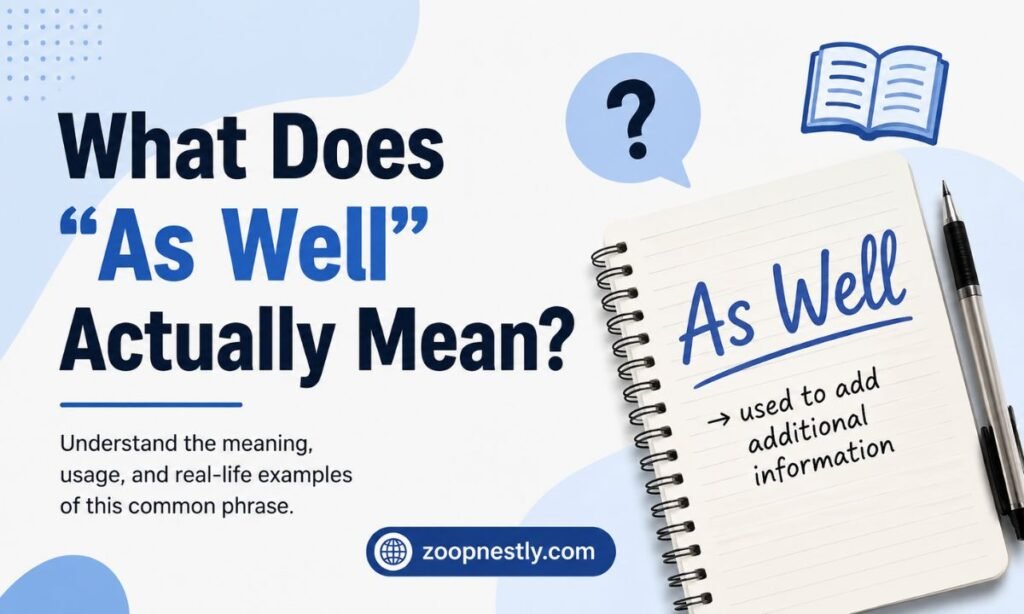
“As well” is an adverbial phrase that means “also,” “in addition,” or “too.” It typically appears at the end of a sentence or clause to add extra information.
Example: “She ordered a coffee and a croissant as well.”
This sentence means she ordered both items, with “as well” simply reinforcing the “and.” You could remove it and the sentence would still make sense, just with slightly less emphasis on the addition.
Aswell vs As Well: Side-by-Side Comparison
| Feature | As Well | Aswell |
| Standard English | Correct | Incorrect |
| Found in dictionaries | Yes | No |
| Appropriate for formal writing | Yes | No |
| Common in casual texting | Yes | Sometimes, by mistake |
| Grammatically recognized | Yes | No |
This table makes the choice simple: there’s no context, formal or informal, where “aswell” is the accepted spelling.
How to Use “As Well” Correctly in a Sentence
“As well” usually sits at the end of a sentence, right after the idea it’s adding to. Here’s the basic pattern:
Subject + verb + object + as well.
Examples:
- “I’ll have the salad, and I’d like some water as well.”
- “He plays guitar, and he sings as well.”
- “The report covers sales figures and customer feedback as well.”
Notice that in each case, “as well” adds something to a statement that already exists. It never starts a sentence and rarely appears in the middle.
“As Well As” vs “As Well”: What’s the Difference?
This is where a lot of writers stumble, because the two phrases look similar but work differently.
“As well” adds information at the end of a sentence and functions like “too.”
“As well as” connects two items or ideas within a sentence and functions more like “and” or “in addition to.”
Compare:
- “She speaks French as well.” (She also speaks French.)
- “She speaks French as well as Spanish.” (She speaks both languages.)
Mixing these up can slightly change your meaning, so it helps to check which structure fits your sentence before you write it.
Common Mistakes to Avoid
Beyond writing “aswell” as one word, a few other errors show up often:
- Starting a sentence with “as well.” It almost always belongs at the end or after the item it modifies, not at the beginning.
- Overusing “as well” in the same paragraph. Repeating it too often makes writing feel clunky. Swap in “also,” “too,” or “in addition” for variety.
- Confusing it with “aswell” in spoken contractions. Because people often slur “as well” together when talking fast, the written error follows naturally. Slow down when typing important messages.
- Using “as well as” when “and” would be simpler. “As well as” can sound more formal than needed for everyday writing.
Is “Aswell” Ever Acceptable?
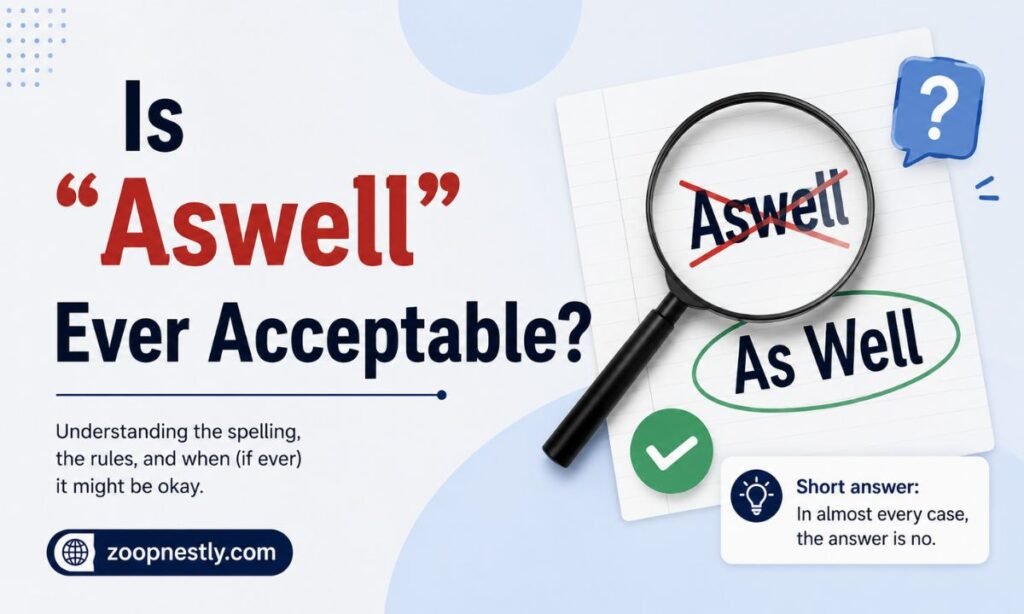
No, not in standard written English. It doesn’t appear in Merriam-Webster, Oxford, Cambridge, or Collins dictionaries as a valid entry. Even in very casual texting, where spelling rules loosen up, “aswell” is still considered a typo rather than an accepted informal spelling, unlike genuine slang terms.
If you’re writing anything that others will read, whether a work email, school assignment, or social media caption meant to look polished, stick with the two-word form.
British English vs American English: Does Spelling Change?
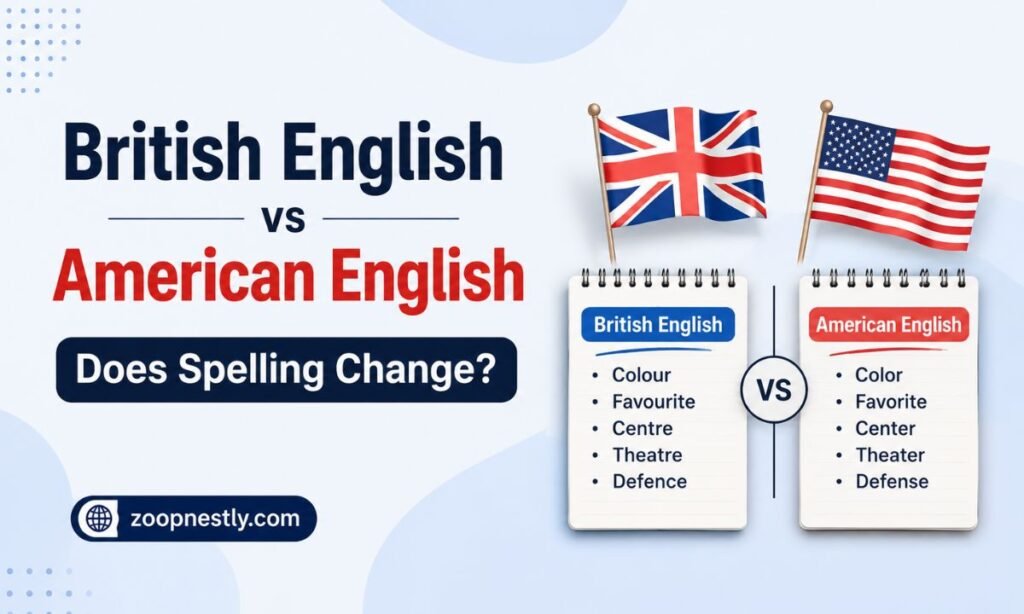
Both British and American English agree on this one. Unlike words such as “colour” versus “color,” there’s no regional variation for “as well.” It’s written as two words in the UK, the US, Australia, Canada, and every other major English-speaking region. This makes it one of the more reliable, universally consistent rules in English spelling.
Words and Phrases You Can Use Instead
Sometimes “as well” starts to feel repetitive, especially in longer pieces of writing. Here are natural alternatives depending on tone:
Casual tone:
- Too
- Also
- Plus
Formal tone:
- In addition
- Additionally
- Furthermore
Example swap: Instead of “The team hit its targets, and morale improved as well,” you could write “The team hit its targets, and morale improved too” for a lighter tone, or “The team hit its targets. Additionally, morale improved” for a more formal report.
How to Remember the Correct Spelling
If you tend to default to “aswell,” try this simple memory trick: think of “as well” the same way you’d think of “as good” or “as fast.” You wouldn’t write “asgood” or “asfast,” so there’s no reason “as well” should be any different. Picturing the phrase as a pair, “as” plus “well,” rather than a single unit, helps the correct spelling stick.
Quick Self-Check Before You Hit Send
Before submitting an email, essay, or post, scan for these three things:
- Is “as well” written as two separate words?
- Does it sit at the end of the sentence or right after what it’s adding to?
- Have you used it more than twice in the same paragraph? If so, swap one instance for “also” or “too.”
Running through this quick checklist takes seconds and catches one of the more common small errors in everyday writing.
Frequently Asked Questions
Is “aswell” a real word?
No. “Aswell” is not recognized in any major English dictionary. The correct form is always two words: “as well.”
Can I start a sentence with “as well”?
It’s uncommon and generally not recommended. “As well” typically appears at the end of a sentence or clause to add information, not at the beginning. If you want to start a sentence with a similar meaning, use “Additionally” or “Also” instead.
What’s the difference between “as well” and “too”?
Both mean roughly the same thing, but “too” is slightly more casual and flexible in placement, while “as well” tends to sound a touch more neutral or formal and usually sits at the end of a sentence.
Does “as well” need a comma before it?
Not always. A comma is optional and depends on the rhythm of the sentence. “I’d like a coffee as well” doesn’t need one, but “I’d like a coffee, as well as a croissant,” often reads more smoothly with a comma before “as well as” in longer sentences.
Why does spell check sometimes miss “aswell”?
Some basic spell checkers only flag words that aren’t recognized at all, and depending on settings, “aswell” might slip through if it’s close enough to a stored pattern or if the checker isn’t set to catch spacing errors. This is why proofreading still matters even when using digital tools.
Final Thoughts
The rule behind aswell or as well is refreshingly simple: “as well” is correct, and “aswell” is not, in any dialect, tone, or context. Once this becomes second nature, you’ll spend less time second-guessing a phrase you probably use several times a week. Keep it as two words, place it at the end of your sentence, and vary it occasionally with “also” or “too” to keep your writing feeling natural rather than repetitive.

James Walker is a content writer and language researcher with over 5 years of experience in meanings, definitions, and language-related topics. He enjoys simplifying complex terms into clear, easy-to-understand explanations. Through ZoopNestly.com, he helps readers find accurate and reliable information.