Author: James Walker

  • Art 7 Cryptographic Key Management Rts On Ict Danger Management Framework Dora Springlex

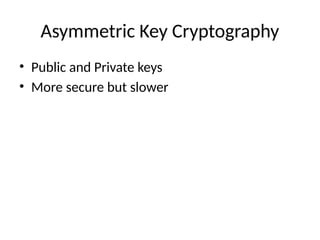
    A cryptographic algorithm is a computational process or method used to encrypt and decrypt data to make sure safety and privacy. A cryptographic key, typically referred to as an encryption/decryption key, is a string of information used by a cryptographic algorithm to transform plain textual content to ciphertext (human unreadable output). Hash features play a vital position in cryptographic techniques by ensuring knowledge integrity. Even the slightest alteration to the input generates a very different hash, allowing customers to detect tampering successfully. Cryptographic controls discover utility in various scenarios and use cases within info safety techniques together with information safety, safe communication and transport, non-repudiation of transactions, and so on.
    what is fips validated cryptography

    Cryptographic Controls In Info Safety

    IBM supplies comprehensive knowledge safety services to protect enterprise data, applications and AI. Regulatory standards just like the Common Data Protection Regulation (GDPR) and the Payment Card Trade Knowledge Security Normal (PCI DSS) implement strict guidelines on information protection, with extreme penalties for non-compliance. As encryption becomes indispensable to cybersecurity, key management grows more and more necessary across industries. Storing keys in software program could be more handy, but it can additionally carry the next security threat than hardware-based storage options like HSMs. To understand the position of key administration, think about the parallel of a protected and the code required to open it. Encryption keys might need to be shared securely throughout departments or with exterior partners.

    Deprecated Ecc Curves↑

    The security of this symmetric secret is crucial as a end result of if it’s compromised, all encrypted data is at risk. Key management for symmetric encryption focuses on securely generating, storing and distributing the key, ensuring it’s accessible solely to licensed users. Knowledge confidentiality is at risk when weak keys are used in encryption algorithms, making it simpler for attackers to decrypt ciphertext and entry plaintext knowledge. Data integrity can be compromised, as weak keys utilized in digital signatures or message authentication codes (MACs) might permit attackers to forge legitimate signatures or MACs, resulting in undetected knowledge alterations. Automation can make all of the difference, streamlining the encryption key lifecycle from era and storage to rotation and deletion. Sectigo Certificates Supervisor simplifies this process, reducing guide effort whereas making certain keys stay https://miamicottages.com/various-software-development-services-from-convert-edge-in-toronto.html secure and correctly managed.

    Data Security & Privateness
    security solutions

    The storage location is most likely not an active memory but only acquired from an operational memory available to cryptographic algorithms. Encryption, aka cryptography, is used to secure information at rest, saved in servers, and in motion, as transmitted over the network. Cryptography includes mathematical operations that convert the original plaintext into an unintelligible ciphertext (encryption) and the reverse process, changing ciphertext to plaintext (decryption). Cryptography plays a significant role inside the ISO/IEC framework and organizations in search of ISO/IEC implementation should adjust to the appropriate cryptographic controls to guard their information property. Key management services are sometimes best for companies that wish to dynamically scale their key administration wants without investing closely in on-premises infrastructure. They can provide ease of use, scalability and integration with varied cloud providers.

    • Secure distribution strategies can even help ensure the secure transmission of keys, including utilizing the Transport Security Layer (TLS) protocol.
    • It also covers key utilization, ensuring keys are employed correctly for encryption, decryption, signing, and verification.
    • Sturdy governance policies are essential to outline key usage, entry controls, and lifecycle procedures.
    • These systems securely handle each private and non-private keys, guaranteeing correct key generation, storage, rotation, and entry management while implementing strict safety insurance policies.
    • Hardened builds of Rocky Linux apply cryptographic controls in opposition to acknowledged safety baselines corresponding to FIPS.

    Cryptographic key administration is significant across numerous purposes to secure sensitive data and communications effectively. Weak cryptographic keys can result from predictable or low-entropy pseudo-random quantity mills (PRNGs) used during key era. If a PRNG lacks enough entropy or follows a deterministic pattern, attackers might predict or reconstruct non-public keys, compromising the whole cryptographic system. This problem is assessed underneath CWE-338 (Use of Cryptographically Weak PRNG) and CWE-332 (Insufficient Entropy in PRNG). HSMs are devoted devices designed to generate, retailer and use cryptographic keys with out ever exposing the key material. Even directors cannot extract keys from a correctly configured HSM; they will solely invoke authorised operations.

    Be A Part Of this webinar to discover practical methods for working and governing AI agents responsibly at scale, with professional insights on observability, threat management and accountable AI operations. Key distribution is especially difficult for symmetric keys as a outcome of they have to always stay secret. If DSA have to be used, select a minimal of 2048-bit keys with a 224-bit or 256-bit q, though 3072-bit keys are strongly preferred. For extra particulars on key length suggestions for EdDSA or ECDSA, discuss with Cryptographic keylengths and Elliptic-Curve Cryptography. Monthly updates on CSA Chapters, together with native occasions, chapter actions, management highlights, and opportunities to attach with your regional cloud security group.

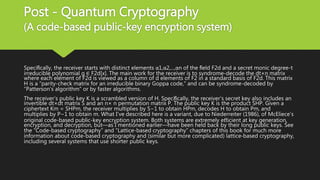
    On the opposite hand, uneven key systems can mitigate safety challenges by openly distributing public keys while keeping personal keys secure. Safe distribution methods can also assist make certain the safe transmission of keys, together with using the Transport Safety Layer (TLS) protocol. In asymmetric encryption, key administration involves securely producing keys, managing their storage, controlling entry and regularly rotating keys to stop breaches. Moreover, as new technologies emerge, the importance of robust key management continues to develop.

  • What is DevSecOps?

    DevSecOps

    The primary goals and benefits of DevSecOps are those that open the door for organizations to experience advancement in operational efficiency across various departments. If security vulnerabilities aren’t detected until the end of a project, the result can be major delays as development teams scramble to address the issues at the last minute. DevSecOps extends DevOps by integrating security practices into every stage of the software development lifecycle, ensuring that security is a shared responsibility across development, operations, and security teams, not an afterthought applied at the end.

    This approach not only improves reliability but also enhances collaboration between development and operations teams, a key tenet of the DevSecOps philosophy. DevSecOps is all about improving collaboration between development, https://www.adapt-uk.com/how-can-companies-train-for-ai-skills/ security, and operations teams to improve organizational efficiency and free up teams to focus on work that drives value for the business. DevOps is a set of practices to improve collaboration between development and operations teams to build software faster, efficiently, and reliably.

    Security as code enables real-time threat response and aligns security practices with DevSecOps goals. SecOps, short for Security Operations, is a collaborative framework that combines Security and Operations teams, stemming from a similar concept of DevSecOps but without the Dev component. Development and operations teams have discovered systems and tactics that help them work more efficiently, reduce costs, and produce high-quality results. The DevSecOps and DevOps approach both aim to streamline and accelerate software development and delivery by enhancing collaboration between development and operations teams and automating repetitive tasks. This breakdown has also had a direct impact on the way software is developed, leading to https://eurodialogue.org/Lithuanian-based-NATO-Energy-Security-Center-of-Excellence-to-be-officially-established rolling releases and agile development practices where new features and code are continuously pushed into production at a rapid pace.

    • Security as code enables real-time threat response and aligns security practices with DevSecOps goals.
    • DevOps is a set of practices to improve collaboration between development and operations teams to build software faster, efficiently, and reliably.
    • DevSecOps is all about improving collaboration between development, security, and operations teams to improve organizational efficiency and free up teams to focus on work that drives value for the business.
    • SecOps, short for Security Operations, is a collaborative framework that combines Security and Operations teams, stemming from a similar concept of DevSecOps but without the Dev component.
    • This approach not only improves reliability but also enhances collaboration between development and operations teams, a key tenet of the DevSecOps philosophy.

    Devsecops definition

    • Even though not-insignificant challenges exist, establishing DevSecOps best practices can ensure that – once processes are more or less up and running – security does not act as an impediment to the speed of application development.
    • If the goals of DevSecOps are 1) to release better software faster, and 2) to detect and respond to software flaws in production faster and more efficiently, what are the capabilities you should cultivate to achieve them?
    • The primary goals and benefits of DevSecOps are those that open the door for organizations to experience advancement in operational efficiency across various departments.
    • Automation can help to improve the efficiency and effectiveness of security checks and scans and can help to prevent security vulnerabilities from being introduced into production systems.

    DevSecOps empowers development teams to collaborate, automate, and continuously test and monitor the security of the software. Implementing DevSecOps effectively requires adopting key best practices that enhance security, efficiency, and collaboration throughout the software development lifecycle. By developing security as code, we will strive to create awesome products and services, provide insights directly to developers, and generally favor iteration over trying to always come up with the best answer before a deployment. DevSecOps aims to help development teams address security issues efficiently. DevSecOps operations teams should create a system that works for them, using the technologies and protocols that fit their team and the current project.

    DevSecOps

    DevSecOps provides a critical advantage by integrating security into the core of the software development lifecycle. Automation can help to improve the efficiency and effectiveness of security checks and scans and can help to prevent security vulnerabilities from being introduced into production systems. If the goals of DevSecOps are 1) to release better software faster, and 2) to detect and respond to software flaws in production faster and more efficiently, what are the capabilities you should cultivate to achieve them? Even though not-insignificant challenges exist, establishing DevSecOps best practices can ensure that – once processes are more or less up and running – security does not act as an impediment to the speed of application development.

    DevSecOps

    This cloud-based platform works with your development tools to improve production efficiency, maximize quality delivery, ensure security, and align business goals with development resources. By making security a shared responsibility across teams, DevSecOps helps your development teams create applications quickly while maintaining security. Speed and efficiency of software delivery through collaboration between development and operations teams.

    The organisations benefit from the integration of DevSecOps professionals with the development team saving the software cost and attaining the major business goal. The overarching goal of platform engineering is to identify the pain points impacting development teams and mitigate them by providing common, reusable tools, services, and capabilities via an internal developer platform (IDP). Implementing DevSecOps requires organization-wide contribution, as well as efficiently integrated workflows and toolsets that may already be in place. The CI/CD pipeline integrates development and operations teams to improve productivity by automating infrastructure and workflows, as well as continuously measuring https://365eventcyprus.com/high-rise-construction-in-the-center-of-nicosia-may-be-banned.html application performance.

  • Open Alliance for Cloud Adoption

    cloud adoption

    Cloud adoption is the process of moving applications, data and infrastructure to cloud services and building the skills, processes and governance to run them well. See how Amnic supports cost-smart cloud adoption. Cloud adoption looks different depending on the workload and the sector. Those teams attribute spend to the products and teams that create it, set budgets and alerts, forecast spend before it lands and act on optimization recommendations early.

    For example, a company might move collaboration tools first, then shift core applications as they update internal processes. Along the way, decisions become less about where something lives and more about how well it supports the business. Pressing the close button or using the escape key will close the popup.

    • It encourages the initial building of applications or business solutions in the cloud but does not exclusively limit them to it.
    • 💡Tired of soaring bills and overwhelming setups from hyperscalers like AWS, Azure, and GCP?
    • The on-chain economy—which turns real-world assets into digital tokens that can move instantly on blockchains—is arriving faster than most expected.
    • It all goes to show that no matter what tools enterprises choose to use, the core problem is not always with the technology.
    • A data breach could lead to regulatory issues, fines, and significant company reputation damage.

    This guide reveals how to confidently implement generative AI and machine learning as part of your cloud transformation strategy, including key use cases and platform considerations for enterprise success. This Ventana research reveals the barriers holding finance organizations back and provides 10 best practices for successful digital transformation. Both of these help organizations apply CAF principles https://beginnersmind.info/short-course-on-what-you-need-to-know/ to AI use cases, ensuring that AI investments align with broader digital transformation goals and deliver measurable business value.

    Hyperscaler Cloud Revenue and Growth

    Replatforming makes targeted optimizations to applications during migration to take advantage of cloud capabilities without changing their core architecture. Relocating transfers workloads by moving virtual machines directly between environments without modifying applications. After a cloud model has been identified and vendors hired, the next step in cloud adoption is to set up the necessary IT assets. Multicloud environments use the cloud services of more than one vendor simultaneously. The private cloud, also known as an internal or corporate cloud, is a proprietary hosting solution in which all hardware and software resources are dedicated exclusively to (and accessible by) a single organization.

    cloud adoption

    The process of cloud transformation looks different depending on which approach an organization decides is appropriate. While cloud migration is the technical process of moving data from on-premises servers to the cloud, cloud adoption is the broader integration of cloud technology into business operations. In 2025, Gartner predicted that 25% of organizations will experience dissatisfaction with their cloud adoption by 2028 due to cost or mismanagement. By hosting IT infrastructure in the cloud, organizations can access data from any location, scale services up and down to meet demand and make systems more resilient in case of failure.

    • The most effective cloud strategies start with a clear understanding of what the business actually needs.
    • Connected-device demand tracked through IoT analytics is one driver behind the Asia-Pacific surge.
    • Another benefit is that it can help startups scale their business quickly and efficiently.
    • It provides a structured approach to help organizations plan, build and optimize their cloud environments while minimizing business risk.
    • Cost has become the most common reason cloud projects fall short, which is why some workloads even move back on-premises.
    • The People perspective is designed to spur organizational change and bridge the gap between technology and business objectives.

    Move for security 75%of enterprises attest to OCI’s superior security design Modernizing applications, infrastructure, and platforms using cloud computing is best accomplished with Oracle, the only vendor with comprehensive capabilities for IaaS, PaaS, packaged applications, and SaaS. The Cloud Adoption Framework (CAF) is your organization’s key to unlocking the full potential of cloud computing. The hybrid cloud architecture provides orchestration, management, and application portability, as you would get from full cloud adoption. GreenLake provides companies with the ability to modernize multigenerational IT for speed and flexibility. In the event that your organization is not ready for full-scale cloud adoption, you have the choice to employ a hybrid cloud model that offers many of the benefits of cloud services without the all-or-nothing commitment.

    cloud adoption

    The People perspective is designed to spur organizational change and bridge the gap between technology and business objectives. The AWS CAF perspectives are centered on foundational capabilities and provide prescriptive guidance used by thousands of businesses to improve cloud readiness and accelerate their cloud transformation. The AWS CAF provides tailored guidance to help organizations move workloads to the cloud in a secure, compliant and cost-effective manner. The AWS Cloud Adoption Framework was developed in response to the increasing demand for digital transformation and the need to harness the potential of cloud computing. Each perspective includes a set of capabilities that relevant stakeholders own or manage during the cloud transformation journey. Furthermore, as cloud technology matures, the core ways in which businesses operate will continue to change.

    Getting Started with the Cloud Adoption Framework

    In this article, we’ll look at the basics of cloud adoption, its benefits and why it’s important to start now. For example, an organization might run Azure for application workloads while maintaining IBM Cloud for specialized workloads on legacy systems that benefit from IBM’s enterprise capabilities. Also, Azure resource groups provide a way to logically organize and manage related resources—such as virtual machines, databases and storage—enabling teams to deploy, monitor and maintain these assets more efficiently. Azure provides a comprehensive ecosystem of tools to support a Cloud Adoption Framework implementation. Resource optimization becomes an ongoing discipline with regular assessments to ensure that the cloud environment delivers value while adapting to changing business needs.

    cloud adoption

    Integrating cloud strategy with your https://business-soulwork.com/how-to-protect-your-innovative-ideas/ business objectives enables you to set clear adoption goals and track efficiency gains, cost reductions, flexibility, and security compliance. You can partner with an experienced cloud consultant to guide you in the initial phase and provide a clear plan for future adoption according to your unique needs. Adopting cloud technologies requires investment in people and resources, so aligning them with the overall business strategy is essential.

    Using the AWS Well-Architected Tool, available at no charge in the AWS Management Console, you can review your workloads against these best practices by answering a set of questions for each pillar. After defining the architecture, establish a landing zone as the foundational cloud environment where workloads will be migrated. Detailed planning before the actual migration is a critical https://cheap-computers-guide.net/can-you-easily-replace-a-faulty-hard-drive-in-a-cheap-laptop/ success element in cloud adoption. The following sections discuss the network architecture and design of the cloud environments and the essential compliance measures related to network architecture. After finalizing the cloud migration strategy, we plan and architect the cloud environment for workloads.